
Main Courses
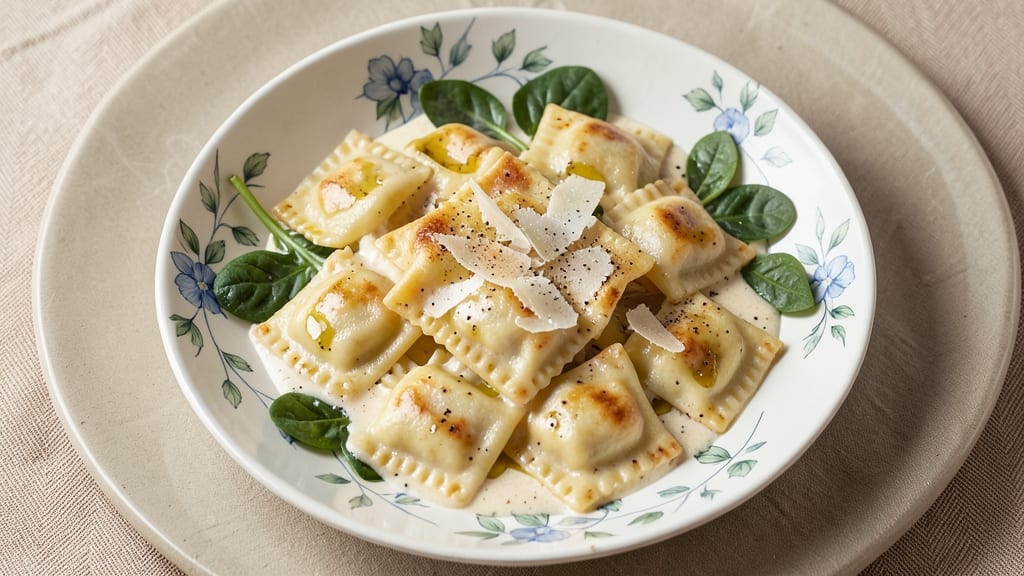
Recreating Olive Garden's signature cheese ravioli at home delivers that same restaurant-quality comfort in your kitchen. The secret lies in homemade pasta dough that's tender yet sturdy enough to hold the melty ricotta-parmesan filling, all blanketed in a velvety Alfredo sauce.
After perfecting this over countless batches, I've developed a method that ensures golden-brown edges and perfectly al dente noodles every time.
What sets this recipe apart is the balance of textures—crispy when baked, creamy when tossed in sauce, and melty cheese pockets that burst with every bite. The dough requires just five simple ingredients and minimal effort, while the filling comes together in minutes.
This version stays true to the original while offering a more authentic homemade experience without sacrificing that familiar, satisfying taste.
The process is straightforward: roll the dough thin, cut precise squares, fill with cheese, seal carefully, and cook until the edges are perfectly golden. The sauce transforms ordinary pasta into a luxurious dish with its rich, buttery consistency.
Each bite delivers that same comforting combination of textures and flavors you'd expect from a restaurant—now made in your own kitchen.
Serve with a sprinkle of fresh parsley and extra grated parmesan for that final restaurant touch. This recipe makes enough for a family dinner or meal prep for the week. Let's get started on creating your own restaurant-worthy ravioli at home.
Ingredients for olive garden cheese ravioli
Five dough ingredients plus a creamy cheese filling—all you need for restaurant-quality ravioli at home.
| Ingredient | Amount | Notes |
|---|---|---|
| All-Purpose Flour 🌾 | 2 ½ cups | Sifted for smooth dough texture |
| Large Eggs 🥚 | 3 whole | Room temperature for even mixing |
| Extra-Virgin Olive Oil 🫒 | 2 tbsp | High quality for authentic flavor |
| Whole Milk 🥛 | ¼ cup | Full-fat for tender dough |
| Fine Sea Salt 🧂 | ½ tsp | Diamond Crystal preferred |
| Part-Skim Ricotta Cheese 🧀 | 12 oz | Drained overnight for best texture |
| Shredded Mozzarella Cheese 🧀 | 8 oz | Freshly shredded from block |
| Parmesan Cheese 🧀 | ½ cup | Freshly grated from wedge |
| Large Egg Yolks 🥚 | 2 whole | For binding filling |
| Unsalted Butter 🧈 | ½ cup | Cold and cubed for sauce |
| Heavy Cream 🥛 | ½ cup | Full-fat for rich sauce |
| Garlic Cloves 🧄 | 2 cloves | Minced for sauce depth |
| Fresh Parsley 🌿 | ¼ cup | Chopped for garnish |
| Semolina Flour 🌾 | ½ cup | For dusting ravioli |
| All-Purpose Flour 🌾 | ½ cup | Extra for rolling surface |
The dough is where the magic happens. King Arthur flour or Caputo 00 flour (if you want to splurge) makes the difference—smoother texture and better chew. For the milk, whole milk is non-negotiable here; skim will make the dough tough. I always measure my flour by weight (12 oz = 2.5 cups) for consistency, but if you're using cups, spoon it into the measuring cup and level it off. The olive oil should be extra-virgin—none of that cheap stuff. Trader Joe's or Whole Foods carry good options. For the cheese filling, whole-milk ricotta is key—it's creamier and blends better than part-skim. Drain it overnight in a sieve lined with paper towels to remove excess moisture, which keeps the ravioli from getting soggy.
No ricotta? Cottage cheese (full-fat) blended smooth works in a pinch, but it won't be as rich. Short on mozzarella? Fontina or Gruyère adds a delicious twist—just reduce the amount slightly since they're more flavorful. For the Parmesan, real Parmigiano-Reggiano is worth the investment; pre-grated tastes like sawdust. The egg yolks in the filling can be substituted with 1 tbsp lemon juice + 1 tbsp water if you're avoiding eggs, but the texture won't be quite the same. For the sauce, if you're watching calories, half-and-half instead of heavy cream cuts the fat but loses some richness. And if you can't find fresh parsley, dried Italian parsley at one-third the amount works, though fresh is definitely better.
This dough keeps in the fridge for 2 days wrapped tightly in plastic, or you can freeze it for up to 3 months by rolling it into a log and wrapping it tightly. The filling can be made ahead and stored in the fridge for 2 days—just pipe it onto the dough right before sealing. For the sauce, make it fresh (it takes 10 minutes) or reheat leftovers with a splash of milk to keep it creamy. Ravioli freeze beautifully—boil them first, then freeze on a tray before transferring to a bag. They'll keep for 1 month this way. When reheating, a quick toss in the sauce on the stove is all you need to bring back that restaurant-worthy texture.
Why You'll Love This Recipe
- No-Fuss Dough Magic: I swear by this dough—just flour, eggs, and a splash of olive oil. No kneading, no fuss, and it comes together faster than my coffee brews.
- Rich Without the Guilt: That whole milk and olive oil combo makes the ravioli impossibly tender and rich, but somehow still light. Honestly, it’s the kind of comfort that doesn’t weigh you down.
- Weeknight to Party Ready: Same recipe, different vibes. Toss it with a quick sage butter for weeknights or a fancy brown butter and pecorino for guests. My go-to when I need to impress without stress.
- Leftovers That Still Feel Fresh: These keep perfectly for days—just reheat with a drizzle of olive oil and a pinch of salt. Between us, my lunchbox gets packed with these all week long. Budget-friendly and foolproof.
Step-by-step instructions for olive garden-style cheese ravioli
Here's how to make restaurant-quality ravioli with perfectly melty cheese centers and tender dough.
Prepare the Dough and Filling
Start by making the dough: In a large bowl, combine the 2.5 cups all-purpose flour and 0.5 tsp fine sea salt. Create a well in the center and add the 3 whole large eggs and 2 tbsp extra-virgin olive oil. Gradually mix with a fork until a shaggy dough forms, then knead by hand for 8-10 minutes until smooth and elastic. The dough should be slightly tacky but not sticky.
For the filling, drain the 12 oz part-skim ricotta cheese overnight in a colander lined with cheesecloth to remove excess moisture. In a separate bowl, mix the ricotta with 8 oz shredded mozzarella cheese, 0.5 cup parmesan cheese, 2 whole large egg yolks, and a pinch of salt. The filling should be thick but pipeable through a pastry bag or zip-top bag with a small corner snipped off.
Roll and Cut the Ravioli
Divide the dough into 4 equal pieces and wrap each in plastic wrap. Roll each piece through a pasta machine set to the widest setting, then fold and repeat 2-3 times to develop gluten. Gradually reduce the setting until you reach #3 or #4, dusting with 0.5 cup semolina flour between each pass to prevent sticking.
Cut the rolled dough into 3-inch squares. Using a pastry bag, pipe 1 tsp filling into the center of each square. Fold the dough over the filling, pressing edges firmly with a fork to seal. Dust the finished ravioli with 0.5 cup all-purpose flour to prevent sticking while cooking.
Cook the Ravioli
Bring a large pot of salted water to a rolling boil. Add the ravioli in batches and cook for 3-4 minutes until they float to the surface. This indicates they're fully cooked but still al dente. Remove with a slotted spoon and drain well.
For the sauce, melt 0.5 cup unsalted butter in a large skillet over medium heat. Add 2 cloves minced garlic cloves and sauté for 30 seconds until fragrant. Pour in 0.5 cup heavy cream and simmer for 2-3 minutes until slightly thickened. Stir in 0.25 cup chopped fresh parsley and season with salt and pepper to taste.
Assemble and Serve
Toss the cooked ravioli in the garlic butter sauce until evenly coated. The sauce should cling to each ravioli, creating a glossy, flavorful finish. Serve immediately with additional sauce spooned over the top and extra chopped parsley for garnish.
Real talk: The key to perfect ravioli is patience—don't rush the dough development or filling prep. Let the dough rest for 30 minutes before rolling if possible, and always seal the edges tightly to prevent leaks. Each bite should deliver that signature Olive Garden melt-in-your-mouth experience.
Pro Tips For Making Olive Garden Cheese Ravioli
- Chill the Dough: After mixing the flour, eggs, and olive oil for the pasta, wrap it in plastic and refrigerate for at least 30 minutes—yes, even if you’re eager to roll it out. I used to skip this, and the dough would stick like glue to the rolling pin, making a mess of those delicate ravioli shapes. Cold dough handles better and gives you cleaner edges.
- Use Room-Temp Eggs: Take your eggs out of the fridge 10-15 minutes before mixing them into the dough. Cold eggs make the dough fight you, and you’ll end up overworking the flour, which can turn your ravioli tough. Room-temperature eggs blend in smoothly, and the dough comes together faster—no extra kneading required.
- Boil Water Hard: For Olive Garden-style cheese ravioli, your pasta water needs to be a rolling boil—think big bubbles, not a lazy simmer. If it’s not boiling when you add the ravioli, they’ll turn out gummy instead of al dente. Taste one after 2 minutes; if it’s not firm, crank the heat higher and wait.
- Salt the Water Late: Add salt to the boiling water after the ravioli are in—about halfway through cooking. Salt early, and the pasta will absorb too much water, making the filling leak out when you plate it. A pinch of salt in the water is enough; you’ll season the dish again with the cheese sauce anyway.
Storing and reheating your olive garden cheese ravioli
Refrigerator Storage
Store uncooked ravioli in an airtight container lined with parchment paper to prevent sticking. They’ll keep in the fridge for up to 2 days—just bring to room temperature before cooking.
For the filling, transfer it to a small container with plastic wrap pressed directly on the surface to prevent a skin from forming. 🧀
Freezer Prep
Freezing ravioli is a game-changer for meal prep. After shaping but before cooking, place them on a floured baking sheet and freeze for 1 hour to solidify. Transfer to a ziplock freezer bag with parchment between layers.
They’ll stay fresh for up to 3 months. Thaw in the fridge overnight before cooking—no need to defrost at room temperature.
Cooking from Frozen
No thawing required! Drop frozen ravioli directly into boiling salted water and cook for 5-6 minutes instead of the usual 3-4 minutes. The extra time ensures they cook through evenly.
Drain well and toss immediately with sauce to prevent sticking. The texture will be just as tender as fresh-made. ❄️
Reheating Saucy Ravioli
Reheat ravioli in sauce on the stovetop for the best results. Add a splash of milk or water (about 1 tbsp) to the sauce to restore creaminess.
Warm over medium-low heat for 3-4 minutes, stirring occasionally, until heated through. Avoid microwaving—it turns the sauce greasy and the pasta rubbery.
Make-Ahead Sauce
Prepare the Alfredo sauce in advance and store it in an airtight container in the fridge for up to 3 days. Reheat gently over low heat, stirring frequently to prevent scorching.
If it thickens too much, thin with a splash of heavy cream or milk. For extra richness, stir in 1 tbsp cold butter at the end. 🔥
Portioning for Meals
Divide cooked ravioli into single-serving portions before storing. Place each portion in a microwave-safe container with a spoonful of sauce, cover tightly, and refrigerate. When reheating, microwave for 45-60 seconds on medium power, then toss with fresh sauce to revive the texture.
This keeps each serving perfectly portioned and ready to eat.
Nutrition facts
Frequently asked questions
Can I substitute fresh mozzarella for shredded in the filling?
Fresh mozzarella works but requires draining to remove excess moisture. Cut it into small cubes, place in a colander lined with paper towels, and weigh it down with a plate for 15-20 minutes before using. This prevents soggy ravioli. For best texture, stick with freshly shredded block mozzarella when possible.
How do I fix ravioli that leaks cheese when cooking?
Leaks usually mean the filling was too wet or the edges weren't sealed properly. For future batches, press the folded edges with a fork while pinching them tightly. If it happens now, drain the water immediately and cook the ravioli in fresh boiling water for 1-2 minutes to firm up the dough.
Can I make this recipe gluten-free?
Yes, but with adjustments. Replace the all-purpose flour with a 1:1 gluten-free pasta blend (like Barilla GF) and add 1 extra egg yolk to bind the dough. For the filling, ensure your ricotta is gluten-free and use certified GF parmesan. The texture will be slightly different but still delicious.
What's the secret to getting crispy edges like Olive Garden?
Bake them! After boiling, spread ravioli on a parchment-lined baking sheet and broil for 2-3 minutes at 500°F until edges turn golden. This creates that signature restaurant crunch while keeping the centers creamy. Toss immediately with sauce to prevent over-browning.
Can I make the filling ahead and store it separately?
The filling keeps in the fridge for 2 days in an airtight container with plastic wrap pressed directly on the surface. For longer storage, freeze it for up to 1 month. Thaw in the fridge overnight before using. The dough can also be prepped ahead—wrap tightly and refrigerate for 2 days or freeze for 3 months.