
Sauces & Condiments
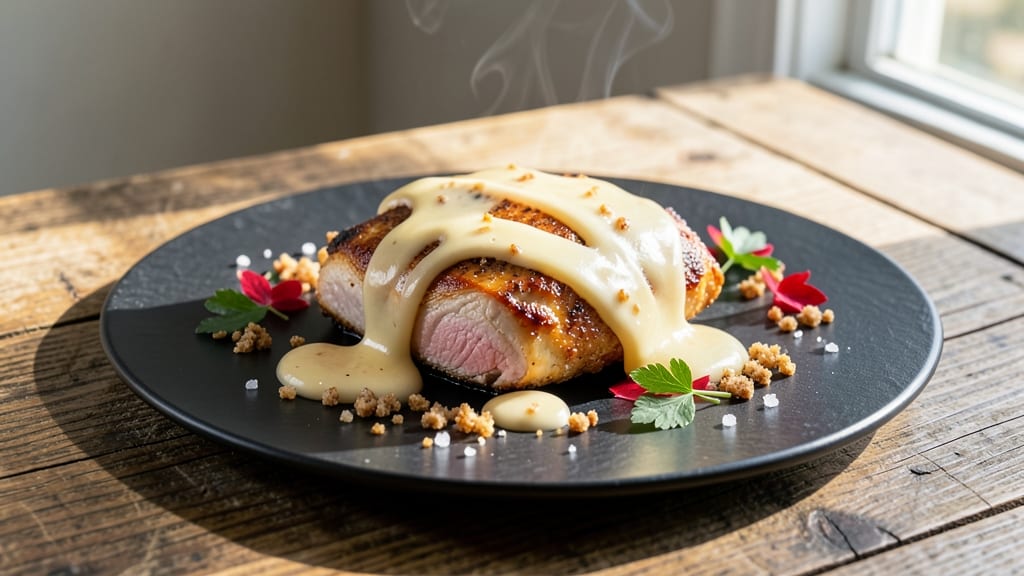
This cheese glaze recipe transforms ordinary dishes into something extraordinary with its ultra-rich, velvety texture and deep savory flavor. Professional chefs rely on this technique to elevate pasta, pizza, and breadsticks—it’s the secret weapon behind restaurant-quality results at home.
The combination of cream cheese, butter, and heavy cream creates a luxurious drizzle that clings perfectly to any surface.
What sets this glaze apart is its foolproof simplicity—just five ingredients and 10 minutes of active time. No complicated techniques or expensive equipment required. The key lies in balancing heat control and stirring constantly to prevent burning while achieving that signature glossy finish.
Once mastered, this glaze becomes a staple in your culinary arsenal.
The result is a silky-smooth sauce with a perfect balance of richness and tang, enhanced by garlic and herbs for depth. Whether drizzled over al dente pasta, melted onto pizza, or brushed onto golden breadsticks, it adds a professional touch that turns everyday meals into showstoppers.
The best part? It keeps beautifully in the fridge for up to 5 days, ready to transform your next dish.
This versatile glaze works equally well as a finishing touch or a primary sauce—ideal for impressing guests or treating yourself. Let’s create something truly special with this restaurant-quality technique that’s easier than you think.
Ingredients for cheese glaze
Five ingredients, restaurant-quality results—this velvety glaze transforms dishes with professional precision.
| Ingredient | Amount | Notes |
|---|---|---|
| Cream Cheese (Full-Fat) 🧀 | 8 oz | Room temperature for smooth blending |
| Unsalted Butter 🧈 | ½ cup | Cold, cubed for even melting |
| Heavy Cream 🥛 | ½ cup | Full-fat for optimal richness |
| Garlic Cloves 🧄 | 2 cloves | Freshly minced, for aromatic depth |
| Dried Parsley 🌿 | 1 tbsp | Finely ground for herbal balance |
| Diamond Crystal Kosher Salt 🧂 | ½ tsp | Adjusts to taste after blending |
| Black Peppercorns 🌶️ | ¼ tsp | Freshly cracked for subtle heat |
| Extra-Virgin Olive Oil 🫒 | 1 tbsp | High-quality, fruity finish |
The foundation lies in ingredient quality. Philadelphia cream cheese delivers consistent texture, while European-style butter from brands like Plugrá adds depth. Heavy cream should be full-fat—Dean's or Land O'Lakes work reliably. For garlic, freshly minced is non-negotiable; pre-minced loses potency. Whole Foods or specialty markets offer superior dried parsley—avoid the dusty grocery store bins. Salt and pepper should be freshly ground; Diamond Crystal kosher dissolves cleanly, while Tellicherry peppercorns add complexity when cracked.
Substitutions require precision. Neufchâtel cheese replaces cream cheese at equal weight, though texture differs slightly. For butter, ghee works in a pinch but lacks richness. Heavy cream can be swapped with half-and-half plus 1 tbsp heavy cream, though consistency thins. Garlic powder (½ tsp) mimics fresh but lacks depth—garlic-infused oil is a better alternative. Olive oil may be omitted if dietary restrictions apply, but the glaze loses its signature sheen. For a dairy-free version, cashew cream (blended soaked cashews) replaces the cream cheese-butter base, though texture becomes lighter.
This glaze maintains peak quality when stored properly. Transfer to an airtight container with a thin layer of olive oil on top to preserve color and prevent oxidation. Refrigerated, it remains stable for 5 days, though flavor peaks within 3 days. For longer storage, freeze in 1-tbsp portions in ice cube trays—thaw overnight in the fridge before use. Reheat gently in a double boiler or microwave in 10-second bursts to avoid separation. The glaze reheats beautifully but may thicken slightly; thin with a splash of warm heavy cream if needed.
Why You'll Love This Recipe
- Five-Ingredient Magic: I swear by this glaze—just cream cheese, butter, heavy cream, garlic, and parsley. No fancy techniques, no stress, and the result? Rich, velvety perfection in minutes.
- Garlic-Parsley Bomb: That roasted garlic-infused cream cheese base hits different—savory, slightly tangy, with a bright parsley finish. Slather it on roasted veggies or steak, and you’ll forget about takeout.
- Weeknight & Holiday Hero: Use it for weeknight dinners (toss on chicken thighs) or impress guests (drizzle over baked salmon). Same glaze, endless possibilities—no last-minute panic shopping required.
- Make-Ahead Goldmine: Make a big batch, store it in the fridge, and reheat as needed. It thickens slightly but thins right back out with a splash of warm cream. Budget-friendly, too—uses pantry staples.
Step-by-step instructions for ultra-rich cheese glaze
Here's how to create a velvety, ultra-rich cheese glaze that elevates any dish.
Blend Cream Cheese and Butter Until Smooth
In a medium saucepan over low heat, combine the 8 oz cream cheese (full-fat) and 0.5 cup unsalted butter (cold, cubed). Allow the mixture to melt gradually while stirring constantly with a silicone spatula. The reason for low heat is to prevent the cream cheese from curdling or seizing—this ensures a silky texture.
Continue stirring until the butter is completely melted and the mixture becomes homogeneous, with no visible lumps. You'll know it's ready when it looks like a pale, creamy emulsion. This step is critical—rushing it will create a grainy glaze. If you see any lumps, press them through a fine-mesh sieve to achieve that restaurant-quality smoothness.
Incorporate Heavy Cream and Garlic
Once the cream cheese and butter mixture reaches a smooth consistency, remove the saucepan from heat. Add the 0.5 cup heavy cream and whisk vigorously until fully incorporated. The cream should blend seamlessly, creating a thicker, more luxurious base for your glaze.
Return the saucepan to low heat and add the 2 cloves freshly minced garlic. Stir continuously for 1-2 minutes until the garlic becomes fragrant but doesn't brown. Overcooking garlic will turn it bitter, so watch closely. Here's the thing—this is where the aromatic depth comes from, so don't skip this step. The garlic should infuse the glaze without dominating it.
Season and Simmer for Richness
Add the 0.5 tsp diamond crystal kosher salt and 0.25 tsp freshly cracked black peppercorns to the saucepan. Stir well to distribute the seasoning evenly throughout the mixture. Taste and adjust the salt if needed—this glaze should be rich but balanced, not overly salty.
Increase the heat to medium-low and let the glaze simmer gently for 3-4 minutes. You're looking for a slight thickening, but don't let it boil—boiling will cause the cream to curdle. The glaze should coat the back of a spoon smoothly, with a glossy sheen. This simmering step develops the depth of flavor and ensures the glaze will cling beautifully to pasta, pizza, or breadsticks.
Finish with Olive Oil and Herbs
Remove the saucepan from heat and stir in the 1 tbsp extra-virgin olive oil and 1 tbsp finely ground dried parsley. The olive oil adds a fruity finish and prevents the glaze from becoming too heavy, while the parsley contributes a bright herbal note that cuts through the richness. Stir well to combine.
Let the glaze rest for 5 minutes before using. This resting period allows the flavors to meld and the texture to stabilize. The glaze should be thick enough to drizzle but still pourable. If it thickens too much while resting, simply reheat it gently and stir in a splash of warm water or milk to reach your desired consistency.
Use Immediately or Store Properly
Transfer the glaze to a clean jar or airtight container. For immediate use, drizzle generously over hot pasta, baked pizza, or freshly baked breadsticks. The glaze will melt slightly from the heat, creating a luxurious, gooey finish. For storage, refrigerate for up to 5 days—reheat gently in a saucepan over low heat, stirring constantly until smooth.
This glaze is incredibly versatile. Use it as a finishing touch for grilled meats, a topping for roasted vegetables, or even a dip for crusty bread. The key to its success lies in the balance of cream cheese, butter, and heavy cream—together, they create a texture that's both rich and velvety. Don't be tempted to substitute lower-fat ingredients; the full-fat components are essential for that ultra-rich result.
Pro Tips For Making Cheese Glaze
- Melt Cream Cheese Slowly: I learned this the hard way—dumping cold cream cheese into hot butter makes clumps that won’t dissolve. Instead, cut the cream cheese into small cubes (about ½-inch) and let them sit at room temperature for 10 minutes before adding. Then, melt the butter first, then whisk in the cream cheese over low heat until it’s completely smooth.
- Toast Garlic Properly: Raw garlic in this glaze tastes like medicine. Slice the cloves thin (almost translucent) and cook them in the butter until golden, not just soft—about 3-4 minutes over medium heat. If you skip this, your glaze will taste flat, no matter how much parsley you add.
- Avoid Heavy Cream Lumps: Warm the heavy cream first—just until it’s cool to the touch—before mixing it into the cheese-butter base. Cold cream added to hot fat separates like oil and vinegar. Stir it in at the end, off the heat, and you’ll get a silky glaze every time.
- Finish with Fresh Parsley: Dried parsley works in a pinch, but fresh is the real game-changer. If you’re using dried, toast it in the butter with the garlic for 30 seconds to wake up the flavor. For extra brightness, add a teaspoon of fresh parsley at the very end—it keeps the color vibrant and cuts through the richness.
Troubleshooting your cheese glaze
Glaze Too Thick?
If your cheese glaze thickens unexpectedly while cooking, immediately remove it from heat and whisk in 1-2 teaspoons of warm heavy cream or whole milk. The glaze should return to a smooth, pourable consistency.
For extra insurance, place the saucepan in a larger pot of barely simmering water (double boiler method) to gently reheat while stirring until silky again. 💧
Curds Forming?
Curds appear when the cream cheese overheats or the heat is too aggressive. To fix this, immediately reduce the heat to lowest setting and whisk vigorously while adding 1 tablespoon of cold heavy cream.
If curds persist, strain the glaze through a fine-mesh sieve to remove lumps. For prevention, always melt cream cheese over low heat and stir constantly—never let it sit unattended.
Glaze Separating?
Separation happens when the glaze cools too quickly or sits too long. Reheat gently in a saucepan over low heat, stirring constantly with a silicone spatula. If separation persists, whisk in ½ teaspoon of cornstarch mixed with 1 teaspoon cold water until the glaze thickens and re-emulsifies.
This technique works like a culinary glue for broken emulsions. 🔄
Burnt Garlic Flavor?
Overcooked garlic turns bitter and overpowers the glaze. To salvage it, immediately remove the pan from heat and stir in ½ teaspoon of fresh lemon juice or 1 teaspoon of apple cider vinegar.
This brightens the flavor profile and balances the bitterness. For next time, cook garlic for only 1-2 minutes over low heat—it should be fragrant but never golden.
Too Salty?
If your glaze tastes overly salty, balance it by adding 1-2 teaspoons of cold heavy cream or whole milk. The fat content dilutes the salt while maintaining richness. For a more dramatic fix, stir in 1 teaspoon of unsalted butter—this softens the saltiness without altering texture.
Always taste as you go; the glaze should be rich but harmonious, not one-note. 🧂
Glaze Not Clinging?
A glaze that won’t stick to pasta or pizza often lacks fat or has cooled too much. Reheat the glaze to warm but not hot (around 160°F) and stir in 1 teaspoon of extra-virgin olive oil.
The oil reduces surface tension, helping the glaze cling like a second skin. For best results, apply the glaze immediately after reheating while the surface is still hot. 🍝
Nutrition facts
Frequently asked questions
Can I make this cheese glaze ahead of time?
This glaze keeps beautifully in the fridge for up to 5 days when stored in an airtight container with a thin layer of olive oil on top. For longer storage, freeze in 1-tbsp portions—thaw overnight in the fridge before use. Reheat gently over low heat or in 10-second microwave bursts to maintain its silky texture.
What's the best way to thin this glaze if it's too thick?
Use warm heavy cream or whole milk, adding 1 teaspoon at a time while whisking constantly. For a more dramatic fix, place the saucepan in a double boiler and reheat gently while stirring. The glaze should return to a smooth, pourable consistency without losing its rich flavor.
Can I use this glaze on cold dishes?
Yes, but for best results, apply it to warm or hot dishes like pizza or pasta. The heat helps the glaze melt slightly and cling beautifully. For cold applications (like appetizers), chill the glaze first—it will thicken slightly and create a luxurious, spreadable texture when served at room temperature.
How do I prevent curds from forming?
Always melt cream cheese over low heat while stirring constantly. Never let it sit unattended, and avoid high heat—cream cheese curdles when overheated. If curds appear, immediately reduce heat to the lowest setting, whisk vigorously, and add 1 tablespoon of cold heavy cream to restore smoothness.
What are the best dishes to use this glaze on?
This versatile glaze elevates pasta, pizza, breadsticks, grilled meats, roasted vegetables, and even as a dip for crusty bread. For extra decadence, drizzle it over mac and cheese or use it as a finishing sauce for garlic bread. The key is applying it when dishes are piping hot for optimal adhesion.