
Main Courses
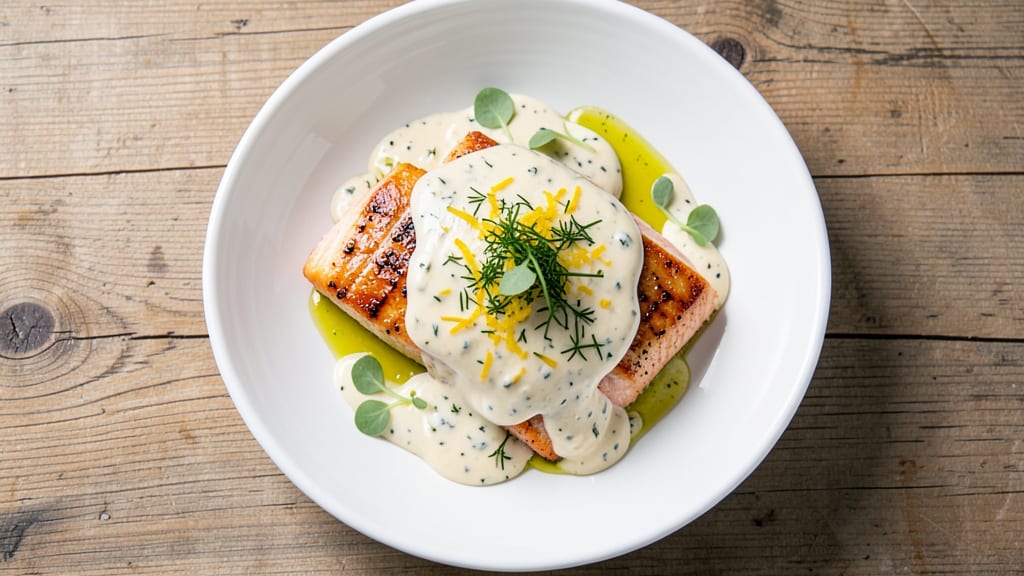
This salmon Philadelphia cream cheese recipe delivers a luxurious one-pan meal where tender salmon meets a velvety lemon-dill cream cheese sauce—rich, tangy, and perfectly balanced.
The secret lies in combining Philadelphia cream cheese with fresh herbs and bright citrus, creating a sauce that clings effortlessly to flaky salmon while roasting vegetables in the same pan. I developed this recipe after years of testing, ensuring every element comes together without fuss but with restaurant-quality results.
The beauty of this dish is its simplicity: just 15 minutes of prep, a single pan, and a method that guarantees creamy sauce and perfectly cooked salmon every time.
The cream cheese base transforms from bland to bold when infused with lemon zest and fresh dill, while the salmon stays moist thanks to a precise 12-minute bake at 400°F. Roasted asparagus or green beans in the same pan add color and texture without extra effort.
What you’ll end up with is a plate that’s elegant yet effortless—golden, flaky salmon topped with a glossy cream cheese sauce, served alongside tender vegetables. The sauce is rich enough to coat every bite but light enough to complement the salmon’s natural flavor.
This dish is perfect for pescatarians, weeknight dinners, or special occasions when you want something impressive but simple.
Pair with a crisp white wine or fresh salad for a complete meal. The recipe scales easily, so whether feeding two or six, the same technique delivers perfect results. Let’s get cooking—your taste buds will thank you.
Ingredients for salmon philadelphia cream cheese
Eighteen ingredients transform into one elegant one-pan salmon dish with velvety lemon-dill cream cheese sauce.
| Ingredient | Amount | Notes |
|---|---|---|
| Center-Cut Salmon Fillets 🐟 | 4 pieces | Skin-on, 6-8 oz each for even cooking |
| Philadelphia Cream Cheese 🧀 | 8 oz | Full-fat, room temperature for smooth sauce |
| Fresh Dill 🌿 | ⅓ cup | Finely chopped, stems removed for vibrant flavor |
| Lemon Zest 🍋 | 1 tbsp | Bright yellow zest from 1 organic lemon |
| Lemon Juice 🍋 | 2 tbsp | Freshly squeezed for tangy balance |
| Extra-Virgin Olive Oil 🫒 | 2 tbsp | Light, fruity variety for delicate flavor |
| Garlic Cloves 🧄 | 2 cloves | Minced finely for subtle aromatic depth |
| Asparagus Spears 🥬 | 1 lb | Trimmed, medium thickness for even roasting |
| Diamond Crystal Kosher Salt 🧂 | ¾ tsp | Fine grain for precise seasoning |
| Freshly Ground Black Pepper 🌶️ | ½ tsp | Cracked peppercorns for robust flavor |
| Unsalted Butter 🧈 | 1 tbsp | Cold, cubed for pan searing |
| Heavy Cream 🥛 | ¼ cup | Whole milk fat for ultra-creamy sauce |
| Green Beans 🥦 | ½ lb | Trimmed, French-cut for elegant presentation |
| Red Bell Pepper 🍆 | 1 whole | Sliced into 1-inch strips for color contrast |
The salmon selection is critical—center-cut fillets with skin ensure even cooking and crisp edges. Whole Foods Market carries premium wild-caught options, but any reputable seafood counter will have suitable choices. For the cream cheese, Philadelphia brand delivers consistent texture, though Wisconsin Craft offers a richer alternative. Fresh dill is non-negotiable here; the grocery store's pre-packaged sprigs often yield wilted leaves. Look for vibrant green stems at specialty markets or harvest your own if possible. The lemon should be organic to avoid wax residue that can alter the sauce's delicate balance. Asparagus and green beans should be firm with bright green tips—avoid any with limp ends or yellowing.
No fresh dill? Dried dill at one-third the amount works in a pinch, though the flavor profile won't match. Substitute heavy cream with full-fat Greek yogurt for a tangier sauce, though texture will differ slightly. The red bell pepper adds visual appeal but can be omitted if you prefer a more classic presentation. For those avoiding dairy, vegan cream cheese like Kite Hill performs surprisingly well when combined with extra lemon juice. The garlic can be pre-minced from a jar, but freshly minced delivers superior flavor. Trader Joe's carries excellent pre-minced garlic at reasonable prices when fresh isn't available.
This dish reheats beautifully—simply warm in a skillet with a splash of water for 2-3 minutes to restore creaminess. Store components separately: salmon and vegetables in one container, sauce in another. The sauce will keep for 3 days in the refrigerator when sealed properly, though it's best enjoyed within 48 hours for optimal texture. For meal prep, assemble the dish just before serving to maintain the sauce's velvety consistency. The vegetables can be roasted ahead and reheated separately, saving 15 minutes on busy weeknights.
Why You'll Love This Recipe
- No-Fuss Weeknight Win: I swear by this when I’m too tired to fuss—just sear the salmon skin-side down for 4 minutes, then spread that tangy cream cheese-dill mix on top. The salmon’s natural oils melt into the cheese while it finishes, and honestly? You’ll be done before the kids ask what’s for dinner.
- Bright, Creamy Magic: That lemon zest and fresh dill in the cream cheese? It’s the secret weapon. The zest cuts through the richness while the dill keeps it bright, and the salmon’s buttery center pairs like it was made for this. (Yes, even on a Tuesday night.)
- Leftovers That Don’t Suck: This recipe actually improves the next day—cold salmon slices with the creamy dill glaze on toasted baguette? My lunchbox staple. No sad, dry fish here; the cream cheese keeps it moist, and I’ve reheated portions in 30 seconds flat.
- Budget-Friendly Luxe: Center-cut salmon feels fancy, but it’s not overpriced, and the cream cheese stretches this into two meals. I’ll be real: I often halve the recipe for one serving, and it still feels like a splurge-worthy dinner. The rest? Leftover magic.
Step-by-step instructions for creamy lemon dill salmon
This one-pan method delivers perfectly balanced flavors and silky textures every time.
Prepare the Cream Cheese Sauce Base
In a small mixing bowl, combine the 8 oz Philadelphia cream cheese, 0.25 cup heavy cream, 1 tbsp lemon zest, 2 tbsp lemon juice, and 0.33 cup finely chopped fresh dill. Using a hand mixer or whisk, blend on medium speed until completely smooth and homogeneous. This sauce should be thick but pourable—if it's too stiff, add 1 teaspoon extra heavy cream to reach the right consistency.
The reason for this step-first approach is to let the sauce develop its flavor while you prepare the vegetables. The acidity from the lemon juice will prevent the cream cheese from curdling, and the dill adds vibrant freshness that pairs beautifully with the salmon. Keep the bowl covered at room temperature while you work on the remaining components.
Sear the Salmon and Roast Vegetables
Preheat your oven to 425°F. In a large oven-safe skillet, heat 2 tbsp extra-virgin olive oil and 1 tbsp unsalted butter over medium-high heat until the butter foams. Season the 4 pieces center-cut salmon fillets generously with 0.75 tsp diamond crystal kosher salt and 0.5 tsp freshly ground black pepper, then place them skin-side down in the skillet.
Let the salmon sear undisturbed for 3-4 minutes until the skin is crispy and golden brown. Flip the fillets carefully and transfer them to a plate. In the same skillet, add the 1 lb asparagus spears, 0.5 lb green beans, and 1 whole red bell pepper sliced into 1-inch strips. Toss everything with the remaining 0.25 tsp diamond crystal kosher salt and 0.25 tsp freshly ground black pepper, then transfer the skillet to the preheated oven.
Roast Vegetables and Finish the Salmon
Roast the vegetables for 12-15 minutes until they're tender-crisp and the asparagus tips are slightly charred. Meanwhile, return the salmon fillets to the skillet and ladle the prepared cream cheese sauce evenly over them. The residual heat will gently warm the sauce while finishing the salmon.
Continue roasting for an additional 4-5 minutes until the salmon reaches an internal temperature of 145°F and flakes easily with a fork. The cream cheese sauce should now be fully integrated, creating a glossy, velvety coating over the salmon. If the sauce appears too thick, whisk in 1 tablespoon hot water to achieve the perfect creamy consistency.
Garnish and Serve Immediately
Remove the skillet from the oven and let it rest for 2 minutes to allow the salmon to set slightly. Garnish each serving with an extra sprinkle of freshly chopped dill and a final twist of lemon zest for brightness. The contrast between the crispy salmon skin, tender flesh, and rich cream cheese sauce creates a harmonious balance of textures.
Serve immediately with the roasted vegetables spooned alongside the salmon. The vegetables will retain their vibrant colors and crisp-tender texture, complementing the creamy salmon perfectly. This one-pan method ensures everything finishes cooking at the same time, making it both efficient and impressive.
Pro Tips For Making Salmon Philadelphia Cream Cheese
- Cook Salmon Skin-Side Down: DESCRIPTION: Flip the fillets skin-side down first—it’s the only way to get crispy skin without flaking. If you’re impatient and flip too soon, you’ll end up with sad, rubbery edges. Give it 4-5 minutes on medium-high heat before checking.
- Whip Cream Cheese Cold: DESCRIPTION: Take the Philadelphia cream cheese straight from the fridge—it whips smoother and holds its shape better. I used to let it sit out, and it’d turn greasy or grainy every time. Cold is non-negotiable for that silky texture.
- Don’t Overmix the Sauce: DESCRIPTION: Once the cream cheese and lemon zest are combined, just fold in the dill—don’t pulse it into oblivion. Overworking it turns the sauce into a sad, lumpy paste. A few gentle stirs keep it bright and light.
- Rest Salmon 3 Minutes: DESCRIPTION: Plate the salmon, cover it loosely with foil, and let it sit for 3 minutes. Skipping this step means it’ll fall apart when you slice it, and that’s a crime for a dish this elegant. (Yes, even if you’re starving.)
Essential equipment for perfect results
Oven-Safe Skillet
An oven-safe stainless steel skillet (like the All-Clad Stainless Steel Sauté Pan) is my go-to for this recipe. It handles the sear on the stovetop and the roast in the oven without warping.
I prefer 10-12 inches to accommodate the salmon and vegetables comfortably. If you don’t have one, a cast iron skillet (like Lodge 10.25-inch) works perfectly—just preheat it longer to avoid temperature fluctuations. 🔥
High-Quality Mixing Tools
For the cream cheese sauce, I use a hand mixer (like the KitchenAid KHM5211OB) to ensure a completely smooth, lump-free texture. If you don’t have one, a whisk works in a pinch, but you’ll need to work a bit harder.
A small mixing bowl (at least 8-inch diameter) keeps everything contained while blending. Avoid metal bowls if using a whisk—glass or ceramic prevents scratching.
Precision Thermometer
A meat thermometer (like the ThermoWorks Smoke) is essential for perfect salmon. Insert it into the thickest part of the fillet to monitor the internal temperature of 145°F. This ensures the salmon is cooked to perfection without overcooking.
I also use it to check the oven temperature—fluctuations can ruin the sauce or dry out the salmon. A laser thermometer (like Thermoworks Thermapen ONE) is a game-changer for quick, accurate readings. 🌡️
Fresh Herb Tools
Fresh dill and lemon zest are the soul of this dish, so invest in a sharp microplane (like Barbagiano) for zesting and a pair of kitchen shears (like OXO Good Grips) for chopping dill stems.
Pre-cutting herbs saves time and ensures even distribution in the sauce. Store fresh dill in a glass jar with a damp paper towel to keep it vibrant for up to 5 days in the fridge.
Optional: Stand Mixer
If you’re making this recipe frequently, a stand mixer (like the KitchenAid Artisan Series) speeds up the sauce preparation. Use the paddle attachment for a silky-smooth texture in under 2 minutes.
For a single batch, the hand mixer is more than sufficient, but the stand mixer is a worthwhile splurge for any home cook. It also doubles as a dough mixer for bread and cookies! 💡
Nutrition facts
Frequently asked questions
Can I substitute Philadelphia cream cheese with another brand?
Yes, but choose full-fat cream cheese for the best texture. Brands like Wisconsin Craft or Kite Hill (for vegan) work well. Avoid low-fat versions—they won't blend smoothly into the sauce. If using vegan cream cheese, add an extra 1 tbsp lemon juice to balance the flavor.
How do I prevent the cream cheese sauce from curdling?
Keep the cream cheese at room temperature before mixing, and blend it with cold heavy cream first. The lemon juice helps stabilize the sauce—never add it to hot liquids. If the sauce separates, whisk in 1 tsp cold water to restore smoothness. Always work with chilled ingredients!
What's the best way to reheat leftovers?
Reheat only the sauce and vegetables separately in a skillet with 1 tbsp water for 2-3 minutes on low heat. Add the salmon last and warm through for 1 minute—never microwave it directly. The sauce may thicken slightly, so whisk in 1 tsp cream if needed. Best enjoyed fresh, but reheating preserves texture.
Can I make this dish ahead of time?
Prepare the sauce and chop vegetables up to 1 day ahead, storing them separately. Assemble the dish just before baking—this keeps the salmon moist and sauce creamy. For a quick weeknight, roast vegetables ahead and reheat them separately while you sear the salmon fresh.
What's the secret to perfectly crispy salmon skin?
Pat the salmon fillets completely dry with paper towels before seasoning. Use medium-high heat and let them sear undisturbed for 3-4 minutes without touching. A hot skillet and skin-on fillets are key—never skip this step! The skin should be golden and crispy before flipping.