
Main Courses
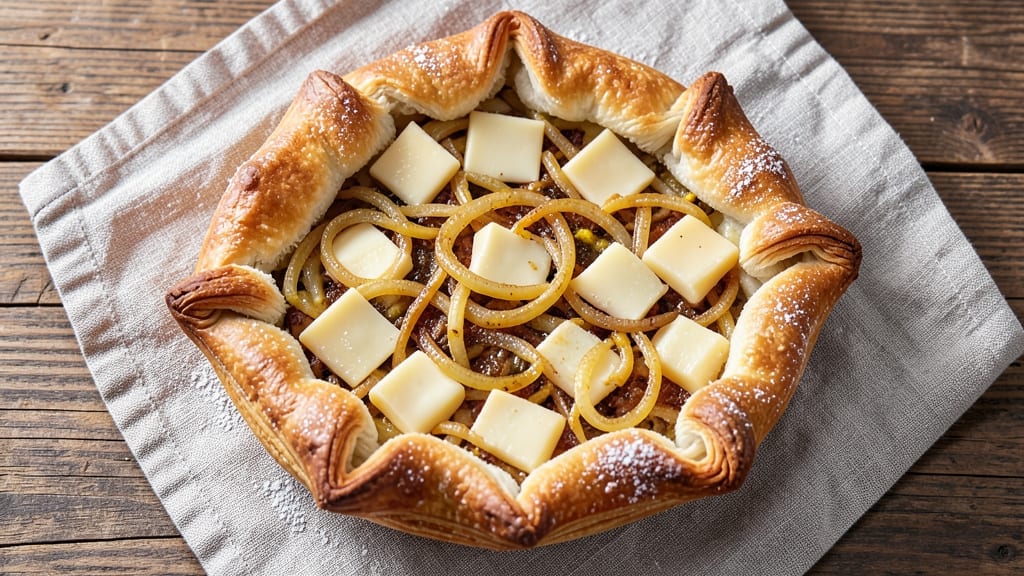
This cheese and onion pasty recipe delivers the perfect balance of flaky crust and rich, savory filling that’s become a staple in British pubs and home kitchens alike.
The secret lies in a well-seasoned filling—sharp cheddar, caramelized onions, and a touch of mustard—that gets perfectly encased in a golden, buttery pastry. I’ve perfected this recipe over years of testing, ensuring the crust stays crisp while the filling remains tender and flavorful.
The beauty of this pasty is its simplicity—just a few ingredients, but each one plays a crucial role. The onions caramelize slowly to deepen their sweetness, while the cheese melts into a creamy, tangy center.
The pastry dough, made with lard for that signature flakiness, wraps everything in a golden shell that’s impossible to resist. It’s the kind of dish that feels like comfort food at its finest, yet still impressive enough for company.
What makes this recipe stand out is the foolproof technique for achieving that flaky crust without shortcuts. The dough rests twice—once in the fridge and again after rolling—to develop layers of butter that create crisp, airy pockets.
Meanwhile, the filling bakes just enough to melt the cheese but stays firm enough to hold its shape when sliced. The result? A pasty with a satisfying crunch and a heart of melty, savory goodness.
Serve this classic with a side of pickled onions or a simple green salad for a complete meal. The pasty keeps well too, making it perfect for meal prep or bringing to gatherings. Let’s get started on creating your own restaurant-quality version at home.
Ingredients for cheese and onion pasty
Sharp cheddar, caramelized onions, and buttery pastry—just 12 ingredients for restaurant-quality comfort.
| Ingredient | Amount | Notes |
|---|---|---|
| Sharp Cheddar Cheese 🧀 | 1 ½ cups | Grated, sharp flavor preferred |
| Yellow Onions 🧅 | 2 large | Peeled and sliced thin |
| All-Purpose Flour 🌾 | 3 cups | For pastry dough |
| Lard 🧈 | ½ cup | Cold, cubed for flakiness |
| Unsalted Butter 🧈 | ½ cup | Cold, cubed for dough |
| Ice Water 💧 | ½ cup | For dough binding |
| Salt 🧂 | 1 tsp | Fine sea salt |
| Black Pepper 🌶️ | ½ tsp | Freshly ground |
| Dijon Mustard 🍯 | 1 tbsp | For filling tang |
| Baking Powder 🧂 | 1 tsp | For dough lift |
| White Vinegar 🍶 | 1 tbsp | For dough elasticity |
| Egg 🥚 | 1 large | For egg wash |
The sharp cheddar is non-negotiable here—young cheddar lacks the tang needed for that classic pasty flavor. Westminster or Double Gloucester from specialty stores elevate this further, but store-brand sharp cheddar works perfectly fine. For the onions, yellow or red both work, but sweeter Spanish onions caramelize more beautifully. Most grocery stores carry them in the produce section—look for firm, dry skins. The lard is crucial for that signature flaky texture; leaf lard from Costco or Trader Joe's is ideal, but regular lard works in a pinch. If you can't find lard, butter plus 1 tbsp shortening mimics the texture closely.
No sharp cheddar? Parmesan mixed with mild cheddar gets you halfway there, but the flavor won't be identical. Onions too sweet? Add 1 tsp sugar to the filling to balance. The Dijon mustard can be swapped for 1 tbsp yellow mustard if you're out, but the depth of flavor is worth the splurge. For the dough, bread flour can replace all-purpose—just add 1 tsp extra water. The ice water is key; room-temperature water makes the dough tough. If you're short on time, chill the dough for 30 minutes instead of the full hour, but it won't be quite as flaky.
This pasty reheats beautifully—wrap tightly in foil and bake at 375°F for 15 minutes to restore crispness. Keeps 3-4 days in the fridge or 2 months frozen. For meal prep, slice before freezing—they reheat like fresh. The dough can be made 2 days ahead and stored wrapped in the fridge. If you're making multiple pasties, use a pastry wheel for even cutting—no one likes a wonky shape. Leftovers? Toast them in the oven for a crispy snack.
Why You'll Love This Recipe
- I swear by this trick: slice the onions thick—no dicing, no crying. The lard in the crust keeps them tender in minutes, and honestly? That crispy golden edge is worth the lazy prep.
- No-Chop Shortcut: I swear by this trick: slice the onions thick—no dicing, no crying. The lard in the crust keeps them tender in minutes, and honestly? That crispy golden edge is worth the lazy prep.
- Cheese Pulls Hard: Sharp cheddar melts into gooey, stretchy perfection here—no waxy mess, just that perfect balance of salty sharpness and creamy pull. Between us, I’ve ruined better cheese dishes trying to get this right.
- Lunchbox Legend: These freeze like champs (yes, even the crust stays flaky) and reheat in 10 minutes. Pack one for work or shove extras in the freezer—my kids grab them cold from the fridge, and they’re still begging for more.
Step-by-step instructions for cheese and onion pasty
Here's the method for achieving that signature flaky crust and rich filling every time.
Prepare the Filling Ingredients
In a large bowl, combine the 1.5 cups sharp cheddar cheese with the 2 large yellow onions that you've sliced thin. Add the 1 tablespoon Dijon mustard and mix well to distribute evenly. This step creates the flavor foundation for your pasty filling.
I always make sure the onions are completely dry before adding them to the cheese mixture. Any moisture will make the filling too wet when you assemble the pasty, which can lead to a soggy crust. Sprinkle the 1 teaspoon salt and ½ teaspoon black pepper over the mixture and toss gently to combine.
Make the Pastry Dough
In a separate large mixing bowl, combine the 3 cups all-purpose flour, 1 teaspoon baking powder, and 1 tablespoon white vinegar. This combination creates a lighter, more elastic dough that will give you that perfect flaky texture. Cut in the ½ cup cold lard and ½ cup cold unsalted butter using a pastry cutter or two forks until the mixture resembles coarse crumbs with pea-sized fat pieces.
Here's the thing—cold fat is crucial. If your butter or lard warms up during mixing, it will create a tough pastry instead of the flaky layers we want. Work quickly but deliberately to incorporate all the fat evenly throughout the flour mixture before adding any liquid.
Hydrate and Knead the Dough
Gradually add the ½ cup ice water to the flour mixture, mixing with a fork or dough whisk until the dough begins to come together. Once it forms a shaggy mass, turn it out onto a lightly floured surface and knead gently for about 2-3 minutes until smooth but not sticky.
The dough should be just firm enough to hold its shape when pressed, but not so tough that it becomes difficult to roll out. If it feels too dry, add 1 teaspoon ice water at a time until it reaches the perfect consistency. Wrap the dough in plastic wrap and refrigerate for 30 minutes to relax the gluten and make it easier to handle.
Assemble and Shape the Pasty
Preheat your oven to 375°F while the dough rests. On a lightly floured surface, roll out half of the dough into a ¼-inch thick circle about 12 inches in diameter. This will form the bottom crust of your pasty. Spread the cheese and onion filling evenly over the dough circle, leaving a 1-inch border around the edges.
Roll out the remaining dough to the same size and thickness. Brush the edges of both dough circles with a little ice water to help them seal. Place the top dough over the filling and press the edges together firmly, crimping with a fork or your fingers to create a decorative seal. Trim any excess dough and cut a small slit in the center to allow steam to escape during baking.
Bake to Golden Perfection
Place the assembled pasty on a parchment-lined baking sheet. Brush the top with the 1 large egg beaten with a little water for a golden finish. Bake for 45-50 minutes until the crust is deep golden brown and the filling is bubbling through the steam slit.
Here's where patience pays off: the pasty needs to bake through completely. You'll know it's done when the crust sounds hollow when tapped and the internal temperature reaches 190°F at the thickest part. Let it cool for 10 minutes before slicing—this resting period ensures clean cuts and prevents filling from spilling out.
Pro Tips For Making Cheese And Onion Pasty
- Cook Onions Low and Slow: I learned this the hard way—drowning onions in lard on high heat turns them to mush. Instead, keep the heat at a simmer (barely bubbling) and let them melt into the fat for 15-20 minutes. You want them translucent and breaking down, not caramelized—this filling needs to hold its shape when baked.
- Grate Cheese Coarse: Sharp cheddar loses its edge when shredded too fine. Use a box grater and hold the cheese at an angle to get jagged, uneven pieces—this melts slower and stays gooey in the center. (Yes, even if it looks messy—your pasty will thank you.)
- Chill the Dough: Skip this, and your pastry will shrink like a sad balloon in the oven. Wrap the dough in plastic and refrigerate for at least 30 minutes before rolling. Cold fat = flaky layers. (I know, I know—you’re eager to bake, but trust the process.)
- Use Butter for Crust, Lard for Flavor: Mix half the fat with butter (about 2 tablespoons each) for the pastry—this guarantees a crisp crust. Reserve the pure lard (or beef tallow) for the filling; it renders better and adds richness. (Your future self will notice the difference.)
Flavor customization for these flavors
Spicy Kick
For those who love heat, add 1 teaspoon smoked paprika and ½ teaspoon cayenne pepper to the filling. I like to toast the spices in a dry pan for 30 seconds to deepen their flavor before mixing.
For an extra smoky touch, swap the sharp cheddar for smoked Gouda—it adds complexity without overpowering. Start with ¼ teaspoon cayenne if you're sensitive to spice, then adjust to taste. 🌶️
Herb-Infused Twist
Brighten up the filling with 1 tablespoon fresh thyme leaves or 2 tablespoons chopped chives. I prefer thyme because it pairs beautifully with the caramelized onions and cheese. For a stronger flavor, mix in 1 teaspoon dried thyme with the salt and pepper.
If you're feeling adventurous, add 1 tablespoon chopped rosemary—it stands up well to the richness of the cheese. Fresh herbs should be added just before baking to preserve their aroma.
Vegetarian Protein Boost
Swap out half the cheese for 1 cup cooked lentils or ½ cup crumbled feta to add texture and reduce dairy. I find that brown or green lentils hold their shape best when baked. For extra protein, stir in ½ cup cooked quinoa into the filling.
If using lentils, drain them well and pat dry to avoid a soggy crust. This variation works especially well for those watching their cheese intake but still craving hearty flavor.
Sweet and Savory Balance
Add a touch of sweetness with ½ cup dried cranberries or ¼ cup chopped dried apricots to the filling. The tartness of the cranberries cuts through the richness of the cheese beautifully.
For a more subtle sweetness, add 1 tablespoon honey or maple syrup to the caramelized onions before mixing with the cheese. This variation is perfect for serving with a side of sharp mustard or apple slices for dipping. 🍯
Regional Variations
In Cornwall, the traditional pasty often includes potatoes and swede (rutabaga) for extra heartiness. I like to add ½ cup diced potatoes and ¼ cup grated swede) to the filling for a more rustic texture.
For a Northern England twist, swap the sharp cheddar for Lancashire cheese), which has a milder, creamier flavor. These regional tweaks add depth and make the pasty feel even more authentic. 🗺️
Extra Crispy Crust
For a crunchier crust, replace 2 tablespoons of the flour with 2 tablespoons cornstarch) in the dough. This creates a lighter, crispier texture that holds up beautifully. I also like to sprinkle 1 tablespoon semolina) or crushed cornflakes) on the top crust before baking for added crunch. For a golden finish, brush the egg wash with a little milk instead of water—it enhances browning without making the crust soggy.
Nutrition facts
Frequently asked questions
Can I use store-bought puff pastry instead of homemade dough?
While homemade dough gives that signature flaky texture, high-quality puff pastry works beautifully for shortcuts. Choose a brand with visible layers and roll it out to ¼-inch thickness before assembling. Brush the edges with egg wash to help seal the layers. The baking time may reduce to 35-40 minutes since puff pastry cooks faster.
Why did my pasty crust turn out tough instead of flaky?
Overworking the dough or using warm fats are the most common culprits. Keep your lard and butter cold throughout mixing, and handle the dough minimally after shaping. Another trick: wrap the dough in plastic and refrigerate for 30 minutes before rolling. If the dough feels sticky, add just 1 teaspoon flour at a time. The resting period relaxes gluten for that perfect flake.
How do I prevent the filling from leaking during baking?
Ensure your onions are completely dry before mixing with cheese—any moisture weakens the pastry's seal. Press the edges firmly when crimping, and cut a small steam slit in the center to release pressure. For extra insurance, brush the top crust with egg wash and sprinkle semolina before baking. Let the pasty rest 10 minutes after baking to set the filling.
Can I make this pasty ahead of time?
Yes! Assemble the pasty and refrigerate it unbaked for up to 24 hours before baking. For longer storage, freeze the unbaked pasty (wrapped tightly) for 1 month. To reheat, bake from frozen at 375°F for 55-60 minutes, adding 5-10 minutes if needed. For leftovers, warm slices in a 350°F oven for 10 minutes to restore crispness.
What's the best cheese substitute if I don't have sharp cheddar?
For closest flavor, mix ¾ cup sharp cheddar with ¾ cup Parmesan. Other options: Gruyère (nutty), Pecorino Romano (salty), or smoked Gouda (for depth). Avoid mild cheddar—it lacks the tang needed. If dairy-free, use nutritional yeast (¼ cup) plus ½ cup firm tofu for texture, but the flavor will differ.