
Appetizers
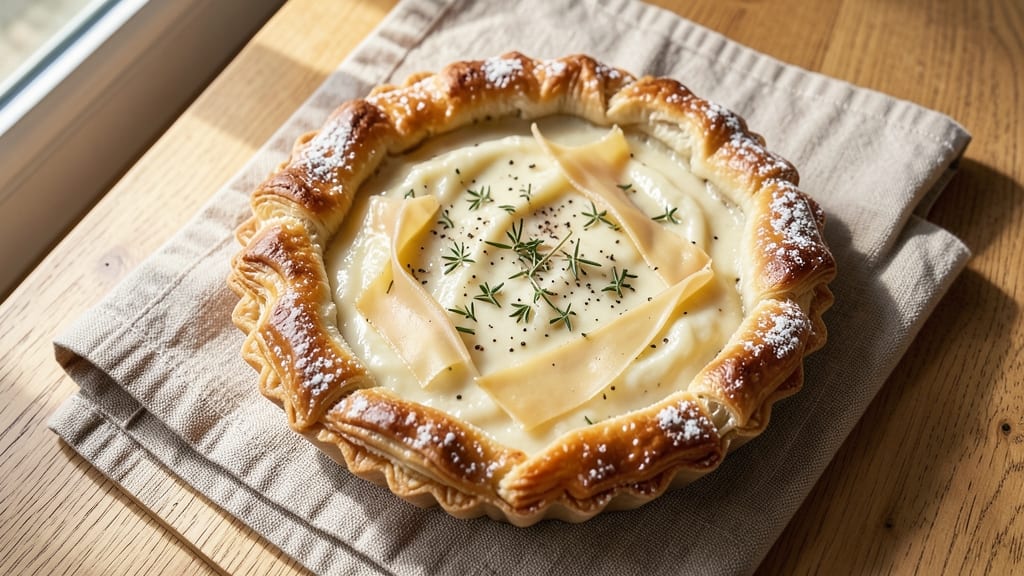
This Balthazar goat cheese tart recipe delivers the perfect balance of flaky pastry and creamy chèvre that's become my signature appetizer. The secret lies in using high-quality puff pastry and a simple yet elegant filling that transforms ordinary goat cheese into something extraordinary.
I've perfected this recipe over years of hosting dinner parties, where it consistently disappears before the main course even arrives.
The foundation starts with a golden-brown puff pastry crust that encases a rich, tangy filling of Balthazar goat cheese blended with eggs and a touch of cream.
What sets this apart is the technique of brushing the tart shells with egg wash before baking—this creates that signature crispness while keeping the interior tender. The filling develops a beautiful, slightly caramelized top that contrasts perfectly with the flaky crust.
What you'll end up with is an appetizer that's both rustic and refined—each bite combines the buttery layers of the pastry with the creamy, slightly tangy goat cheese that melts on your tongue.
The aroma alone will have your guests asking for the recipe, and the visual presentation makes it perfect for any occasion, from casual gatherings to elegant dinner parties.
For an extra touch of sophistication, consider adding caramelized onions to the filling or a drizzle of honey after baking. These tarts reheat beautifully, making them ideal for meal prep when you're anticipating a crowd. Let's get started on creating these crowd-pleasing appetizers that will become your new signature dish.
Ingredients for balthazar goat cheese tart
Twelve golden tarts that'll disappear before your guests even reach dessert.
| Ingredient | Amount | Notes |
|---|---|---|
| Balthazar Goat Cheese 🧀 | 16 oz | Logan or chèvre variety preferred |
| Puff Pastry Sheets 🍞 | 2 sheets | High-quality, thawed completely |
| Large Eggs 🥚 | 3 whole | Room temperature for blending |
| Heavy Cream 🥛 | ½ cup | Full-fat for richness |
| All-Purpose Flour 🌾 | 1 tbsp | For dusting work surface |
| Unsalted Butter 🧈 | 1 tbsp | Melted for egg wash |
| Diamond Crystal Kosher Salt 🧂 | ½ tsp | Fine grain preferred |
| Ground Black Pepper 🌶️ | ¼ tsp | Freshly cracked |
| Fresh Thyme Leaves 🌿 | 1 tbsp | Chopped, for garnish |
| Honey 🍯 | 1 tbsp | Optional drizzle |
| Caramelized Onions 🧅 | ½ cup | Optional filling enhancement |
The Balthazar goat cheese is non-negotiable here—its creamy, tangy character is what makes these tarts special. Whole Foods or specialty cheese shops carry it, and you'll want the logan variety for its smooth texture. If you can't find it, La Tourangelle goat cheese is a solid backup. The puff pastry should be high-quality—Pepperidge Farm works in a pinch, but Duke's or Alliance make all the difference. Keep everything cold until ready to use; warm ingredients make for a runny filling. For the egg wash, melt the butter first—it blends better with the eggs and creates that signature golden sheen.
No Balthazar? Fresh chèvre from a local creamery works beautifully, though the flavor will be slightly less refined. Short on time? Cream cheese blended with lemon juice mimics some of the tang, though it lacks the depth. The caramelized onions add a luxurious touch—Trader Joe's sells pre-made ones that save hours of cooking. If you're feeling adventurous, swap the thyme for fresh rosemary or tarragon for a different herbal note. The honey drizzle is optional but adds a lovely contrast to the tangy cheese—local raw honey has the best flavor. For extra flakiness, brush the pastry with a bit of melted butter before baking.
These tarts reheat beautifully—just 10 minutes at 350°F in the oven with foil over them to keep the filling warm. Store any leftovers in an airtight container in the fridge for up to 3 days, though they rarely last that long. For make-ahead prep, assemble the tarts (without baking) and refrigerate for up to 24 hours before baking. The filling can be made a day ahead and stored in the fridge—just bring it to room temperature before using. Freeze unbaked tarts for up to 2 months by wrapping them tightly in plastic wrap and foil.
Why You'll Love This Recipe
- Two-Ingredient Base: The puff pastry and Balthazar cheese do 90% of the work—just fold, bake, and let the tangy richness shine. Honestly, I’ve made this with my eyes closed (okay, maybe not that blindly), and it still comes out golden and perfect.
- Creamy Crisp Contrast: That buttery puff pastry edge paired with the silky goat cheese custard? It’s the kind of texture combo that makes you pause mid-bite. The heavy cream custle adds just enough richness to balance the tang—no one’s left feeling shortchanged.
- Weeknight Dinner Hack: Slice it into squares, pack it in a container, and boom—you’ve got a lunch that feels fancy. My kids ask for it after school (yes, even on a Tuesday night), and it reheats beautifully in the oven or microwave.
- Budget-Friendly Luxe: Balthazar cheese might sound fancy, but one wheel stretches across two tarts. The rest? Flour, eggs, and cream you already have. It’s the kind of recipe that makes gourmet taste guilt-free—no specialty store required.
Step-by-step instructions for Balthazar goat cheese tarts
Here's how to create golden, flaky tarts that perfectly balance rich chèvre with delicate pastry.
Prepare the Goat Cheese Filling
In a medium bowl, combine the 16 oz Balthazar Goat Cheese with the 0.5 cup Heavy Cream. Using a silicone spatula, gently fold until just smooth—don't overmix or the filling will become dense. Add the 0.5 tsp Diamond Crystal Kosher Salt, 0.25 tsp Ground Black Pepper, and 1 tbsp Fresh Thyme Leaves, mixing until evenly distributed.
For extra depth, fold in the 0.5 cup Caramelized Onions if using. The onions should be cool and slightly sticky from caramelization. Here's the thing—this filling needs to be room temperature when assembled, so if it feels chilled, let it sit at room temperature for 10-15 minutes while you prep the pastry.
Roll and Cut the Puff Pastry
Unfold one sheet of Puff Pastry Sheets onto a lightly floured surface. Using a rolling pin, gently flatten any air pockets while keeping the edges straight. This ensures even baking and prevents curling. Cut the pastry into 12 equal rectangles using a sharp knife or pastry cutter—about 3x4 inches each.
I press down lightly on the pastry with my fingers as I cut to prevent tearing. The key to flaky layers is handling the pastry as little as possible—don't press too hard or you'll compress the butter layers. Transfer the cut pastry pieces to a parchment-lined baking sheet and refrigerate for 10 minutes to firm up slightly before filling.
Assemble and Chill the Tarts
Preheat your oven to 375°F and position a rack in the middle position. Working quickly, spoon about 1 tablespoon of the goat cheese mixture into the center of each pastry rectangle. Using a small offset spatula, gently spread the filling toward the edges, leaving about ½ inch border around the perimeter.
Fold the pastry edges up and over the filling, pinching gently to seal. Here's where it gets tricky—press down lightly on the folded edges with your thumb to create a decorative pleat pattern. This not only looks beautiful but also helps maintain structure during baking. Place the assembled tarts on a parchment-lined baking sheet and refrigerate for 20 minutes to set the filling.
Create the Egg Wash and Bake
In a small bowl, whisk together the 3 whole Large Eggs with 1 tbsp Unsalted Butter that has been melted and cooled slightly. The mixture should be smooth but not too runny. Brush this egg wash generously over the tops of all tarts, letting any excess drip down the sides. This creates that signature golden, crackly crust we're after.
Bake for 20-25 minutes until the pastry is deep golden brown and the filling is just set but still slightly jiggly in the center. The edges should be crisp while the center remains tender. If the tops brown too quickly, tent loosely with foil for the last 5 minutes of baking.
Finish and Serve
Remove the tarts from the oven and let them cool on the baking sheet for 5 minutes. While still warm, drizzle with 1 tbsp Honey if using, letting it pool slightly in the center of each tart. The honey adds a beautiful contrast to the tangy goat cheese and creates a delicate glaze.
Serve immediately while the pastry is still crisp and warm. The filling should be soft and creamy in the center, with a slight wobble when the tart is lifted. These tarts are best enjoyed within 2 hours of baking when the pastry is at its peak crispness and the filling is still warm.
Pro Tips For Making Balthazar Goat Cheese Tart
- Preheat That Oven: Don’t just turn it on—get it to 375°F (190°C) and let it hum for 10-15 minutes first. Puff pastry needs a hot oven to rise properly, or you’ll end up with sad, dense edges instead of those flaky, golden layers. Trust me, your tart’s structure depends on this.
- Whisk the Cream Cold: Chill your heavy cream and eggs before mixing them into the goat cheese filling. Warm cream separates like a diva, and cold eggs temper it properly. I learned this after a batch curdled mid-bake—now I just pop everything in the fridge for 10 minutes first.
- Press, Don’t Pile: When rolling out the puff pastry, press it gently into the tart pan—don’t shove it. Overhandling shrinks the dough, and you’ll end up with a thick, chewy base instead of a crisp, delicate crust. A light touch keeps the layers intact.
- Blind-Bake the Base: Skip the half-baked shortcut—weigh down the puff pastry with dried beans or pie weights before baking the base. Without this, the cheese filling will sink the crust like a lead balloon. Five minutes of pre-baking makes all the difference.
Wine and beer pairings for this balthazar goat cheese tart
White Wine Pairings
For these delicate tarts, I always reach for a crisp Sauvignon Blanc from New Zealand or Loire Valley. The bright acidity and citrus notes cut through the richness of the goat cheese beautifully.
Try a bottle of Cloudy Bay Sauvignon Blanc—its zesty grapefruit and lime flavors create perfect harmony with the tangy chèvre. 🍷
A Chardonnay with subtle oak notes also works wonderfully, especially if you've added caramelized onions to your filling. Look for a Meadow Creek Chardonnay from California—its balanced acidity and creamy texture complement the pastry's flakiness without overpowering the delicate flavors.
Rosé Wine Options
If you prefer something lighter, a dry Provence rosé like Whispering Angel brings a refreshing contrast. The strawberry and citrus notes enhance the tart's herbal thyme and honey drizzle. Serve it slightly chilled to appreciate its crispness alongside the warm pastry.
Beer Pairings
For beer lovers, a Belgian Witbier like Hoegaarden pairs surprisingly well. The coriander and orange peel notes create an interesting contrast with the goat cheese's tanginess. The effervescence also helps cleanse your palate between bites.
A crisp German Pilsner, such as Warsteiner, works beautifully too. Its clean, hoppy finish balances the richness of the tarts without competing with their delicate flavors. 🍺
Seasonal Considerations
In summer, I often opt for a sparkling wine like Prosecco—its bubbles and light fruitiness make it perfect for warm weather gatherings. The effervescence complements the tart's creamy texture wonderfully.
For fall and winter, a dry Riesling from Germany adds a touch of sweetness that pairs beautifully with the honey drizzle. The wine's mineral notes enhance the earthy flavors of the goat cheese. 🍇
Nutrition facts
Frequently asked questions
Can I use regular goat cheese instead of Balthazar?
You can substitute, but Balthazar's smooth texture and balanced tang make it ideal. For best results, use fresh chèvre with similar creaminess—avoid crumbly varieties. If needed, blend regular goat cheese with 2 tablespoons heavy cream to mimic the rich consistency. The flavor will be slightly less refined but still delicious.
How do I prevent the pastry from getting soggy?
Prevent soggy bottoms by chilling the assembled tarts for 20 minutes before baking. Use a parchment-lined baking sheet and avoid overfilling—leave at least ½-inch border around edges. For extra insurance, blind-bake the pastry shells for 5 minutes at 375°F before adding filling.
Can I make these tarts ahead of time?
Assemble the tarts (unbaked) and refrigerate for up to 24 hours before baking. For make-ahead baking, freeze assembled tarts (unbaked) for 2 months)—thaw in the fridge overnight before baking. Reheat baked tarts at 350°F for 10 minutes with foil over them to maintain crispness.
What's the best way to reheat leftovers?
Reheat in a 350°F oven for 8-10 minutes covered with foil to restore crispness. For microwave reheating, use 20-second bursts on low power—this prevents the pastry from becoming rubbery. The filling will soften slightly but remains creamy when properly reheated.
Can I add other ingredients to the filling?
Yes! Try spinach or arugula for greens, sun-dried tomatoes for depth, or walnuts for crunch. For sweet variations, fold in 1 tbsp honey or 1 tsp maple syrup with the cream. Just be mindful of moisture content—drain any wet ingredients thoroughly to maintain pastry crispness.