
Desserts
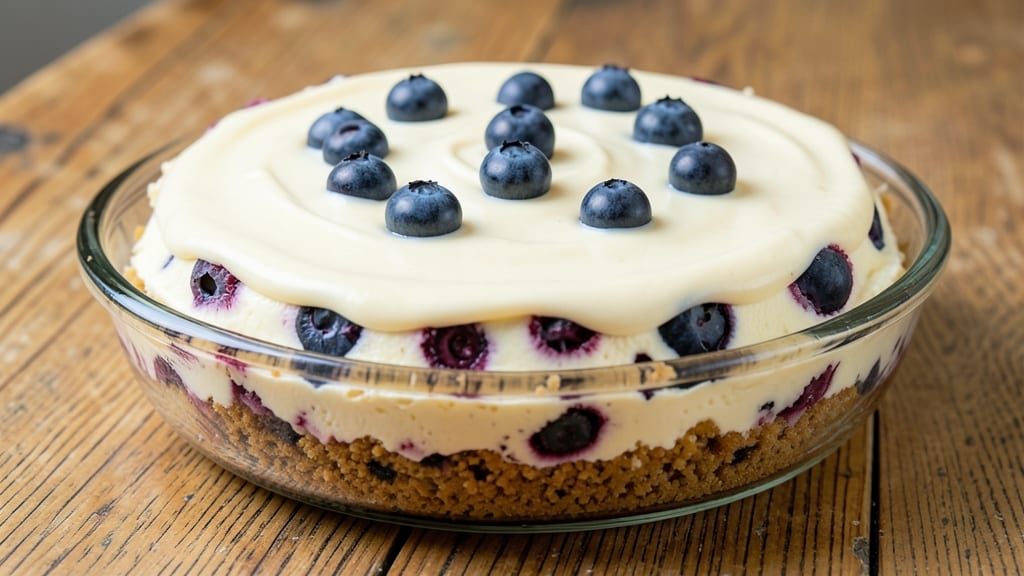
This blueberry cheesecake recipe delivers the perfect balance of creamy, tangy cheesecake and bursts of juicy blueberries in every bite. The secret lies in a water bath bake for silky texture and macerated blueberries that release their natural sweetness.
After years of testing variations, I've perfected a method that ensures a crack-free crust and vibrant berry swirls that stay fresh-tasting.
The crust starts with a buttery graham cracker base that bakes to golden perfection, providing the ideal foundation for the cheesecake layer.
The filling combines cream cheese, sour cream, and a touch of vanilla for that classic tangy flavor, while the blueberries are simmered with sugar to concentrate their flavor before being swirled into the batter. This technique prevents the berries from sinking and keeps them juicy throughout.
What you'll end up with is a cheesecake that's rich yet light, with a smooth, velvety texture and pockets of sweet-tart blueberries in every slice.
The water bath method guarantees a perfectly set center without any cracks, while the macerated berries add a depth of flavor you won't find in store-bought versions. The result is a dessert that's impressive enough for special occasions but simple enough for weeknight treats.
Serve it chilled with a dollop of whipped cream or a drizzle of caramel sauce for extra indulgence. Here's everything you need to create this showstopping dessert that will have everyone asking for seconds.
Ingredients for blueberry cheese cake
Classic graham cracker crust meets velvety cream cheese filling with bursts of macerated blueberries.
| Ingredient | Amount | Notes |
|---|---|---|
| Graham Crackers 🍪 | 2 cups | Crushed into fine crumbs |
| Unsalted Butter 🧈 | ½ cup | Melted, cooled slightly |
| Granulated Sugar 🍚 | ¼ cup | For crust sweetness |
| Large Eggs 🥚 | 2 whole | Room temperature preferred |
| Cream Cheese 🧀 | 32 oz | Full-fat, room temperature |
| Sour Cream 🥛 | ½ cup | Full-fat for richness |
| Vanilla Extract 🌿 | 2 tsp | Pure, high-quality preferred |
| Granulated Sugar 🍚 | 1 ½ cups | For filling sweetness |
| Large Eggs 🥚 | 3 whole | Room temperature preferred |
| Fresh Blueberries 🫐 | 2 cups | Macerated with sugar |
| Granulated Sugar 🍚 | ¼ cup | For macerating berries |
| All-Purpose Flour 🌾 | ¼ cup | For stabilizing filling |
| Salt 🧂 | ½ tsp | Diamond Crystal preferred |
| Heavy Cream 🥛 | ½ cup | Optional for swirls |
The graham crackers should be crushed into fine, even crumbs—no large pieces that will burn during baking. Honey Maid or Keebler are reliable brands for consistent texture. For the butter, Land O'Lakes unsalted works best, but any high-quality brand will do. The crust requires melted butter that's cooled slightly to prevent steam from forming during mixing, which can lead to a soggy base. Room-temperature cream cheese is non-negotiable—it blends smoothly without lumps, and brands like Philadelphia or Kirkland Signature deliver consistent results. Always check the sell-by date, as older cream cheese can separate or develop an off flavor.
Substitutions are possible but require adjustments. For the crust, almond flour or digestive biscuits can replace graham crackers, though texture will differ slightly. Full-fat sour cream is ideal, but Greek yogurt works in a pinch—reduce by 2 tablespoons to account for its thicker consistency. Vanilla bean paste can replace extract for a more complex flavor profile, though pure extract remains the standard. The blueberries must be fresh or frozen unsweetened—canned berries release excess liquid during maceration. If using frozen, thaw and drain thoroughly. Heavy cream swirls can be omitted entirely if preferred, but they add a luxurious touch that complements the tartness of the berries.
Prevent cracking by ensuring all ingredients are room temperature before mixing, and never overmix the batter. The water bath is critical—use a deep baking dish filled with hot water to create a steamy environment that sets the cheesecake gently. Macerated blueberries should be simmered for exactly 5 minutes before swirling—any longer and they'll lose their vibrant color and burst of flavor. Store the baked cheesecake in an airtight container in the refrigerator for up to 5 days, though it's best enjoyed within 3 days for optimal texture. For longer storage, freeze the entire cheesecake (unwrapped) for up to 2 months, then thaw overnight in the fridge before serving.
Why You'll Love This Recipe
- No-Fuss Layers: The crust takes five minutes—just crush graham crackers, mix with melted butter, and press. No rolling, no fuss, just that perfect buttery crunch you crave.
- Creamy-Blueberry Magic: That tangy cream cheese filling meets juicy blueberries in every bite—rich, sweet, and just a little tart. Honestly, the first time I tasted it, I nearly licked the bowl.
- Party or Picnic: Slice it for a crowd or pack it for a potluck—it travels well and always disappears fast. (Yes, even on a Tuesday night when you’re pretending to be fancy.)
- Leftovers That Win: This keeps for days in the fridge, and the flavor only gets better. My kids beg for seconds, and I’ve reheated slices for breakfast—yes, really—with zero judgment.
Step-by-step instructions for blueberry cheesecake
Mastering this layered dessert requires precision in assembly and baking techniques.
Prepare the Graham Cracker Crust
Preheat your oven to 350°F and position a rack in the lower third. In a food processor, pulse the 2 cups graham crackers until you achieve fine, sand-like crumbs. Avoid over-processing or you'll end up with graham cracker dust instead of texture.
Transfer the crumbs to a large mixing bowl and add the 0.5 cup melted unsalted butter (cooled slightly) and 0.25 cup granulated sugar for crust sweetness. Mix with a wooden spoon until the mixture is evenly moistened and holds together when pressed. The consistency should resemble wet sand that compacts when squeezed.
Press the mixture firmly and evenly into a 9-inch springform pan, using the bottom of a measuring cup to create an even, compact layer. Create a slight overhang at the edges since you'll remove the sides later. Bake for 10 minutes until the crust is set and edges begin to golden. Remove from oven and let cool slightly while you prepare the filling components.
Macerate the Blueberries
While the crust bakes, combine the 2 cups fresh blueberries with 0.25 cup granulated sugar and 0.25 cup all-purpose flour in a medium bowl. Gently stir to coat the berries completely. Let this mixture sit at room temperature for 15-20 minutes while you prepare the cheesecake batter.
The maceration process allows the blueberries to soften slightly and release their juices, which will create a vibrant swirl pattern in the finished dessert. You'll notice the berries become plump and the mixture takes on a glossy appearance as the sugar draws out moisture.
After macerating, drain any excess liquid through a fine-mesh strainer and press gently on the berries to remove excess moisture. Reserve the berries for the swirl layer and set aside. The liquid can be used to adjust the consistency of your filling if needed.
Create the Cheesecake Filling
In a large mixing bowl, beat the 32 oz cream cheese and 1.5 cups granulated sugar with an electric mixer on medium speed until completely smooth and creamy. This process should take about 3-4 minutes. The mixture should be pale yellow and free of any lumps.
Add the 3 whole large eggs (room temperature) one at a time, mixing just until each is incorporated after about 10 seconds of mixing. Overmixing at this stage can incorporate too much air, which may cause cracks in the finished cheesecake. Add the 0.5 cup sour cream, 2 tsp vanilla extract, and 0.5 tsp salt, mixing just until combined.
For the optional swirl effect, divide the batter into two portions. To one portion, add the 0.5 cup heavy cream and mix until just combined. Gently fold the reserved macerated blueberries into the second portion of batter using a spatula, being careful not to break up the berries.
Assemble and Bake the Cheesecake
Pour half of the plain cheesecake batter over the cooled crust, spreading it evenly with a spatula. Drop spoonfuls of the blueberry mixture over the top, then gently swirl with the spatula to create a marbled effect. Top with the remaining plain batter and spread smoothly.
Bake in the preheated 350°F oven for 50-60 minutes until the edges are set and the center still jiggles slightly when shaken. The cheesecake should pull away from the sides of the pan but still have a slight wobble in the center. This indicates proper doneness—overbaking will result in a dense, cracked texture.
Turn off the oven, crack the door open slightly, and let the cheesecake cool completely in the oven for 1 hour. This gradual cooling helps prevent cracking. Remove from the oven, release the springform pan, and refrigerate for at least 6 hours or overnight before serving.
Pro Tips For Making Blueberry Cheese Cake
- Pulse Graham Crumbs: DESCRIPTION: Dump those graham crackers into the food processor and pulse until they’re just crumbly—not fine flour. I learned this the hard way after making a crust so powdery it dissolved into the filling. You want texture, not dust.
- Whip Cream Cheese Cold: DESCRIPTION: Take your cream cheese straight out of the fridge—room temperature is overrated here. Cold cream cheese whips smoother and doesn’t turn greasy when mixed with butter. Trust me, your filling will thank you.
- Bake Until Set: DESCRIPTION: Don’t pull that cake out the second it jiggles. Bake it until the center is just firm—about 5 minutes past when the recipe says. Underbaked cheesecake means a runny mess, and nobody wants that.
- Swap Sugar for Corn Syrup: DESCRIPTION: Replace half the granulated sugar with light corn syrup (about ¼ cup) for a denser, crack-free filling. It’s a no-fuss upgrade that actually works—no weird science, just better texture. (Yes, even if you’re skeptical.)
Common mistakes when making your blueberry cheese cake
Overmixing the Batter
I’ve seen so many beginners whip the cheesecake batter like they’re making whipped cream, and that’s a recipe for disaster. Overmixing incorporates too much air, which causes the cheesecake to crack as it bakes.
Instead, mix the batter just until smooth—about 10 seconds per egg—and avoid high-speed blending. The goal is a silky, lump-free texture, not fluffy peaks. 💡
Skipping the Water Bath
This is a non-negotiable step for me. Without a water bath, your cheesecake risks cracking or developing a dense, rubbery texture. The steam from the water creates an even, gentle heat that sets the cheesecake perfectly.
Use a deep baking dish filled with 2 inches of hot water and place your springform pan inside. If you’re short on time, a DIY water bath with a roasting pan works just as well.
Room-Temperature Ingredients
Cold cream cheese and eggs are the silent villains of a perfect cheesecake. If your cream cheese is straight from the fridge, it’ll create lumps and prevent smooth blending. Let it sit at room temperature for 1-2 hours before mixing.
The same goes for eggs—room temperature eggs blend more easily and reduce the risk of curdling. I always check this step before starting, and it’s made a world of difference in my results. ❄️
Overbaking the Cheesecake
Patience is key here. Your cheesecake is done when the edges are set but the center still jiggles slightly—like 2-3 seconds of wobble when shaken. Overbaking dries out the texture and leads to cracks.
If you’re unsure, use an instant-read thermometer: the center should read 150-155°F. Let it cool gradually in the oven after baking to lock in moisture and prevent sinking.
Using Frozen Blueberries
Frozen blueberries can work, but they release excess moisture during baking, which dilutes the flavor and makes the cheesecake soggy. If you must use them, thaw and drain them thoroughly first.
For the best results, stick with fresh blueberries and macerate them properly. The extra effort ensures vibrant color and a burst of flavor in every bite. 🫐
Ignoring the Resting Time
Rushing to slice into your cheesecake right after baking is one of the biggest mistakes I see. The cheesecake needs at least 6 hours in the fridge to set completely. This resting time allows the flavors to meld and the texture to firm up.
If you’re in a hurry, try refrigerating it overnight—it’s worth the wait for a silky, sliceable dessert. 💪
Nutrition facts
Frequently asked questions
Can I substitute frozen blueberries for fresh in this recipe?
Fresh blueberries yield the best texture and flavor, but frozen can work if thawed and drained thoroughly. For optimal results, use fresh berries and macerate them with sugar for 15-20 minutes before baking. Frozen berries may release excess moisture, making the cheesecake soggy.
Why does my cheesecake crack after baking?
Cracking often happens from overmixing (incorporating too much air) or cooling too quickly. Mix the batter just until smooth and let it cool gradually in the oven after baking. A water bath also helps prevent cracks by creating even heat distribution.
How long should I chill the cheesecake before serving?
For the best texture, refrigerate for at least 6 hours or overnight. This allows flavors to meld and the filling to set properly. Rushing to slice it too soon can result in a crumbly or runny dessert.
Can I make this cheesecake without a water bath?
While possible, a water bath ensures a silky texture and prevents cracks. For a DIY water bath, place your springform pan in a larger roasting pan filled with 2 inches of hot water during baking. This mimics professional results.
What's the best way to store leftover cheesecake?
Keep it in an airtight container in the fridge for up to 5 days or freeze for 2 months. For freezing, wrap tightly in plastic wrap and foil. Thaw overnight in the fridge before serving to preserve texture.