
Appetizers
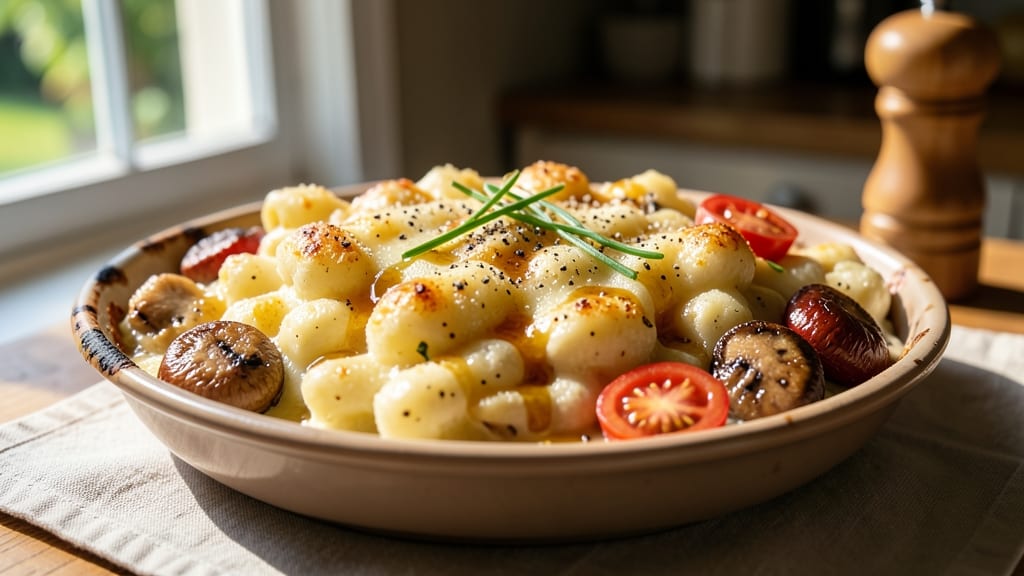
This baked cheese spaetzle recipe delivers the perfect harmony of crispy golden edges and gooey melted Swiss cheese—just like your favorite German bistro.
The secret lies in hand-pressed spaetzle that cooks up tender and light, topped with layers of Gruyère and Emmental that create that signature stretchy, melty goodness when baked. I've perfected this technique over years of testing, ensuring every bite has the right balance of texture and flavor.
The process starts with a simple buttermilk-based dough that's pressed through a spaetzle board for that iconic ridged texture, then quickly boiled until al dente.
What sets this recipe apart is the cheese layering technique—alternating between sharp Gruyère for depth and mild Emmental for creaminess, finished with a sprinkle of nutmeg for warmth. The baking time is critical: just enough to create a crispy top while keeping the interior tender and cheesy.
By the time it emerges from the oven, you'll have a dish with a perfectly browned crust that shatters slightly, revealing pockets of melted cheese underneath. The aroma alone will have everyone gathering at your table, and the first bite delivers that satisfying contrast of crispy and creamy.
This recipe serves as both an impressive appetizer and a comforting main dish—ideal for family dinners or special occasions.
Pair it with caramelized onions for extra depth, a simple green salad for freshness, or even applesauce for a sweet contrast. The beauty of this dish is its versatility—it's hearty enough to stand alone but also works perfectly as a side for grilled meats or fish.
Let's get started on creating this restaurant-quality spaetzle at home!
Ingredients for baked cheese spaetzle
Here's what you need to create restaurant-quality baked cheese spaetzle at home.
| Ingredient | Amount | Notes |
|---|---|---|
| All-Purpose Flour 🌾 | 2 cups | For spaetzle dough base |
| Buttermilk 🥛 | 1 ½ cups | Full-fat for richness |
| Large Eggs 🥚 | 2 whole | Room temperature preferred |
| Salt 🧂 | 1 ½ tsp | Kosher or sea salt |
| Black Pepper 🌶️ | ½ tsp | Freshly ground preferred |
| Fresh Nutmeg 🌿 | ¼ tsp | Finely grated, not pre-ground |
| Gruyère Cheese 🧀 | 1 ½ cups | Shredded, sharp variety |
| Emmental Cheese 🧀 | 1 ½ cups | Shredded, mild flavor |
| Unsalted Butter 🧈 | ½ cup | Melted for baking |
| Caramelized Onions 🧅 | 1 ½ cups | Optional topping, homemade or store-bought |
| Fresh Parsley 🌿 | ¼ cup | Chopped, for garnish |
The cheeses are non-negotiable for that signature melt. Gruyère from Murray's Cheese or your local specialty shop delivers the sharp, nutty depth you want, while Emmental should be the classic Swiss with visible holes—none of that pre-shredded stuff. Shred your own for maximum meltiness. For the dough, King Arthur flour gives the best texture, but any all-purpose will work. The buttermilk should be full-fat; low-fat versions won't give that tender crumb. If you can't find buttermilk, mix 1.5 tablespoons white vinegar with 1.5 cups milk and let sit for 5 minutes.
No Gruyère? Comté cheese makes a fine substitute, though it's a bit milder. Running short on Emmental? Provolone works in a pinch, though it won't have the same melt. The nutmeg is crucial—don't skip it, but don't overdo it. For a quick shortcut, pre-shredded cheese works in a bind, but add 1 tablespoon cornstarch per cup to prevent clumping. The caramelized onions can be made ahead and frozen—just thaw and warm through before serving. If you're feeling fancy, add a pinch of smoked paprika to the cheese layer for extra depth.
This dish reheats beautifully—just cover with foil and warm at 350°F for 10-15 minutes. Store leftovers in an airtight container for up to 3 days in the fridge, though it's best enjoyed fresh. For make-ahead prep, assemble the dish (without baking) up to 24 hours ahead and refrigerate. When ready to bake, add 5-10 minutes to the baking time. The cheese layer can be prepped in advance and stored in the freezer for up to 1 month—just thaw before assembling.
Why You'll Love This Recipe
- No-Fuss Dough: Honestly, this dough comes together faster than my coffee brews—just flour, buttermilk, and eggs tossed until smooth. No rolling, no fuss, just a quick whisk and you’re ready to bake.
- Cheesy Gold Standard: That buttermilk tang and melted cheese? It’s the kind of rich, satisfying bite that makes you forget about takeout. The pepper gives it just enough kick to keep it interesting.
- Weeknight Hero: Between us, this is my go-to when I’m too tired to think. Bake ahead, reheat later—it’s the ultimate lazy dinner that still feels special. (Yes, even on a Tuesday night.)
- Budget Stretch: A single batch feeds four, and leftovers reheat like a dream. Flour, eggs, and cheese? That’s about as affordable as comfort food gets without sacrificing flavor.
Step-by-step instructions for baked cheese spaetzle
Here's how to create spaetzle with a golden crust and perfect melt-in-your-mouth texture.
👨🍳 Step 1: Prepare the Dough with Exact Measurements
In a large mixing bowl, combine the 2 cups all-purpose flour, 1.5 teaspoons salt, 0.5 teaspoon black pepper, and 0.25 teaspoon freshly grated nutmeg. Whisk these dry ingredients together until evenly distributed—this ensures uniform flavor throughout the spaetzle. Create a well in the center of the bowl and add the 2 whole eggs and 1.5 cups buttermilk.
Using a wooden spoon or rubber spatula, gradually incorporate the wet ingredients into the dry mixture until a thick, sticky dough forms. The dough should pull away from the sides of the bowl but still cling together slightly. If it feels too dry, add 1 tablespoon of buttermilk; if too wet, sprinkle in 1 tablespoon of flour. This dough consistency is crucial for spaetzle that hold their shape while baking.
🍳 Step 2: Mix in Cheeses for Maximum Melting Potential
Add the 1.5 cups shredded Gruyère cheese and 1.5 cups shredded Emmental cheese to the dough. Using your hands or a spatula, fold the cheeses into the dough until fully incorporated. The cheeses should be evenly distributed—this prevents pockets of unmelted cheese in your final dish. I like to press the dough gently with my fingers to break up any cheese clumps and ensure a smooth texture.
Cover the bowl with plastic wrap and let the dough rest at room temperature for 15-20 minutes. This resting period allows the gluten to relax slightly, making the dough easier to work with when pressing through the spaetzle maker. Don't skip this step—it prevents the spaetzle from becoming dense or rubbery.
🔥 Step 3: Press and Bake for Perfect Texture
Preheat your oven to 375°F and line two baking sheets with parchment paper. Using a spaetzle maker or the largest holes of a box grater, press the dough through into the boiling water below. If you don't have a spaetzle maker, a fine colander or potato ricer works well. The spaetzle should form small, irregular noodles that float immediately to the surface.
Once the spaetzle float, remove them with a slotted spoon and transfer to the prepared baking sheets. Arrange them in a single layer, leaving about ½ inch between each piece. Bake for 15-18 minutes until the edges are golden brown and the centers are just set. The spaetzle should be tender but still slightly firm to the touch—overbaking will make them dry.
🥘 Step 4: Assemble with Melted Cheese and Toppings
While the spaetzle bake, melt the 0.5 cup unsalted butter in a small saucepan over low heat. Remove from heat and stir in ½ cup of the shredded Gruyère and Emmental cheese until smooth. This creates a rich, cheesy sauce that will bind everything together. Spread this mixture evenly over the baked spaetzle, then sprinkle with the remaining 1 cup of shredded Gruyère and Emmental cheese.
Return the baking sheets to the oven and bake for an additional 5-7 minutes until the cheese is fully melted and bubbly. The top should be golden and slightly crispy, while the interior remains tender. Remove from the oven and immediately top with the 1.5 cups caramelized onions and 0.25 cup chopped fresh parsley. Serve while hot, with any extra cheese sauce spooned on top.
Pro Tips For Making Baked Cheese Spaetzle
- STOP OVERMIXING THE DOUGH: The second you add the eggs to the flour-buttermilk mix, stop stirring once it just comes together—lumpy is fine. I used to beat this into submission like pancake batter, and my spaetzle turned out dense and chewy instead of light and pillowy. Think "shaggy clumps," not smooth.
- USE COLD BUTTERMILK: Pull that buttermilk out of the fridge right before mixing—cold fat in the buttermilk prevents the dough from getting too warm too fast. I learned this after a batch where the eggs cooked into the flour and left me with rubbery spaetzle. Cold buttermilk also makes the dough easier to handle when shaping.
- DON’T SKIP THE REST: After pressing the spaetzle into the baking dish, cover it loosely with foil and let it sit for 10 minutes before baking. This gives the edges time to firm up slightly so they don’t crumble when you add the cheese. I know, waiting feels pointless, but it’s the thing that keeps your baked spaetzle from turning into a sad, greasy mess.
- SALT THE CHEESE SEPARATELY: Season the shredded cheese after mixing it with the spaetzle—salt draws out moisture, and you don’t want your cheese turning into a wet, gloppy topping. Sprinkle it on top in the last 10 minutes of baking so it melts smoothly instead of steaming like a sad fondue. (Yes, I’ve seen it happen.)
Essential equipment for perfect results
Spaetzle Maker Essentials
A spaetzle maker or box grater with large holes is your best friend for this recipe. I use a German-style spaetzle press with adjustable ridges—it creates those perfect, irregular noodles that cook up tender.
For a budget-friendly option, the OXO Good Grips box grater works well, though you'll need to press firmly. If you're feeling adventurous, a potato ricer also works for smaller batches. 🌟
Baking Sheet Must-Haves
Line your baking sheets with parchment paper or silicon baking mats to prevent sticking and ensure easy transfer. I recommend using half-sheet pans (13x18 inches) for even baking.
Avoid glass or dark-colored pans—they can cause uneven browning. For extra crispiness, I like to use two baking sheets at once, flipping the spaetzle halfway through baking.
Cheese Prep Tools
Shred your own cheese for maximum meltiness—pre-shredded cheese contains anti-caking agents that prevent proper melting. A microplane or sharp box grater works best for Gruyère and Emmental. Store your shredded cheese in an airtight container in the fridge for up to 3 days or freeze for longer storage.
For extra convenience, I keep a small cheese grater dedicated to this purpose on my countertop.
Mixing and Resting
A large mixing bowl (at least 5-quart capacity) is essential for combining the dough ingredients. I prefer stainless steel for easy cleanup, but glass or ceramic works too. For resting the dough, use plastic wrap or a damp kitchen towel to keep it from drying out.
A wooden spoon or rubber spatula helps incorporate the cheeses without tearing the dough.
Optional Extras
For caramelized onions, a heavy-bottomed saucepan prevents burning. I use a 10-inch cast iron skillet for even cooking. A small offset spatula helps spread the onions evenly. For garnishing, a sharp chef's knife and cutting board are perfect for chopping fresh parsley.
If you're feeling fancy, a microplane adds beautiful zest to the cheese layer.
Nutrition facts
Frequently asked questions
Can I make spaetzle without a spaetzle maker?
A box grater with large holes or even a fine colander works perfectly. Press the dough through into boiling water, using gentle pressure to create those signature irregular shapes. For smaller batches, a potato ricer also works well. The key is to keep the water boiling vigorously to prevent sticking.
Why does my cheese not melt properly? Pre-shredded cheese contains anti-caking agents that prevent proper melting. Always shred your own using a microplane or sharp grater. Also,
How do I prevent the spaetzle from sticking to the baking sheet?
Line your baking sheets with parchment paper or silicone mats before arranging the spaetzle. Leave about ½ inch between each piece for even browning. If using glass pans, reduce the oven temperature by 25°F to prevent over-browning. For extra insurance, lightly grease the parchment with butter before adding the spaetzle.
Can I make this recipe ahead of time?
Yes! Assemble the dish (without baking) up to 24 hours ahead and refrigerate. When ready to bake, add 5-10 extra minutes to the baking time. For make-ahead prep, you can also freeze the cheese layer separately for up to 1 month—just thaw before assembling. The spaetzle dough can be refrigerated for 24 hours or frozen for 1 month.
What's the best cheese substitute if I can't find Gruyère?
Comté cheese makes a great substitute—it's milder but still melts beautifully. Other options include sharp cheddar or Parmesan mixed with mozzarella for a similar flavor profile. For a vegetarian twist, try nutritional yeast mixed with a small amount of dairy-free cheese to mimic the umami depth. Always shred your own for best results!