
Appetizers
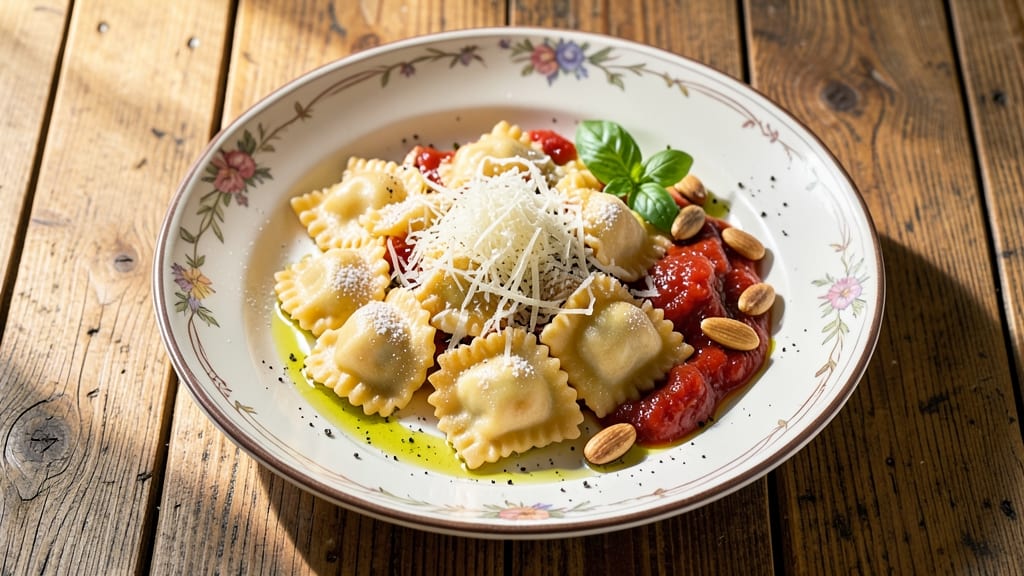
This authentic cheese ravioli recipe brings the art of Italian handmade pasta into your kitchen with tender, pillowy pockets stuffed with creamy ricotta and nutty parmesan.
The secret lies in the delicate balance of eggs, flour, and water for the dough, combined with a filling that's rich yet light—no heavy cream here. I've perfected this technique over years, ensuring the ravioli holds its shape while delivering that melt-in-your-mouth texture we all crave.
What sets this recipe apart is the traditional method of rolling the dough paper-thin and cutting perfect circles before pleating them into classic ravioli shapes. No shortcuts here—this is the real deal, from the foolproof dough to the creamy cheese filling that's just sweet enough to complement the savory sauce.
The key is patience: letting the dough rest and working in small batches to maintain control.
Once boiled to perfection, these ravioli transform into golden, tender pillows that cling to every strand of your favorite sauce—whether it's classic butter-sage or a rich tomato reduction. The filling stays intact, releasing its creamy goodness with each bite.
This is the kind of dish that makes you feel like you've stepped into a rustic Italian trattoria, all from the comfort of your home kitchen.
The beauty of this recipe is its versatility—use it for an elegant appetizer, a hearty main course, or even a comforting lunch. With a few adjustments, you can add spinach or herbs to the filling, but the classic ricotta-parmesan remains a timeless favorite.
Ready to master the art of handmade ravioli? Let's get started.
Ingredients for authentic cheese ravioli
Authentic Italian ravioli starts with these 13 essential ingredients—flour, eggs, and cheese take center stage.
| Ingredient | Amount | Notes |
|---|---|---|
| All-Purpose Flour 🌾 | 2 ½ cups | High-protein preferred for elasticity |
| Large Eggs 🥚 | 3 whole | Room temperature for even mixing |
| Granulated Sugar 🍚 | ¼ cup | Balances cheese filling sweetness |
| Fine Sea Salt 🧂 | 1 ½ tsp | Diamond Crystal preferred |
| Whole Milk 🥛 | ½ cup | Warmed slightly for dough |
| Part-Skim Ricotta Cheese 🧀 | 15 oz | Drained overnight for moisture |
| Freshly Grated Parmigiano-Reggiano 🧀 | 1 cup | Aged 24+ months preferred |
| Freshly Grated Pecorino Romano 🧀 | ¼ cup | Sharp contrast to ricotta |
| Freshly Chopped Spinach 🌿 | 2 cups | Packed, optional for color |
| Extra-Virgin Olive Oil 🫒 | 2 tbsp | For dough and finishing |
| Unsalted Butter 🧈 | ¼ cup | Cold, for dough cutting |
| Fresh Sage Leaves 🌿 | ¼ cup | Chopped, for finishing sauce |
| Freshly Ground Black Pepper 🌶️ | ½ tsp | Freshly cracked for heat |
The flour is your foundation—King Arthur or Caputo Tipo 00 if you can find it, but all-purpose works in a pinch. Eggs should be room temperature when you start, so pull them out 30 minutes ahead. The ricotta needs draining—wrap it in a clean towel, place a plate on top, and let it sit overnight in the fridge to remove excess moisture. For the Parmigiano-Reggiano, buy a wedge and grate it yourself—pre-grated tastes like sawdust. The Pecorino Romano adds that sharp, salty bite that cuts through the creaminess. I always grab mine at Eataly or my local Italian market, but the grocery store usually has it too.
No ricotta? Cottage cheese blended smooth works in a bind, though it's not quite the same texture. Skip the spinach if you're feeling traditional, but trust me—it adds that gorgeous green pop without overpowering. For the dough, if you're short on eggs, add 1 tbsp of olive oil per missing egg, but the texture won't be quite as tender. The butter for cutting the dough should be cold but not rock-hard—press it with your finger to test. And if you're making a big batch, double the dough recipe—it keeps beautifully in the freezer for up to 3 months.
Dough keeps best wrapped in plastic for 2 days in the fridge, or freeze for 3 months between parchment paper. The filling can be prepped ahead and stored for 1 day—just bring it to room temp before using. For the sauce, I make a simple butter-sage version with 2 tbsp butter, 1 tbsp olive oil, and 1/4 cup fresh sage, simmered until the butter melts and the sage is fragrant. Portion the ravioli into single servings before freezing—no more defrosting a giant pile!
Why You'll Love This Recipe
- Same recipe, endless uses: toss with butter and sage for a lazy Tuesday, or dress it up with brown butter and crispy pancetta for company. My kids eat it plain; my in-laws demand the fancy version.
- No-Fuss Dough: I mix the flour, eggs, and a pinch of sugar in my food processor—literally 30 seconds of work. The dough comes together smoother than store-bought, and honestly? No rolling pin required if you’re in a pinch.
- Rich, Tangy Bite: That whole milk in the filling makes all the difference—creamy, not greasy, with just enough salt to wake up every bite. The sugar? Trust me, it balances the sharpness of the cheese so it’s never heavy.
- Weeknight to Dinner Party: Same recipe, endless uses: toss with butter and sage for a lazy Tuesday, or dress it up with brown butter and crispy pancetta for company. My kids eat it plain; my in-laws demand the fancy version.
Step-by-step instructions for authentic cheese ravioli
Let's make these pillowy ravioli with tender dough and rich, herby filling—just like Nonna would.
Prepare the Filling for Maximum Flavor
In a large bowl, combine the 15 oz part-skim ricotta cheese, 1 cup freshly grated Parmigiano-Reggiano, 0.25 cup freshly grated Pecorino Romano, and 0.5 tsp freshly ground black pepper. I like to use a fork to break up any large cheese clumps while gently mixing everything together. The ricotta should be completely drained if you prepped it overnight—this prevents watery filling.
Next, fold in the 2 cups freshly chopped spinach and 0.25 cup chopped fresh sage leaves. The spinach adds vibrant color and subtle earthiness, while the sage brings bright, aromatic depth. Taste the mixture and adjust seasoning if needed—this is your flavor foundation. Cover and refrigerate while you make the dough, but don't let it sit too long or it'll get too cold to work with.
Create the Perfect Dough
On a clean work surface, mound the 2.5 cups all-purpose flour and make a well in the center. Add the 3 whole large eggs, 0.25 cup granulated sugar, and 1.5 tsp fine sea salt to the well. The sugar might seem odd, but it balances the richness of the cheese filling beautifully.
Using a fork, gradually incorporate the flour into the wet ingredients until you have a shaggy dough. Then, with your hands, knead for about 8-10 minutes until smooth and elastic. If the dough feels too dry, add 1 tablespoon of the 0.5 cup whole milk at a time. Wrap tightly in plastic and let rest for 30 minutes at room temperature—this relaxes the gluten for easier rolling.
Roll and Cut the Dough
Divide the rested dough into 4 equal pieces and keep the rest covered. Working with one piece at a time, roll it through a pasta machine on the widest setting first. Fold the dough in half and repeat this process 2-3 times, reducing the thickness by one setting each time until you reach the thinnest setting (usually #5 or #6).
Lightly dust the rolled dough with flour to prevent sticking. Using a 3-inch round cutter (or a glass), cut circles for your ravioli. I like to keep a small bowl of flour nearby to dust between each cut—this prevents the delicate dough from tearing. You should get about 16-20 ravioli from each piece of dough, depending on your cutter size.
Assemble and Seal the Ravioli
Place 1 teaspoon of the cheese filling in the center of each dough circle. Fold the dough over the filling to form a half-moon shape, then press gently around the edges with your fingers to seal. For a professional finish, I use a fork to crimp the edges—press down firmly along the folded edge to create a decorative pattern.
Place the assembled ravioli on a floured tray, leaving space between each one so they don't stick. Cover with a clean kitchen towel to keep them from drying out while you finish the batch. If the dough feels too sticky, dust your work surface and hands with flour—just don't overdo it or the ravioli will be tough.
Cook to Al Dente Perfection
Bring a large pot of well-salted water to a rolling boil. Add the ravioli in batches (don't overcrowd the pot) and cook for 3-4 minutes until they float to the surface. This is your signal—they're done when they're tender but still slightly firm to the bite.
Drain immediately and toss with 2 tablespoons extra-virgin olive oil and a pinch of salt. For serving, I like to finish them with a simple sage butter sauce: melt 0.25 cup unsalted butter in a pan, add the 0.25 cup chopped fresh sage leaves, and cook for 1 minute until fragrant. Toss the cooked ravioli in this sauce just before serving for that authentic Italian touch.
Pro Tips For Making Authentic Cheese Ravioli
- Chill the Dough: Let the pasta dough rest in the fridge for at least 30 minutes before rolling—this relaxes the gluten so it doesn’t snap when you cut the ravioli. I used to skip this and ended up with ravioli that looked more like sad noodle scraps than plump pockets.
- Whisk Eggs Like a Maniac: Beat the eggs for the filling until they’re thick and pale, with visible ribbons when you lift the whisk. This ensures the cheese binds properly without turning the ravioli into a greasy mess. (Yes, even if your arms feel like they’re about to give out.)
- Salt the Water Hard: Boil the ravioli in water that tastes like the ocean—about 1.5 tablespoons of sea salt per quart. Under-seasoned water means bland ravioli, and no one wants that. Trust me, your taste buds will notice.
- Fill Sparingly, Seal Tight: Use a piping bag or ziplock with a tiny corner cut to add filling—just enough to make the ravioli look full, not stuffed like a Thanksgiving turkey. Press the edges firmly with your thumb to seal, or the cheese will leak out like a bad joke.
Common mistakes when making perfect results
Overworking the Dough
I’ve made this mistake more times than I’d admit—kneading the dough too long or too aggressively makes it tough instead of tender. The goal is 8-10 minutes of gentle kneading until smooth, not until your arms burn.
Overworked dough loses its elasticity, leading to ravioli that feel like eating a chewy pasta shell instead of a delicate pillow. If the dough starts to feel resistant or springs back too slowly when pressed, stop immediately. 💪
Skipping the Rest
That 30-minute rest for the dough isn’t optional—it’s what makes the difference between ravioli that hold their shape and ones that tear apart when you fold them. The rest relaxes the gluten, allowing the dough to roll out smoothly and thinly.
If you’re in a rush, at least let it rest for 15 minutes, but don’t skip it entirely. Trust me, your ravioli will thank you. ⏳
Uneven Filling Distribution
Splitting the filling unevenly leads to lopsided ravioli that burst open when cooking. Use a small cookie scoop or teaspoon to measure 1 tsp of filling per ravioli—consistency is key. If you eyeball it, some ravioli will be overstuffed and others underfilled.
Pro tip: Weigh the filling before dividing it into portions for even distribution. A kitchen scale makes this effortless. ✨
Undercooking or Overcooking
Ravioli are done when they float to the surface and cook for 3-4 minutes—no more, no less. Undercooked ravioli taste raw in the center, while overcooked ones turn mushy. Test one by cutting it open: the filling should be warm but still hold its shape.
If you’re unsure, err on the side of slightly undercooked—they’ll finish cooking in the sauce. 🌡️
Using Pre-Shredded Cheese
Pre-shredded cheese is a no-go for authentic ravioli—it’s loaded with anti-caking agents that make the filling grainy and dry. Always grate your own Parmigiano-Reggiano and Pecorino Romano using a fine microplane or box grater.
The texture difference is night and day. If you’re short on time, buy a block and grate it yourself—it’s worth the extra effort. 🧀
Not Salting the Water Enough
Your pasta water should taste like the sea—salty enough that a drop stings your lips. Use 2 tablespoons of salt per gallon of water (or 1 tablespoon per quart).
Under-salted water makes ravioli bland, while properly salted water enhances their flavor. I promise, your ravioli will taste dramatically better with this simple step. 🧂
Nutrition facts
Frequently asked questions
Can I make ravioli dough without a pasta machine?
Roll the dough by hand using a rolling pin, starting with the thickest setting and gradually reducing the thickness. Work in small batches to keep the dough from drying out. For even results, fold the dough in half after each roll and repeat until you reach your desired thinness. A glass bottle works well for cutting circles too!
How do I prevent the filling from leaking when cooking?
First, ensure your filling is well-drained ricotta (no excess moisture). Seal the ravioli edges tightly with your fingers or a fork, and avoid overfilling. Cook in batches to maintain water temperature—overcrowding causes uneven cooking. Test one immediately when it floats to check for leaks.
What's the best way to freeze homemade ravioli?
Freeze uncooked ravioli on a floured tray until solid (1 hour), then transfer to airtight containers or bags. Label with the date—they'll keep for 3 months. To cook from frozen, add 1-2 extra minutes to boiling time. Never refreeze thawed ravioli.
Can I substitute cottage cheese for ricotta in the filling?
You can, but blend cottage cheese until completely smooth first. It won't be identical—ricotta has a creamier texture—but it works in a pinch. For best results, drain cottage cheese overnight just like ricotta. The flavor will be slightly tangier, so reduce the Pecorino Romano to 0.125 cup to balance.
What's the secret to getting that perfect pillowy texture?
The key is a thin, even dough and proper cooking time. Roll the dough as thin as possible (but not translucent) and cook until just al dente—3-4 minutes in boiling water. Immediately toss with olive oil to prevent sticking. The sugar in the dough also helps create that signature tender bite.