
Appetizers
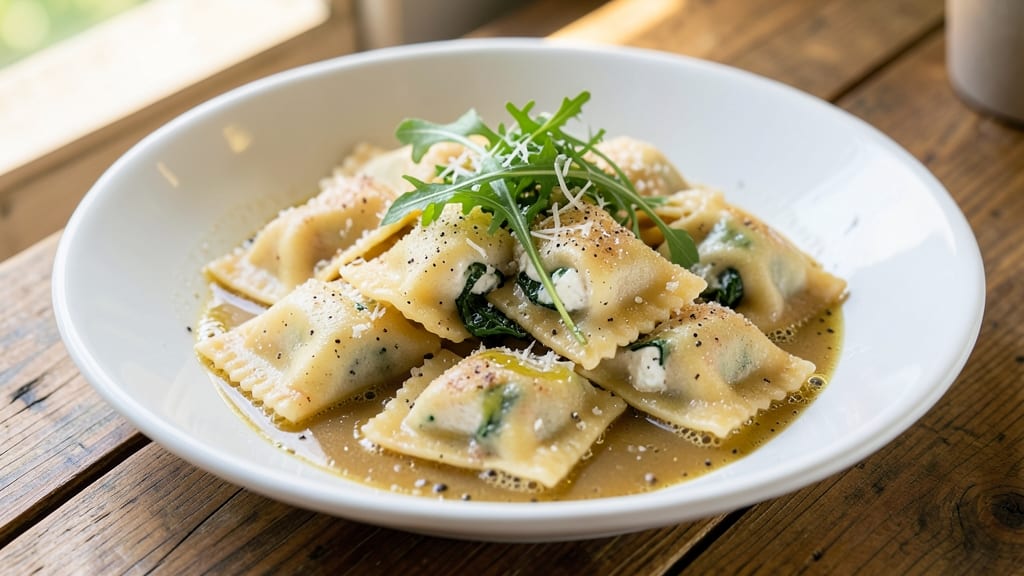
This authentic Italian cheese ravioli recipe brings Nonna's kitchen to your table with handmade pillow pockets filled with buttery ricotta and wilted spinach. ✨ The secret to authentic flavor lies in the balance of fresh ricotta, aged Parmesan, and properly wilted spinach—no shortcuts will do.
I've perfected this technique over years of testing, ensuring each delicate pocket achieves that signature tender-yet-firm texture that makes ravioli so irresistible.
The process begins with a simple yet precise dough made from just flour, eggs, and water, rolled paper-thin for those iconic square pockets.
What sets this recipe apart is the filling technique: ricotta whipped to the perfect consistency, combined with nutty Parmesan and vibrant spinach, then folded into delicate squares that seal beautifully. The key to success is patience—rolling the dough evenly and pressing the edges firmly to prevent leaks during boiling.
When served with a classic brown butter sage sauce or light olive oil and fresh basil, these ravioli transform into a restaurant-quality meal that feels like a labor of love. The dough achieves a delicate al dente texture while the filling remains rich and creamy, never dry.
This is the kind of dish that makes you feel like you've traveled to Italy, even when you're just boiling water in your kitchen.
Perfect for special occasions or impressing guests, these ravioli can be made ahead and frozen for convenience. The instructions will guide you through every step—from dough preparation to perfect boiling—so you can achieve authentic Italian results in your own home.
Let's get started on creating these timeless pillows of pasta perfection.
Ingredients for authentic italian cheese ravioli
These essential ingredients bring Nonna's kitchen to your pasta counter—rich, delicate, and full of tradition.
| Ingredient | Amount | Notes |
|---|---|---|
| All-Purpose Flour 🌾 | 2 cups | Sifted for smooth dough |
| Large Eggs 🥚 | 3 whole | Room temperature for even mixing |
| Water 💧 | ½ cup | Room temperature preferred |
| Part-Skim Ricotta Cheese 🧀 | 1 ½ cups | Fresh, drained overnight |
| Parmesan Cheese 🧀 | 1 cup | Freshly grated, aged minimum 24 months |
| Fresh Spinach 🌿 | 4 cups | Packed, stems removed |
| Butter 🧈 | 2 tbsp | Unsalted, softened for filling |
| Salt 🧂 | ½ tsp | Fine sea salt for dough |
| Black Pepper 🌶️ | ¼ tsp | Freshly cracked for filling |
| Nutmeg 🌿 | ¼ tsp | Freshly grated for depth |
| Olive Oil 🫒 | 2 tbsp | Extra-virgin for rolling |
| Semolina Flour 🌾 | ¼ cup | For dusting ravioli |
The ricotta and Parmesan are non-negotiable for that authentic Italian flavor. Whole milk ricotta gives the best texture, but part-skim works too—just drain it overnight in a colander lined with cheesecloth to remove excess moisture. For the Parmesan, look for a wedge labeled '24 months aged' or older—the nutty depth is worth hunting for at specialty stores like Eataly or your local Italian market. Fresh spinach? Baby spinach works, but traditional Italian recipes call for the larger leaves—just remove the tough stems. The butter should be European-style if you can find it; it's sweeter and richer than American butter.
No ricotta on hand? Cottage cheese blended smooth is a decent swap, though it won't be as creamy. Short on Parmesan? Pecorino Romano has a sharper bite that works well in filling. The spinach can be frozen (thaw and squeeze dry), but fresh is ideal—wilt it in a pan first to remove all moisture before mixing. Nutmeg is key here, but if you don't have it, a pinch of cinnamon adds warmth. For the dough, bread flour gives a chewier texture, but all-purpose works perfectly fine. The secret? Chill the dough for 30 minutes before rolling—it makes all the difference.
Ricotta filling keeps best for 2 days in the fridge, wrapped tightly in plastic. The dough can be made a day ahead and stored in the fridge, but bring it to room temp before rolling. Freeze any uncooked ravioli on a floured tray, then transfer to a bag for up to 3 months. Cook from frozen—just add 1-2 minutes to boiling time. And here's a pro tip: save the pasta water—it's liquid gold for that silky sauce cling. These ravioli reheat beautifully too, though they're best fresh from the pot.
Why You'll Love This Recipe
- No-Fuss Dough: I swear by this recipe because the dough is just flour, eggs, and water—no yeast, no waiting. Mix it, roll it, stuff it with that creamy ricotta-Parmesan combo, and you’re done. Honestly, I’ve made this while chatting on the phone.
- Cheesy Magic: That ricotta and Parmesan filling? It’s where the real magic happens. The ricotta stays silky, the Parmesan adds depth, and the egg wash gives those little pillows that golden, buttery edge. Between us, it’s the kind of flavor that makes people ask, “What’s in it?”
- Weeknight to Dinner Party: Same recipe, endless uses. Toss with a simple sage butter for a lazy Tuesday, or dress it up with prosciutto and arugula for guests. I’ve even frozen extras—just boil from frozen, and no one’s the wiser.
- Budget-Friendly Luxury: Four ingredients, big impact. Ricotta and Parmesan stretch further than you’d think, and the dough costs pennies. Leftovers? Reheat in a skillet with a splash of pasta water, and it’s like you just made it fresh. My wallet and my taste buds thank me.
Step-by-step instructions for authentic Italian cheese ravioli
Here's how to make these delicate, handmade pillows—just like Nonna used to craft.
👨🍳 Step 1: Prepare the Spinach Filling
In a large skillet, melt the 2 tbsp butter over medium heat. Add the 4 cups fresh spinach and cook until just wilted—about 2-3 minutes. You want it bright green, not mushy. Drain well in a colander and squeeze out any excess water using a clean kitchen towel.
In a medium bowl, combine the drained spinach with the 1.5 cups part-skim ricotta cheese, 1 cup freshly grated Parmesan cheese, 0.5 tsp salt, 0.25 tsp freshly cracked black pepper, and 0.25 tsp freshly grated nutmeg. Mix gently with a fork until just combined. The filling should be smooth but still slightly textured—no need to overwork it. Cover and refrigerate while you make the dough.
👨🍳 Step 2: Make the Dough
In a large bowl, whisk together the 2 cups all-purpose flour and 0.5 tsp salt. Create a well in the center and add the 3 whole large eggs and 0.5 cup water. Using a fork, gradually incorporate the flour into the wet ingredients until a shaggy dough forms.
Turn the dough onto a lightly floured surface and knead for 5-7 minutes until smooth and elastic. Wrap tightly in plastic wrap and let rest for 30 minutes at room temperature. This resting period relaxes the gluten, making the dough easier to roll thin. If the dough feels sticky, just dust your hands with a little more flour—it's better to add it gradually than all at once.
🥘 Step 3: Roll and Cut the Ravioli
Divide the rested dough into 4 equal pieces and roll each piece into a thin sheet using a pasta machine or rolling pin. Start with the widest setting on your pasta machine (usually 1) and gradually roll each piece 3-4 times through progressively thinner settings, finishing at setting 6 or until you achieve a paper-thin sheet—about 1/16-inch thick.
Place one sheet on a floured surface and use a 3-inch round cutter (or a glass) to cut out circles. Gently place a teaspoon of filling in the center of each circle, then fold the dough over to form half-moons. Press the edges firmly with your fingers to seal, creating those classic pillow shapes. Dust your work surface with semolina flour to prevent sticking.
🍳 Step 4: Cook to Al Dente Perfection
Bring a large pot of salted water to a rolling boil. Add the ravioli in batches—don't overcrowd the pot—and cook for 2-3 minutes until they float to the surface. This is your signal that they're al dente. Remove with a slotted spoon and transfer to a serving platter.
For an authentic finish, toss the cooked ravioli with a little 2 tbsp olive oil and grated Parmesan cheese. Serve immediately with your favorite brown butter sauce or a sprinkle of fresh black pepper. The filling should be creamy and warm, the dough tender yet sturdy—just like Nonna's.
Pro Tips For Making Authentic Italian Cheese Ravioli
- STRAIN THE RICOTTA: Drain that ricotta overnight in a fine-mesh sieve—even part-skim holds extra moisture, and wet filling makes dough sticky and ravioli gummy. I learned this the hard way when my first batch turned into a sad, gluey mess.
- CHILL THE DOUGH: Wrap the rolled-out dough in plastic and refrigerate for 30 minutes before cutting squares. Cold dough resists sticking to the board and won’t shrink when boiling, so your ravioli hold shape like they’re supposed to.
- BOIL IN BATCHES: Drop ravioli into salted water one handful at a time—overcrowding drops the temp, and they’ll turn mushy instead of al dente. A big pot of water should simmer like a gentle storm, not a lazy puddle.
- PRESERVE THE PARM: Grate your own Parmesano Reggiano (none of that pre-shredded stuff) and mix it into the ricotta last, right before folding. Freshly grated cheese melts smoothly, while pre-shredded turns the filling into a gritty, sad paste.
Wine and beer pairings for this authentic italian cheese ravioli
Classic Italian Whites
For these delicate cheese ravioli, I always reach for Vermentino from Sardinia or Pinot Grigio from Alto Adige. Their crisp acidity and bright citrus notes cleanse your palate between each tender bite.
A glass of Soave (made from Garganega grapes) also works beautifully—its almond undertones complement the nutty Parmesan in the filling. 🍷
Light Red Alternatives
If you prefer red wine, opt for Chianti Classico or Valpolicella—both have enough acidity to stand up to the rich filling without overpowering it. I like a Sangiovese-based Chianti with its cherry notes and earthy finish.
Avoid heavy, tannic reds like Cabernet Sauvignon that would clash with the creamy texture.
Beer Pairings
A crisp Italian lager like Peroni or Moretti is my go-to choice. The light effervescence and subtle maltiness refresh your palate between bites. For craft beer lovers, a Belgian witbier with its citrusy coriander notes provides an interesting contrast to the spinach and ricotta.
Avoid heavy IPAs or stouts that would compete with the delicate flavors.
Brown Butter Sauce
When serving with the classic brown butter sage sauce from the recipe, I like a dry Riesling from Germany. The slight sweetness and acidity balance the nutty butter perfectly.
For a white wine option, Chardonnay with minimal oak (like one from Lombardy) complements the buttery richness without overwhelming the dish. 🍷
Olive Oil Finish
If you're finishing with just extra-virgin olive oil and fresh basil, stick with the same crisp whites or a light lager. The olive oil's peppery notes pair wonderfully with Vermentino or Pinot Grigio.
For a non-alcoholic option, sparkling water with a splash of balsamic vinegar adds a refreshing contrast to the creamy ravioli.
Nutrition facts
Frequently asked questions
Can I substitute fresh ricotta with cottage cheese?
You can, but the texture will differ. For best results, blend 1.5 cups cottage cheese until completely smooth, then drain it overnight in a cheesecloth-lined colander. This removes excess moisture, but the filling may be slightly denser than ricotta.
How do I prevent the ravioli from sticking together?
Use semolina flour instead of regular flour for dusting between layers and before freezing. It creates a rough surface that prevents sticking. Also, keep the ravioli in a single layer on a floured tray before freezing or cooking.
What's the best way to reheat cooked ravioli?
For best texture, reheat in a skillet with a splash of water or pasta water over low heat for 2-3 minutes, stirring gently. Avoid microwaving—it makes the dough gummy. For frozen ravioli, boil from frozen for 1-2 extra minutes.
Can I make the dough ahead of time?
Yes! Wrap the dough tightly and refrigerate for up to 24 hours. Let it sit at room temperature for 30 minutes before rolling to prevent cracking. For longer storage, freeze the dough for up to 1 month—thaw overnight in the fridge before using.
What if my ravioli filling leaks during boiling?
This usually means the dough wasn't sealed properly or the filling was too wet. Press the edges firmly when folding, and ensure your filling isn't overly moist. If it happens, strain the pasta water through a fine-mesh sieve before adding sauce—it'll help thicken any leaks.