
Sauces & Condiments
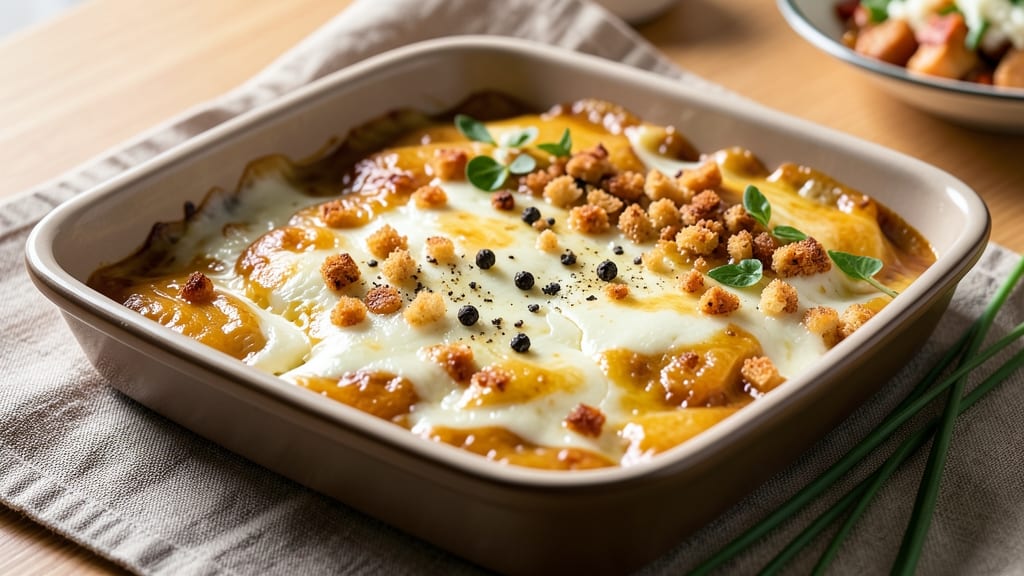
This au gratin cheese sauce recipe transforms simple ingredients into a luxurious, golden-brown topping with a velvety stretch—perfect for elevating potatoes, pasta, or vegetables.
The secret lies in the precise balance of sharp cheddar, rich cream, and a touch of mustard powder, which creates that signature bubbly crust while keeping the interior lusciously creamy.
Professional chefs rely on this technique to achieve restaurant-quality results at home. The sauce starts with a roux—equal parts butter and flour cooked until nutty—before adding warm milk and cheese for a smooth, velvety base.
What sets this apart is the final step: browning the sauce under the broiler until it develops a golden, crispy crust with tiny bubbles.
What you’ll end up with is a sauce that’s rich, stretchy, and irresistibly crispy on top—ideal for topping baked dishes or drizzling over steaming vegetables. The flavor is deeply savory with just enough tang, and the texture changes dramatically from creamy to crispy, making every bite exciting.
This is the kind of sauce that turns ordinary sides into showstopping centerpieces.
Use it as a topping for scalloped potatoes, mac and cheese, or even grilled fish. The recipe yields about 2 cups, enough to generously coat a standard baking dish. Let’s make this sauce—the star of your next meal.
Ingredients for au gratin cheese sauce
Ten essential ingredients transform into a restaurant-quality au gratin sauce with velvety stretch and bubbly crust.
| Ingredient | Amount | Notes |
|---|---|---|
| Unsalted Butter 🧈 | ½ cup | Cold-cut into small cubes for even cooking |
| All-Purpose Flour 🌾 | ½ cup | Diamond Crystal preferred for light texture |
| Sharp White Cheddar Cheese 🧀 | 1 ½ cups | Freshly grated, block preferred |
| Heavy Whipping Cream 🥛 | 1 cup | Full-fat for optimal richness |
| Whole Milk 🥛 | 1 cup | Warmed for smooth incorporation |
| Mustard Powder 🌶️ | 1 tsp | Yellow or Dijon for authentic tang |
| Ground Black Pepper 🌶️ | ½ tsp | Freshly cracked for maximum flavor |
| Kosher Salt 🧂 | ½ tsp | Diamond Crystal preferred for precise seasoning |
| Garlic Cloves 🧄 | 2 cloves | Minced for subtle aromatic depth |
| Extra-Virgin Olive Oil 🫒 | 1 tbsp | For finishing to enhance golden crust |
The cheese selection is non-negotiable—sharp white cheddar provides the perfect balance of tang and creaminess. Penzeys or local artisan cheesemongers offer the freshest blocks, but pre-grated works in a pinch if labeled 'block-style' (avoid the pre-shredded kind with anti-caking agents). The butter should be cold-cut into small cubes to create a proper roux without burning. For flour, Diamond Crystal measures differently than regular brands—pack the cup lightly to avoid dense texture. Garlic cloves should be minced, not powdered, to develop their aromatic complexity during cooking.
No sharp cheddar? Gruyère or Emmental provide excellent substitutes, though the flavor profile shifts slightly toward nutty. Running short on heavy cream? Half-and-half plus 1 tbsp extra butter maintains richness. Mustard powder unavailable? Dijon mustard at half the amount works, though the texture will be slightly looser. For a dairy-free adaptation, full-fat coconut milk replaces both cream and milk, though the sauce will be less velvety. Always use full-fat dairy products—reduced-fat versions compromise the sauce's luxurious texture. The olive oil finish is optional but recommended for that signature golden sheen.
Freshly grated cheese loses moisture quickly, so store any extras in an airtight container with a damp paper towel for up to 3 days. The prepared sauce reheats beautifully—simmer gently on the stove or warm in the microwave with a splash of milk to restore creaminess. For best results, broil the sauce immediately after making to develop that signature bubbly crust. Leftover sauce freezes well for up to 3 months when stored in a sealed container with a thin layer of olive oil on top to prevent skin formation. Portion into ice cube trays for convenient single-use servings.
Why You'll Love This Recipe
- Five-Ingredient Magic: The pantry staples you already own—just butter, flour, milk, cream, and that sharp cheddar—turn into something luxurious. No specialty stores, no last-minute grocery runs, just pure, creamy satisfaction in a skillet.
- Creamy Crispy Perfection: That golden top with the melt-in-your-mouth center? It’s all in the timing—whisking the roux until it’s nutty, then folding in the cheese until it’s just almost smooth. Honestly, it’s the kind of texture that makes you close your eyes and sigh.
- Weeknight Workhorse: Toss it over roasted potatoes, stir it into pasta, or drizzle it on grilled fish—this sauce adapts like a chameleon. I’ve even used it to rescue burnt toast (yes, really) and turned it into a cheesy grilled cheese filling. It’s my secret weapon for "I don’t know what to eat" nights.
- Leftovers That Don’t Let You Down: The flavor actually deepens the next day—better than takeout, I swear. Reheat it gently, add a splash of milk to loosen it up, and suddenly you’ve got a cozy lunch or a quick dinner for two. No sad, rubbery leftovers here.
Step-by-step instructions for au gratin cheese sauce
Mastering this sauce delivers the perfect balance of velvety texture and golden-brown crust every time.
Create the Roux Foundation
In a medium saucepan, melt the 0.5 cup unsalted butter over medium heat. Once fully melted and foaming subsides, immediately whisk in the 0.5 cup all-purpose flour to form a smooth paste. Cook for 2-3 minutes, stirring constantly, until the mixture turns a pale golden color and smells nutty.
This roux is the backbone of your sauce—don't rush it. The color change signals the flour's raw taste has cooked off, preventing a floury aftertaste. If it darkens too quickly, reduce the heat slightly. You're aiming for a light beige hue, not brown.
Gradually Incorporate Liquids
Slowly pour in the 1 cup whole milk and 1 cup heavy whipping cream simultaneously, whisking vigorously to prevent lumps. Return the heat to medium-low and continue whisking for 3-4 minutes until the sauce thickens enough to coat the back of a spoon.
This gradual addition prevents curdling and ensures a silky texture. If the sauce thickens too quickly, add 1-2 tablespoons of milk to loosen it. The sauce should now resemble heavy cream with a velvety consistency—thick enough to hold its shape but still pourable.
Build Flavor with Aromatics and Seasonings
Reduce heat to low and add the 2 minced garlic cloves, 1 tsp mustard powder, 0.5 tsp kosher salt, and 0.5 tsp ground black pepper. Stir constantly for 1 minute to allow the garlic to infuse without burning. Then gradually whisk in the 1.5 cups sharp white cheddar cheese until fully melted and smooth.
Cheese melts best when added gradually—don't dump it all at once or you'll risk clumping. If the sauce looks too thick, thin with a splash of warm milk. The cheese should dissolve completely, creating a glossy, golden sauce with no visible chunks.
Achieve the Perfect Finish
Remove the sauce from heat and immediately stir in the 1 tbsp extra-virgin olive oil. This final touch enhances the sauce's richness and helps create that coveted golden-brown crust when baked. Transfer the sauce to a mixing bowl and cover with plastic wrap pressed directly onto the surface to prevent a skin from forming.
Let the sauce rest for 10 minutes at room temperature. This resting period allows flavors to meld and the sauce to thicken slightly—essential for achieving that signature bubbly crust when baked. The sauce should now have a smooth, velvety texture with a glossy sheen.
Pro Tips For Making Au Gratin Cheese Sauce
- Cook the Roux Low: I learned this the hard way—rushing the roux with butter and flour on high heat turns it sandy instead of creamy. Keep the heat at a gentle simmer, stirring constantly, until it’s the color of pale toast. That’s when you add the milk, not a second sooner.
- Grate Cheese Fresh: Pre-shredded cheese has anti-caking agents that make the sauce grainy. Use a box grater or food processor for sharp white cheddar—it melts smoother and sticks better to the sauce. (Yes, even if you’re impatient like me.)
- Temper the Cream: Dumping cold heavy cream into a hot roux causes lumps. Whisk in the warm milk first, then slowly add the cream while stirring like your life depends on it. The sauce will thank you with a silky finish.
- Salt in Stages: Skip the urge to salt everything at once. Add half the cheese’s salt with the butter, then taste the roux before adding milk. Adjust again at the end—this sauce forgives over-salting less than you think. (Your future self will thank you.)
Creative variations of this dish
Classic Potato Topping
This sauce was literally designed for scalloped potatoes—spread a thin layer over sliced potatoes in a baking dish, then top with extra cheese before baking. I like to use Yukon Gold potatoes for their buttery texture and even cooking.
For extra richness, add a sprinkle of Gruyère cheese on top before broiling. 🥔
Mac and Cheese Upgrade
Transform your mac and cheese by mixing this sauce directly into the cooked pasta. For a baked version, spread the sauce over pasta in a baking dish, then top with breadcrumbs and extra cheese before broiling.
I often add crispy bacon bits for a smoky-sweet contrast. The sauce's velvety texture coats each noodle perfectly.
Vegetable Elevation
Drizzle this sauce over roasted vegetables like brussels sprouts, asparagus, or cauliflower> to turn them into a gourmet side. I recommend roasting the vegetables first until tender-crisp, then spooning the warm sauce over them.
The cheese sauce's tang cuts through the natural sweetness of the vegetables beautifully. 🥦
Seafood Pairing
This sauce pairs surprisingly well with seafood. Drizzle it over grilled salmon or baked cod> for a creamy, cheesy contrast to the delicate fish. I like to add fresh dill>** and a squeeze of lemon to brighten the flavors.
The sauce's richness complements the natural sweetness of the fish without overpowering it.
Baked Pasta Variations
For baked pasta dishes, spread this sauce over cooked pasta like penne> or fettuccine>, then top with your choice of protein—grilled chicken, shrimp, or even crispy pancetta>**.
The sauce's bubbly crust forms perfectly under the broiler, creating a restaurant-quality finish. I often add a pinch of nutmeg>** to enhance the cheese flavor.
Dairy-Free Adaptation
For a dairy-free version, replace the heavy cream and milk with full-fat coconut milk>, and use nutritional yeast> instead of cheese. While it won't have the same velvety texture, it still delivers a rich, cheesy flavor.
I've found that adding 1 tbsp cornstarch>**** helps thicken the sauce, making it more suitable for topping dishes. 🌱
Nutrition facts
Frequently asked questions
Why does my au gratin cheese sauce get grainy?
Graininess usually means the cheese didn't melt completely or the sauce was stirred too vigorously after adding it. Always melt cheese gradually over low heat, whisking constantly. For extra smoothness, strain the sauce through a fine-mesh sieve after cooking. Using freshly grated cheese (not pre-shredded) also prevents clumping.
Can I make this sauce ahead of time?
Yes! Prepare the sauce up to 24 hours ahead and store it in an airtight container in the fridge. Reheat gently on the stove with a splash of warm milk to restore creaminess. For best results, broil the sauce immediately before serving to recreate that signature bubbly crust. The flavors actually improve overnight!
What's the secret to getting that perfect golden crust?
The golden crust comes from the olive oil finish and proper broiling technique. Spread the sauce in an even layer in a baking dish, then broil on high for 2-3 minutes until bubbly and golden. Watch closely—it burns quickly! For extra crispiness, sprinkle a pinch of paprika before broiling.
Can I use this sauce for dishes other than potatoes?
This versatile sauce works beautifully on pasta, roasted vegetables, grilled fish, and even meatloaf. The key is to use it warm—drizzle over hot dishes for the best texture. For seafood, add fresh herbs like dill or parsley to complement the flavors.
How do I fix a sauce that's too thick or too thin?
For a too-thick sauce, whisk in 1-2 tablespoons of warm milk until smooth. If it's too thin, mix 1 teaspoon cornstarch with 1 tablespoon cold water, stir into the sauce, and simmer for 1-2 minutes until thickened. Always adjust heat gradually to maintain the velvety texture.