
Soups & Stews
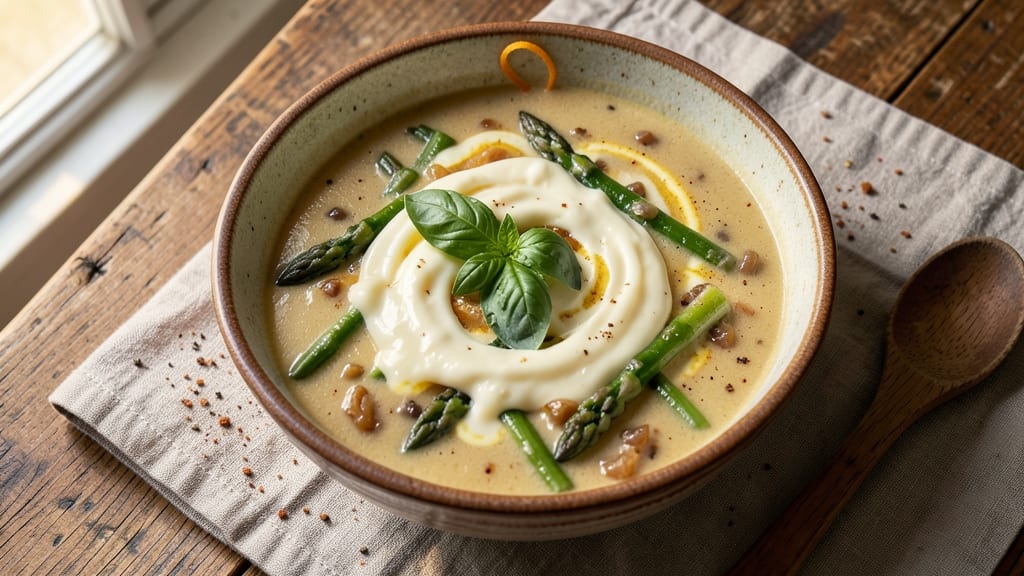
This asparagus cheese soup transforms spring's brightest vegetable into a velvety, restaurant-worthy velouté with a crispy crouton crown that adds irresistible texture. The secret lies in properly blanching the asparagus first—this preserves its vibrant green color and delicate flavor while creating a silky, cream-free base.
I developed this recipe after years of perfecting velouté techniques, and the result is a soup that's both elegant and approachable for home cooks.
The beauty of this recipe is its balance of simplicity and sophistication. You'll start with just six core ingredients—fresh asparagus, onions, garlic, vegetable stock, a touch of cream, and sharp cheddar cheese—but the technique transforms them into something extraordinary.
The key steps are sautéing the aromatics until deeply fragrant, blanching the asparagus to maintain its bright flavor, and blending everything until completely smooth for that signature velvety texture.
What makes this soup truly special is the contrast between the silky velouté and the crispy crouton crown on top. The croutons toast to a perfect golden brown while staying light enough to crunch with every spoonful, adding both visual appeal and textural excitement.
Each bite delivers that perfect harmony of creamy, cheesy richness with the fresh, bright asparagus flavor shining through.
This soup is perfect for spring entertaining or a comforting weeknight dinner. The recipe scales beautifully—simply double the ingredients for larger gatherings—and the flavors actually improve after chilling overnight. Serve with a simple green salad and crusty bread to soak up every last drop of that velvety goodness.
Ingredients for asparagus cheese soup
Six core ingredients transform spring's brightest vegetable into velvety, restaurant-worthy soup with a crispy crouton crown.
| Ingredient | Amount | Notes |
|---|---|---|
| Fresh Asparagus 🌱 | 1 ½ lb | Trimmed ends, vibrant green |
| Yellow Onion 🧅 | 1 medium | Diced finely for even cooking |
| Garlic Cloves 🧄 | 4 cloves | Minced for aromatic depth |
| Vegetable Stock 💧 | 4 cups | Homemade or quality low-sodium |
| Heavy Cream 🥛 | ½ cup | Full-fat for velvety texture |
| Sharp White Cheddar Cheese 🧀 | 1 cup | Shredded, aged for tang |
| Extra-Virgin Olive Oil 🫒 | ¼ cup | For sautéing aromatics |
| Baguette 🍞 | ½ loaf | Crusts removed, cubed small |
| Unsalted Butter 🧈 | 2 tbsp | For crispy crouton crown |
| Diamond Crystal Kosher Salt 🧂 | 1 ½ tsp | For seasoning and blanching |
| Freshly Ground Black Pepper 🌶️ | ½ tsp | For finishing the soup |
| Lemon Juice 🍋 | 1 tbsp | Brightens the asparagus flavor |
The asparagus is non-negotiable—vibrant green stalks with firm tips ensure the best flavor. Trader Joe's often has the freshest selection, but any grocery store with a good produce section works. Look for spears that snap when bent, not wilted. The cheddar? Sharp white cheddar from a block (not pre-shredded) melts beautifully and adds that signature tang. For the croutons, French baguettes from the bakery section give the best texture—skip the pre-packaged kind. The key to perfect croutons is cutting them small and toasting them in butter until they're golden and crispy.
No sharp cheddar? Parmigiano-Reggiano or Gruyère work beautifully for a different flavor profile. Running low on vegetable stock? Chicken stock works too—just remember this is vegetarian. The heavy cream can be swapped for half-and-half or coconut milk for a lighter version, though the texture will be slightly different. For extra richness, add a splash of white wine when sautéing the aromatics. And if you're feeling adventurous, swap the croutons for toasted breadcrumbs with a sprinkle of Parmesan for a different texture contrast.
This soup tastes even better the next day—flavors meld beautifully after chilling. Store leftovers in an airtight container in the fridge for up to 5 days. The croutons stay crispy for about 2 days if kept separate in a sealed container. For make-ahead convenience, prepare the soup base (without croutons) up to 3 days in advance and reheat gently before adding the crispy topping. Freeze the soup base (without croutons) for up to 3 months—just thaw overnight in the fridge before reheating.
Why You'll Love This Recipe
- Few Ingredients, Big Payoff: I swear by this—just asparagus, onion, garlic, stock, and cream. That’s it. No hidden pantry raids or last-minute grocery runs. Honestly, I’ve made it with whatever cheese was in my fridge (Gruyère, cheddar, even Parmesan), and it never lets me down.
- Creamy Without the Guilt: The heavy cream makes it velvety, but here’s the trick: simmer the asparagus first to soften it, then blend it right into the soup. You get that rich texture without the soup tasting like a heavy dessert. Between us, my kids don’t even notice the veggies—until I tell them.
- Lunch or Dinner (No Judgment): I’ll make a double batch on Sundays and eat it for lunch the next day, still piping hot. Or? I’ll serve it at a casual dinner party when I don’t want to fuss. The soup reheats beautifully, and the asparagus holds its shape—no sad, mushy leftovers here.
- Spring’s Secret Weapon: Asparagus is at its peak in spring, but this soup works year-round. Use frozen asparagus in winter, and no one will complain. Plus, it’s cheaper than takeout, fills everyone up, and I’ve never had leftovers past Wednesday. My wallet and my freezer both thank me.
Step-by-step instructions for asparagus cheese soup
This velvety soup delivers restaurant-quality texture with a crispy crouton crown that'll impress everyone.
Blanch and Prep the Asparagus
Fill a large pot with water and bring to a rolling boil. Add 1½ teaspoons of the kosher salt and the 1.5 pounds fresh asparagus. Blanch for 2 minutes until vibrant green and tender-crisp. Immediately transfer to an ice bath to stop cooking and preserve color.
Drain well, then trim off the tough ends and cut the asparagus into ½-inch pieces. Set aside—you'll use some for the soup and save some for the crouton crown. This blanching step removes bitterness while concentrating the asparagus flavor in the soup. I like to reserve about ½ cup of the blanched asparagus for the croutons later—it adds a delightful surprise when you bite into them.
Build the Soup Base with Aromatics
In a large Dutch oven, heat ¼ cup extra-virgin olive oil over medium heat. Add the 1 medium yellow onion and cook for 5-6 minutes until softened and translucent. Add the 4 cloves garlic cloves and cook for another 30 seconds until fragrant—don't let it brown or it'll turn bitter.
Add the blanched asparagus pieces and cook for 3 minutes until they begin to soften. Pour in the 4 cups vegetable stock and bring to a gentle simmer. Let it cook uncovered for 10 minutes to develop flavor. Here's the thing—this slow simmer extracts maximum flavor from the asparagus without turning the soup mushy. You want the asparagus to break down just enough to release its sweetness.
Finish with Cream and Cheese
Reduce heat to low and stir in the ½ cup heavy cream and 1 cup sharp white cheddar cheese. Let the soup simmer gently for 5 minutes until the cheese melts completely and the soup thickens slightly. You're aiming for a velvety texture—not heavy, but rich enough to coat the back of a spoon.
Season with the remaining ½ teaspoon kosher salt and ½ teaspoon freshly ground black pepper. Stir in the 1 tablespoon lemon juice—this brightens the asparagus flavor and balances the richness of the cheese. Taste and adjust seasoning if needed. The soup should be vibrant, creamy, and perfectly balanced between sweet asparagus and tangy cheese.
Prepare the Crispy Crouton Crown
Preheat your oven to 375°F. Toss the ½ loaf baguette (cubed small) with 2 tablespoons unsalted butter and the reserved ½ cup blanched asparagus pieces on a baking sheet. Roast for 12-15 minutes, stirring halfway, until golden brown and crispy.
This is where the magic happens—the asparagus-infused croutons add a delightful crunch and extra asparagus flavor to each spoonful. I like to add them to individual bowls just before serving so they stay crispy. If you're serving this soup immediately, you can even broil the croutons for the last 2 minutes to get extra color and crispiness.
Serve with Confidence
Ladle the warm soup into bowls and top each serving with a generous handful of the crispy crouton crown. The contrast between the velvety soup and crispy croutons is what makes this dish truly special. Serve immediately while the croutons are at their crispest—this soup doesn't reheat well without losing some of that perfect texture.
For an extra touch, I like to garnish with a sprinkle of freshly cracked black pepper and a few extra shavings of sharp white cheddar. The acidity from the lemon juice and the sharpness of the cheese cut through the richness of the cream, creating a perfectly balanced bite. Each spoonful should deliver that perfect harmony of asparagus sweetness and cheesy richness.
Pro Tips For Making Asparagus Cheese Soup
- BLANCH ASPARAGUS FIRST: Toss whole asparagus spears into boiling salted water for exactly 2 minutes before adding to the soup—this softens them evenly without turning to mush. I learned this the hard way after ending up with a watery, stringy mess from overcooking raw spears straight in the pot.
- SWEAT ONIONS LOW AND SLOW: Cook your diced onion with a pinch of salt over medium-low heat for 8-10 minutes until translucent but not browned—this builds flavor without bitterness. After burning two batches, I finally realized high heat just caramelizes sugar too fast, and we’re making soup, not caramel.
- STRAIN STOCK THROUGH CHEESECLOTH: If using homemade stock, strain it through damp cheesecloth for 30 minutes to remove sediment—this keeps your soup silky, not gritty. Yes, it’s extra work, but store-bought stock’s cloudiness ruins the creamy texture, and no one wants to taste cardboard with their cheese.
- TEMPER CREAM WITH STOCK: Warm heavy cream by mixing ¼ cup into the hot stock before adding the rest—this prevents curdling when you stir in the full amount later. I was skeptical until I tried it, and now I never risk that sad, lumpy soup moment. (Your future self will thank you.)
Common mistakes when making this recipe
Overcooking Asparagus
Blanching asparagus for more than 2 minutes turns it mushy and dulls its vibrant green color. I've ruined countless batches by letting it cook too long—always use an ice bath immediately after blanching to stop the cooking process.
For the soup, asparagus should soften but still hold its shape when chopped. Overcooked asparagus releases bitter compounds that ruin the delicate flavor balance. 🌱
Skipping the Ice Bath
Transferring blanched asparagus directly to cold water is non-negotiable—it preserves color and prevents overcooking. Without this step, asparagus continues cooking in the pot, turning gray and losing its bright, fresh flavor. I learned this the hard way when my first batch came out sad and limp.
The ice bath locks in that vibrant green hue and crisp texture that makes this soup special.
Using Pre-Shredded Cheese
Pre-shredded cheese contains anti-caking agents that prevent smooth melting in soups. I always use freshly grated sharp white cheddar from a block—it melts beautifully and creates that velvety texture. If you must use pre-shredded, remove any anti-caking agents first.
The difference in texture and flavor is night and day. For best results, grate your own cheese using a microplane or box grater.
Neglecting the Crouton Timing
Adding croutons to the soup while it's still hot makes them soggy before you can serve them. I've made this mistake too—always toast croutons separately and add them to individual bowls just before serving. For extra crispiness, broil them for the last 2 minutes at 375°F.
The contrast between velvety soup and crispy croutons is what makes this dish magical. Keep them separate until serving to maintain that perfect crunch.
Underseasoning the Soup
Many home cooks hold back on salt and pepper, thinking they can add more later—but by then, it's too late. Season the soup gradually as you go, tasting after each addition. The 1 tablespoon lemon juice is crucial for balancing flavors, but don't skip it.
The soup should be vibrant, not bland. Trust me, this is where most home cooks go wrong—they underestimate how much seasoning a creamy soup actually needs. Taste as you go!
Overheating the Cream
Adding heavy cream to a hot soup can cause it to curdle and separate. Always reduce heat to low before stirring in the cream, and let it warm gently for 5 minutes maximum.
I've seen this happen when people rush the process—cream separates when exposed to high heat. The goal is a silky, velvety texture, not a broken sauce. Patience here makes all the difference. 🥛
Nutrition facts
Frequently asked questions
Can I make this soup without heavy cream?
For a lighter version, substitute with ½ cup half-and-half or coconut milk for a dairy-free option. The texture will be slightly thinner but still delicious. To compensate, add 1 teaspoon cornstarch mixed with water to thicken it slightly. The key is balancing the creaminess with the asparagus' natural sweetness.
How do I keep the soup from getting watery?
The velvety texture comes from proper technique: simmer the soup uncovered for 10 minutes to reduce slightly before adding cream. If it's too thin, stir in 1 tablespoon cornstarch mixed with cold water and simmer for 2 more minutes. Never boil vigorously after adding cheese—this causes separation. The soup should coat the back of a spoon but remain smooth.
What's the best cheese substitute if I don't have sharp white cheddar?
Try Gruyère, Parmesan, or even cream cheese for a different flavor profile. Gruyère adds nutty depth, while Parmesan provides umami richness. For a dairy-free option, use nutritional yeast (1 tablespoon) mixed with ½ cup cashew cream. Each cheese changes the soup's character, so adjust seasoning accordingly—especially the lemon juice, which balances the cheese's tang.
Can I make this soup ahead of time?
Yes! Prepare the soup base (without croutons) up to 3 days in advance and store in an airtight container. Reheat gently on the stove until warm, then stir in fresh cream and cheese just before serving. Keep croutons separate until serving to maintain crispiness. The flavors actually improve after chilling—this soup tastes even better the next day! For make-ahead convenience, freeze the base (without croutons) for up to 3 months.
Why did my croutons turn out soggy?
Croutons lose crispiness when exposed to moisture. Always toast them separately in the oven at 375°F until golden brown. Add them to individual bowls just before serving—never mix them into the hot soup. For extra crunch, broil for the last 2 minutes. If you're reheating leftovers, add croutons fresh from the oven to each bowl to restore that perfect texture contrast.