
Appetizers
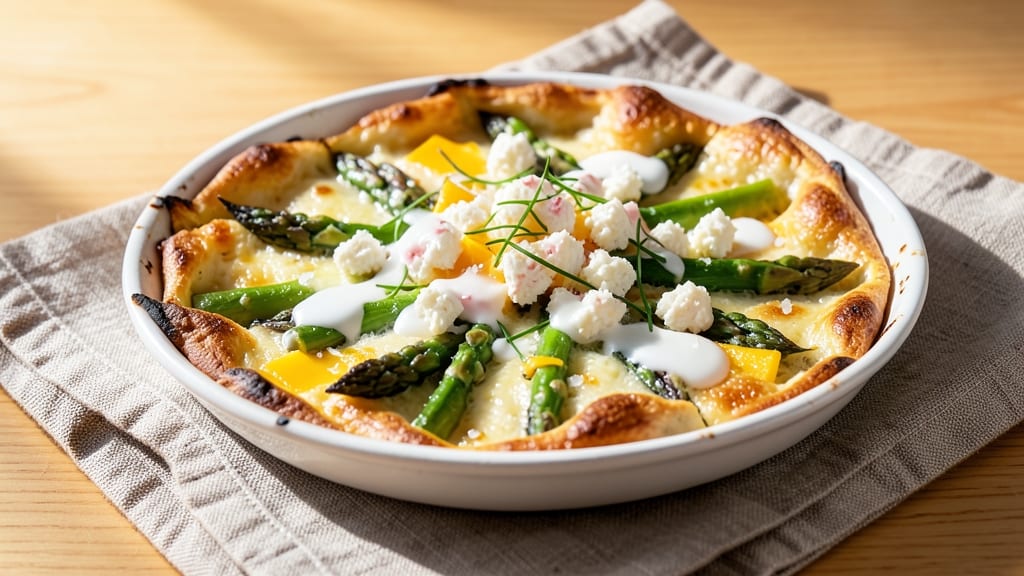
This asparagus and goat cheese frittata delivers the perfect balance of fluffy eggs, crisp edges, and bright spring flavors in every bite. 💛 The secret lies in properly pre-cooking the asparagus and using a combination of goat cheese and sharp cheddar for depth.
I developed this recipe during peak asparagus season when I needed a quick, vegetarian meal that felt special enough for company.
The beauty of this frittata is its versatility—it works equally well as a light breakfast, brunch centerpiece, or even a satisfying dinner with a crisp salad. The asparagus adds natural sweetness that pairs beautifully with the tangy goat cheese, while fresh herbs and lemon zest brighten the dish.
What makes it truly impressive is how simple it is to achieve professional-looking results with just a few key techniques.
By the time it emerges from the oven, you'll have a golden, slightly crispy top with tender, fluffy eggs underneath. The asparagus spears peek through in perfect bites, and the goat cheese creates pockets of creamy richness.
This isn't just another egg dish—it's a restaurant-quality vegetarian main that comes together in one pan with minimal cleanup.
Serve it warm with a simple arugula salad or crusty bread to soak up any extra sauce. The recipe scales perfectly for brunch crowds or leftovers that reheat beautifully. Here's how to make it—simple steps for foolproof results every time.
Ingredients for asparagus and goat cheese frittata
Eight fresh ingredients transform into a restaurant-worthy frittata with crisp edges and fluffy centers.
| Ingredient | Amount | Notes |
|---|---|---|
| Large Eggs 🥚 | 8 whole | Room temperature preferred |
| Fresh Asparagus Spears 🌱 | 1 lb | Trimmed, tough ends removed |
| Goat Cheese 🧀 | 6 oz | Soft, crumbled variety |
| Sharp Cheddar Cheese 🧀 | ½ cup | Grated, aged variety |
| Heavy Cream 🥛 | ¼ cup | Full-fat for richness |
| Fresh Chives 🌿 | ¼ cup | Finely chopped for garnish |
| Fresh Dill 🌿 | 0.1 cup | Chopped, mild flavor |
| Lemon Zest 🍋 | 1 tbsp | Freshly grated |
| Extra-Virgin Olive Oil 🫒 | ¼ cup | High quality, fruity |
| Salt 🧂 | 1 tsp | Kosher or sea salt |
| Black Pepper 🌶️ | ½ tsp | Freshly ground preferred |
| All-Purpose Flour 🌾 | 1 tbsp | For crispy edges |
The asparagus is the star—choose bright green spears with tight tips for peak freshness. Whole Foods or local farmers markets often have the freshest selection during spring. Trim the tough ends (about 1 inch) before cooking, and blanch them for 2 minutes to soften slightly. The goat cheese should be soft and crumbly—look for brands like La Tourangelle or local artisanal varieties for the best texture. Sharp cheddar adds depth that pairs beautifully with the tangy goat cheese, so don't skip the aged variety. For the eggs, room temperature is key—they'll whip up fluffier and incorporate better into the batter.
No goat cheese? Substitute with feta or creamy ricotta, though the flavor will differ slightly. Fresh herbs can be swapped—parsley works in a pinch, but dill and chives provide that bright, herby note that complements the asparagus perfectly. The lemon zest adds a bright pop, but lemon juice works in a squeeze if you're fresh out of zest. For extra crispy edges, sprinkle flour directly on top before baking. If you're making this ahead, pre-cook the asparagus and store separately until ready to assemble—it keeps its vibrant color better.
Prepped ingredients keep for 2 days in the fridge, but assemble the frittata fresh for best results. The asparagus can be blanched ahead and stored in ice water, but pat it dry before adding to the eggs to prevent a soggy texture. Leftovers reheat beautifully—30 seconds in the microwave or until warmed through in a skillet. For a crowd, double the recipe—it scales perfectly for brunch gatherings. Store any leftovers in an airtight container for up to 3 days, though I find it's usually gone before then.
Why You'll Love This Recipe
- One-Pan Magic: I swear by this—just eggs, asparagus, and cheese in one skillet. No fancy gadgets, no extra bowls, and honestly? The cleanup is just wiping a pan. That’s it.
- Creamy-Tangy Dream: The goat cheese melts into this rich, tangy ribbon while the sharp cheddar adds a salty bite. Swirl in that heavy cream at the end, and it’s like a hug in every bite—crispy outside, silky inside.
- Lunchbox Hero: Between us, this frittata is my go-to for meal prep. Slice it up, pack it with a side salad, and you’ve got a lunch that feels fancy but costs next to nothing. My kids even ask for it—(yes, even on a Tuesday).
- Leftovers That Don’t Suck: Most frittatas dry out by day two, but this one? The cream keeps it moist, and the asparagus stays tender. I reheat slices in the toaster oven until golden—tastes just like fresh, and saves me from takeout nights.
Step-by-step instructions for asparagus and goat cheese frittata
Here's how to create a perfectly fluffy frittata with crisp edges and herby depth.
🍳 Step 1: Prep the Asparagus and Cheese Mixture
Start by trimming the tough ends from the 1 lb fresh asparagus spears—you'll want about 6-7 inches per spear. Cut the spears into 1-inch pieces and spread them on a baking sheet. Drizzle with 1 tablespoon of the extra-virgin olive oil, sprinkle with ½ teaspoon salt and ¼ teaspoon black pepper, then toss gently to coat. Roast at 425°F for 10-12 minutes until tender and slightly blistered.
While the asparagus roasts, crumble the 6 oz goat cheese into a medium bowl. Add the 0.5 cup sharp cheddar cheese, 0.1 cup chopped fresh dill, and 1 tablespoon lemon zest. Stir until evenly combined. This mixture will add rich, tangy flavor throughout the frittata. Keep it at room temperature until ready to use.
👨🍳 Step 2: Whisk the Egg and Cream Mixture
In a large bowl, crack the 8 whole large eggs and add the 0.25 cup heavy cream. Whisk vigorously for 30 seconds until the yolks and whites are fully combined. Add the 1 teaspoon salt and 0.5 teaspoon black pepper, then whisk for another 10 seconds until evenly distributed. This step ensures a light, airy texture—don't skip it.
Gradually fold in the roasted asparagus and the goat cheese mixture using a silicone spatula. Be gentle to avoid deflating the eggs. The asparagus should be evenly distributed, and the cheese should melt slightly from the residual heat. Set the bowl aside while you prepare the pan.
🔥 Step 3: Create the Crispy Base
Heat an 10-inch oven-safe skillet over medium-high heat. Add the 0.25 cup extra-virgin olive oil and swirl to coat the bottom evenly. Sprinkle the 1 tablespoon all-purpose flour over the oil and stir for 30 seconds until the flour turns golden. This creates a crispy, flavorful crust that prevents sticking and adds texture.
Immediately pour in the egg mixture and spread it evenly across the pan using a spatula. The base should be about ½-inch thick. Reduce the heat to medium-low and let the frittata cook undisturbed for 5-6 minutes until the edges begin to set and the top looks slightly puffed. This gentle cooking prevents a rubbery texture.
🥘 Step 4: Finish Under the Broiler
Transfer the skillet to a preheated broiler and broil for 4-5 minutes until the top is golden brown and the edges are crispy. Watch closely—broilers can vary, and you want just enough color without burning. The center should still be slightly custardy when you cut into it.
Remove from the broiler and let the frittata rest for 5 minutes in the pan. This resting period allows the eggs to fully set and makes slicing easier. Sprinkle the 0.25 cup chopped fresh chives evenly over the top just before serving for a fresh, herby finish.
🍽️ Step 5: Serve Warm with Confidence
Use a long spatula to slide the frittata onto a cutting board or serving platter. Let it rest for another 2-3 minutes before slicing into 4 equal wedges. The interior should be creamy with pockets of melted goat cheese, while the exterior remains crisp. Serve immediately while warm, with a side salad or crusty bread to soak up any extra sauce.
This frittata delivers the perfect balance of textures—fluffy eggs, crisp edges, tender asparagus, and creamy cheese. The lemon zest brightens the richness, and the fresh herbs add a vibrant finish. Leftovers keep well in the refrigerator for up to 3 days, though they're rarely that lucky.
Pro Tips For Making Asparagus And Goat Cheese Frittata
- Prep Asparagus Properly: Trim the tough ends by snapping them backward—don’t cut, or you’ll lose the crisp texture. Roast the spears for 8-10 minutes at 400°F (425°F if you’re impatient) before adding them to the frittata. This keeps them tender without turning to mush when the eggs cook.
- Start Hot, End Gentle: Get your oven to 425°F and let the pan scream hot before pouring the egg mixture. After 5 minutes, drop to 350°F and let it finish—this gives you a crisp bottom and a creamy top without overcooking the goat cheese.
- Whisk Like You Mean It: Don’t just stir the eggs—whisk them vigorously with the heavy cream until the yolks are fully emulsified. This makes the frittata silky, not rubbery. (Yes, even if you’re using a hand mixer, give it 30 seconds extra.)
- Layer Cheese Strategically: Sprinkle half the sharp cheddar on the bottom of the pan before pouring the eggs, then dot goat cheese on top after adding the asparagus. The cheddar melts into a savory crust, while the goat cheese stays creamy and doesn’t turn grainy. (Trust me, I’ve learned this the hard way.)
Common mistakes when making perfect results
Overcooking the Asparagus
Roasting asparagus at 425°F for more than 12 minutes turns it mushy and loses its natural sweetness. I’ve made this mistake—overcooked asparagus makes the frittata taste bitter and watery. Instead, aim for tender-crisp texture with just a few blistered spots. 🌱
Skipping the Resting Time
Rushing to cut into the frittata right after baking leads to a runny, unappetizing center. Let it rest for 5-10 minutes in the pan before serving.
This allows the eggs to fully set and the flavors to meld. Trust me, the wait is worth it for that perfect creamy texture. ⏰
Uneven Egg Mixture
Folding the roasted asparagus and cheese too vigorously deflates the egg mixture, resulting in a dense, cake-like frittata. Use a silicone spatula and work gently to preserve the airiness. I’ve seen this happen when people overmix—just fold until combined. 🥚
Broiler Burns
Watching the broiler too closely can lead to overcooking and burnt edges. Keep the skillet 6 inches from the heat source and check frequently. A few seconds too long turns golden brown into charred. The top should be just set, not crispy. 🔥
Cold Eggs
Using straight-from-the-fridge eggs creates pockets of uneven cooking. Let eggs sit at room temperature for 30 minutes before whisking. Cold eggs take longer to cook through and can cause the frittata to set unevenly. This small step makes a big difference in texture. ❄️
Inconsistent Heat
Fluctuating heat—like switching from stovetop to broiler too quickly—can cause the frittata to cook unevenly. Let the base set completely on the stovetop before broiling. I’ve seen this happen when people rush the process, leading to a raw center or overcooked edges. Stay patient! 💡
Nutrition facts
Frequently asked questions
Can I make this frittata without goat cheese?
If you're avoiding goat cheese, substitute with 6 oz feta or 8 oz ricotta for a similar creamy texture. For a sharper flavor, try ½ cup crumbled blue cheese—it adds depth that pairs well with asparagus. Just reduce the sharp cheddar by ¼ cup to balance the saltiness.
How do I reheat leftovers without drying them out?
Slice the frittata into wedges and reheat in a nonstick skillet over medium-low heat for 2-3 minutes per side until warmed through. For microwave reheating, cover with a damp paper towel and heat in 30-second intervals until just hot. Never reheat to full heat—this makes the eggs rubbery.
What's the best way to prep asparagus ahead of time?
Trim and blanch the asparagus for 2 minutes in boiling water, then shock in ice water. Store in an airtight container with a paper towel to absorb moisture. It keeps well for 2 days in the fridge—just pat dry before adding to the egg mixture to prevent a soggy frittata.
Can I make this frittata in a smaller pan?
Yes, but adjust the thickness. For a 9-inch pan, use 6 eggs and reduce the asparagus to ½ lb. Keep the same ½-inch thickness for even cooking. The broiling time may decrease to 3-4 minutes—watch closely for golden edges.
Why did my frittata turn out dense instead of fluffy?
Overmixing the eggs or folding too vigorously deflates the air bubbles needed for lightness. Also, ensure your eggs are at room temperature and whisk just until combined. If the pan wasn't hot enough, the base won't set properly, leading to a cake-like texture. Try preheating the pan longer next time.