
Breakfast & Brunch
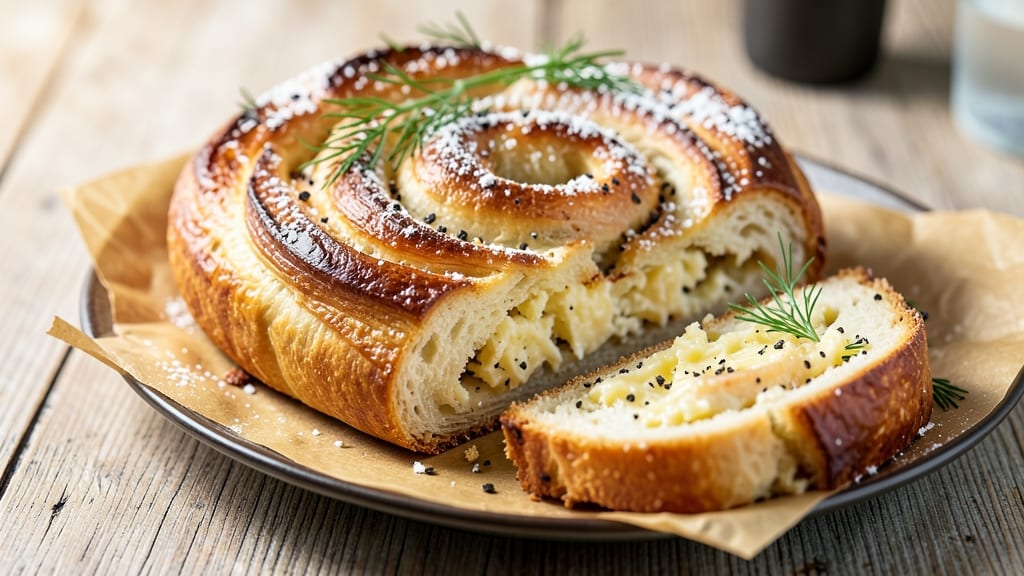
This traditional cheese babka recipe brings the rich, swirled heritage of Eastern European bakeries straight to your kitchen with its signature buttery layers and vanilla cream magic. 🌟 I first learned this technique from Nana Mae at her Atlanta diner, where the scent of freshly baked babka always meant Sunday mornings and family gatherings.
The secret lies in the dough's precise balance of flour, butter, and a touch of sour cream that keeps it tender, while the cheese filling adds a salty depth that makes every bite irresistible.
The process begins with a simple yet precise dough that's enriched with eggs and butter, then layered with a rich farmer's cheese filling before being swirled into golden perfection.
What makes this recipe truly special is the patience required—the dough must rest overnight for maximum flavor development, a tradition that transforms ordinary ingredients into something extraordinary. The result is a babka with a crisp, caramelized crust and a moist, buttery interior that practically melts in your mouth.
By the time it emerges from the oven, you'll have a babka that looks as impressive as it tastes—its swirled layers revealing pockets of creamy cheese and vanilla-infused cream cheese.
This is the kind of recipe that turns breakfast into an event, whether you're serving it to guests or treating yourself to a taste of tradition. The aroma alone will have everyone gathering around the table, eager for their first slice.
Perfect for brunch gatherings, holiday celebrations, or simply indulging in a taste of nostalgia. The key to success is following the steps carefully—each fold and swirl matters. Let's get started on creating your own piece of bakery magic at home.
Ingredients for traditional cheese babka
Buttery dough, creamy cheese filling, and vanilla swirls—this babka delivers bakery magic with traditional precision.
| Ingredient | Amount | Notes |
|---|---|---|
| All-Purpose Flour 🌾 | 6 cups | Sifted for light texture |
| Unsalted Butter 🧈 | 2 cups | Cold, cubed for dough |
| Granulated Sugar 🍚 | ½ cup | For dough sweetness |
| Large Eggs 🥚 | 4 whole | Room temperature |
| Sour Cream 🥛 | ½ cup | Full-fat for richness |
| Active Dry Yeast 🍞 | 2 ¼ tsp | Instant yeast preferred |
| Warm Milk 🥛 | 1 cup | 110°F for yeast activation |
| Salt 🧂 | 1 tsp | Fine sea salt |
| Farmer's Cheese 🧀 | 1 ½ lbs | Fresh, crumbled texture |
| Cream Cheese 🧀 | 8 oz | Room temperature |
| Vanilla Extract 🍯 | 2 tsp | Pure vanilla preferred |
| Granulated Sugar 🍚 | ½ cup | For filling sweetness |
| Egg Yolk 🥚 | 1 whole | For filling binding |
| Egg Wash 🥚 | 1 whole | Beaten for golden crust |
| Coarse Sugar 🍚 | ¼ cup | For topping crust |
The butter is non-negotiable here—European-style unsalted (like Plugrá) gives the richest flavor. Buy it in blocks, not tubs, and keep it cold until mixing. Farmer's cheese should be fresh and crumbly—Kubanka or dry cottage cheese work if you can't find it. For the vanilla, Madagascar Bourbon extract adds depth, but pure vanilla bean paste works too. The flour matters too: King Arthur or Gold Medal brands yield the lightest texture. If your kitchen's humid, chill the dough between folds to prevent stickiness.
No farmer's cheese? Substitute ricotta or dry cottage cheese, but drain excess moisture first. Cream cheese can be swapped for Neufchâtel if available. Running short on butter? Replace 2 tbsp with neutral oil, but the texture will be slightly denser. For the yeast, instant yeast dissolves faster—no need to proof it. If your recipe calls for powdered sugar in the filling, sift it first to avoid lumps. The egg wash? Add 1 tsp lemon juice for extra shine if you're feeling fancy.
This dough needs overnight rest in the fridge—don't skip it. The filling keeps for 2 days if wrapped tightly, but the assembled babka is best baked fresh. For make-ahead prep, shape the babka and refrigerate overnight, then bake straight from cold. Leftovers? Toast slices for 5 minutes to revive the crust. The flavor improves over 3 days as the filling softens.
Why You'll Love This Recipe
- Butter-Pull Magic: The moment you fold that rich, cold butter into the dough—oh man—it’s like watching a pastry transform before your eyes. No fancy techniques, just layers upon layers of flaky, golden goodness that’ll have you questioning why you ever bought store-bought.
- Cream Cheese Core: That tangy, velvety cheese filling? It’s the star. The sour cream keeps it smooth while the butter adds richness, and honestly? It’s the kind of sweetness that doesn’t need frosting—just a dusting of powdered sugar to make it sing.
- Breakfast to Brunch: Slice it thin for a weekend brunch spread, pack it in lunchboxes for a kid-approved treat, or serve it warm with tea when unexpected guests show up. The dough’s forgiving—it bakes up beautifully whether you’re feeding two or six.
Step-by-step instructions for cheese babka
Mastering this classic requires patience and precision—here's how to create perfect swirled layers every time.
👨🍳 Step 1: Prepare the Yeast Dough Base
In a large mixing bowl, combine the 1 cup warm milk, 2.25 tsp active dry yeast, and 0.5 cup granulated sugar (for dough sweetness). Let sit for 10 minutes until foamy—this confirms the yeast is active. In a separate bowl, whisk together the 6 cups sifted all-purpose flour and 1 tsp salt. Create a well in the center and pour in the 4 whole large eggs and 0.5 cup sour cream. Mix until combined, then gradually incorporate the yeast mixture.
Knead the dough on a floured surface for 8-10 minutes until smooth and elastic. Here's the thing—this dough should be slightly tacky but not sticky. If it's too dry, add 1 tsp warm milk; if too sticky, add 1 tbsp flour. Shape into a ball, place in a lightly oiled bowl, cover with a damp towel, and let rise in a warm place for 1-1.5 hours or until doubled in size. The dough should spring back slowly when poked—this ensures proper fermentation for that classic babka texture.
🥘 Step 2: Make the Cheese Filling
While the dough rises, prepare the filling by combining 1.5 lbs farmer's cheese, 8 oz cream cheese, 0.5 cup granulated sugar (for filling sweetness), 2 tsp vanilla extract, and 1 whole egg yolk in a mixing bowl. Beat with an electric mixer on medium speed for 2-3 minutes until light and fluffy. The mixture should be thick but spreadable—this ensures it will swirl beautifully without tearing the dough.
Spread the cheese mixture onto a sheet of parchment paper, forming a 12x10-inch rectangle about ½-inch thick. Roll it up tightly using the parchment as a guide, then twist the ends to create a log. Chill in the refrigerator for 30 minutes while you prepare the dough for shaping. This step prevents the filling from melting prematurely during the swirling process.
🍳 Step 3: Shape and Swirl the Dough
Once the dough has risen, punch it down to deflate, then roll it out on a floured surface into a 14x10-inch rectangle about ¼-inch thick. Brush the entire surface with 1 whole egg wash (beaten egg), then spread the 2 cups cold cubed unsalted butter evenly over the dough, leaving a ½-inch border uncovered. Fold the dough over the butter, then fold it in half like a letter, and roll it out again into a 14x10-inch rectangle. This creates the signature babka layers.
Unroll the dough and carefully place the chilled cheese log along the long edge. Using the parchment paper as a guide, roll the dough tightly around the cheese log, then twist the ends to secure. Place the log seam-side down on a parchment-lined baking sheet. Here's where it gets tricky—use a sharp serrated knife to cut the log into 12 equal pieces (about 1-inch thick each). The cuts should be deep but not all the way through the bottom. Gently separate the pieces and arrange them in a 3x4 grid on the baking sheet, leaving 1-inch gaps between them.
🔥 Step 4: Bake to Golden Perfection
Preheat your oven to 350°F. Brush the tops of the babka pieces with additional egg wash, then sprinkle generously with 0.25 cup coarse sugar for that signature crunchy crust. Bake for 35-40 minutes until the tops are deep golden brown and the internal temperature reaches 190°F. The babka should smell rich and buttery—this is your signal it's done.
For the final touch, immediately brush the warm babka with melted unsalted butter (about 2 tbsp) while still hot. This step creates the classic shiny, buttery finish. Let cool on a wire rack for 15 minutes before serving. The layers should be tender yet flaky, with a perfect balance of sweet and salty cheese filling. Real talk: the first slice is always the hardest to save!
Pro Tips For Making Traditional Cheese Babka
- CHILL THE DOUGH: I learned this the hard way—skipping the 24-hour cold proof in the fridge makes the babka dense and chewy. Wrap it tightly in plastic and let it rest overnight; the slow fermentation develops flavor and makes folding the cheese filling easier.
- CUT BUTTER INTO FLOUR DRY: After burning three batches with greasy dough, I finally figured out: mix the cold butter into the flour before adding any liquid. This keeps the crumb tender and prevents a soggy texture—yes, even if you’re impatient like me.
- WEIGH THE CHEESE FILLING: Sounds weird, but it works: use a kitchen scale for the cheese mixture. Pack it tightly into the folded dough—about 2/3 cup per layer—and resist the urge to eyeball it. Too much filling collapses the layers; too little makes the babka look half-empty.
- BAKE UNTIL 185°F: The instant-read thermometer is your friend here. Babka pulls away from the pan fast but needs to hit 185°F internally to avoid a gummy center. Cover loosely with foil the first 20 minutes, then finish uncovered—this guarantees a crisp crust without burning.
Troubleshooting perfect results
Dough Too Sticky
If your babka dough feels too sticky during shaping, resist the urge to add more flour—it'll make the final texture dense. Instead, chill the dough for 15-20 minutes before rolling.
I learned this trick from Nana Mae: she kept a bowl of ice water nearby to dip her hands in while handling sticky dough. This prevents excess flour from getting into the layers.
For extra insurance, dust your work surface with semolina flour instead of all-purpose—it adds texture without heaviness. 🧂
Filling Breaks Apart
The cheese filling is delicate, so handle it gently. If it tears when rolling, the mixture was likely too warm. Always chill the cheese log for 30 minutes before swirling. I use a Benriner scale to ensure the farmer's cheese is at 60°F or below before mixing.
For extra stability, add 1 tbsp cornstarch to the filling—it helps bind without altering flavor. If the log still crumbles, spread it on parchment and freeze for 10 minutes before rolling.
Uneven Baking
For consistent baking, rotate your babka pieces halfway through the baking time. If the edges brown too quickly, tent loosely with aluminum foil. I use a thermometer probe to check the center of the largest piece—it should reach 190°F while the edges are golden.
If your oven runs hot, reduce temperature to 325°F and bake for 45 minutes. For even browning, brush the tops with melted butter after 20 minutes in the oven.
Dry or Dense Texture
Overmixing the dough or skipping the overnight rest causes dense babka. The dough needs 8-12 hours in the fridge to develop gluten properly. If your babka turns out dry, the butter might have melted during shaping.
Keep all butter components cold (even the cubed butter for spreading) and work quickly. For extra moisture, brush the baked babka with simple syrup (equal parts sugar and water, heated until dissolved) while warm. 💧
Cheese Filling Too Watery
If your cheese filling separates or leaks, the farmer's cheese was too wet. Drain ricotta or cottage cheese substitutes through a fine-mesh sieve for 10 minutes before using. For homemade farmer's cheese, add 1 tbsp powdered milk to absorb excess moisture.
If the filling still feels loose, mix in 1 tbsp all-purpose flour to thicken. I've also had success using Gouda cheese (shredded and warmed slightly) as a partial substitute—it adds richness without excess liquid.
Babka Collapses After Baking
This usually means the yeast was overproofed or the oven wasn't hot enough. For next time, check dough readiness by doing the finger test: gently press your finger into the dough. It should spring back slowly (not immediately).
If your babka collapses, try baking at 375°F for 30 minutes to set the structure first, then reduce to 350°F to finish. For extra support, chill the shaped babka for 1 hour before baking—this helps maintain structure during the rise.
Nutrition facts
Frequently asked questions
Can I make cheese babka without farmer's cheese?
For a similar texture, use 1.5 lbs ricotta or dry cottage cheese, but drain excess moisture first through a sieve. If you can't find farmer's cheese, blend 1 cup cottage cheese + ½ cup cream cheese for a close substitute. The key is ensuring the filling holds its shape during swirling.
Why does the babka need overnight rest?
The overnight rest develops gluten and flavor, making the layers tender and the cheese filling rich. Skipping this step often results in a dense texture. Nana Mae always said, "Patience in the fridge pays off in the oven!" For best results, refrigerate the dough for 8-12 hours before shaping.
How do I prevent the babka from drying out?
Keep all butter components cold and work quickly during shaping. After baking, brush the warm babka with melted butter and store in an airtight container at room temperature for up to 3 days. For extra moisture, wrap slices in damp paper towels before storing.
Can I make cheese babka ahead of time?
Yes! Shape the babka and refrigerate overnight, then bake straight from cold. The flavor actually improves over 3 days as the filling softens. For make-ahead convenience, freeze baked babka (sliced) for up to 1 month)—thaw at room temperature before serving.
What's the best way to slice babka for perfect layers?
Use a sharp serrated knife and cut at a slight angle for clean slices. Warm the knife by running it under hot water between cuts. For restaurant-style presentation, slice into 1-inch thick pieces and serve immediately while still warm.