
Sauces & Condiments
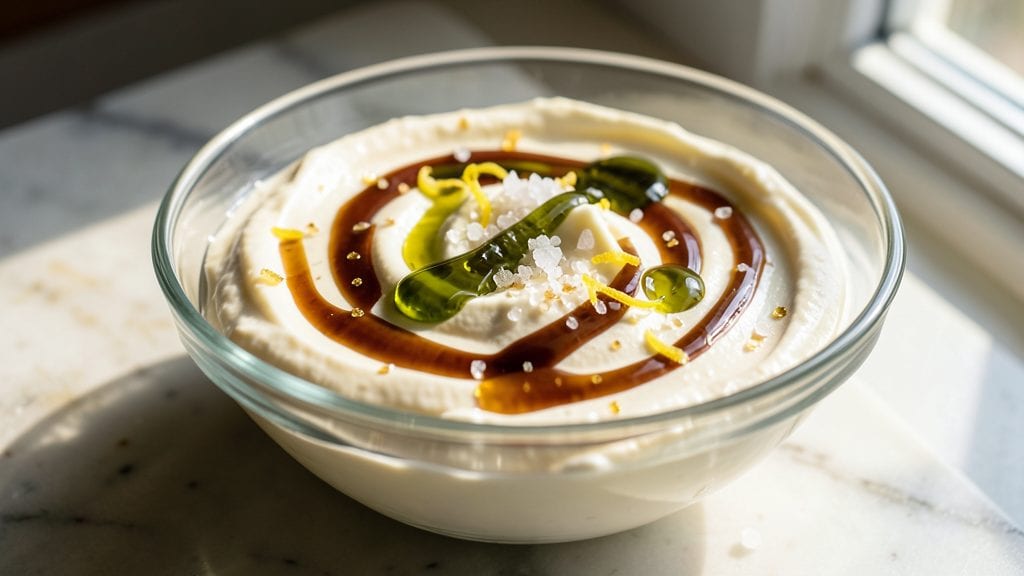
A sweetened cream cheese recipe transforms simple pantry staples into a velvety, citrus-kissed spread that elevates everything from bagels to fruit tarts. The secret lies in balancing rich cream cheese with bright lemon zest and honey—a combination that creates a smooth, spreadable texture with layers of flavor.
I developed this after years of experimenting with store-bought versions that always fell short of homemade quality.
This recipe delivers professional results in just 15 minutes of active work, with no special equipment needed beyond a mixing bowl and whisk. The citrus brightens the natural sweetness of the cream cheese, while vanilla and a touch of salt round out the flavors.
Perfect for breakfast, dessert toppings, or even as a glaze for pancakes, this spread keeps beautifully in the refrigerator for up to 10 days.
What you'll end up with is a silky-smooth cream cheese blend that's sweet enough to satisfy cravings but not overpowering—ideal for pairing with fresh berries, toasted croissants, or as a filling for cream cheese danishes.
The texture is light and airy, with just enough body to hold its shape when spread. No one will guess it's made with just five ingredients.
Use it as a breakfast staple, a dessert enhancement, or even a dip for pretzels. The versatility makes it a kitchen essential that's always worth having on hand. Let's get started on creating this crowd-pleasing spread that's easier than you think.
Ingredients for sweetened cream cheese
Six essential ingredients create a velvety citrus-kissed cream cheese blend that rivals artisanal spreads.
| Ingredient | Amount | Notes |
|---|---|---|
| Full-Fat Cream Cheese 🧀 | 8 oz | Room temperature for blending |
| Raw Honey 🍯 | ⅓ cup | Light amber preferred for balance |
| Fresh Lemon Zest 🍋 | 1 tbsp | Finely grated, no pith |
| Pure Vanilla Extract 🌸 | 1 tsp | Bottled vanilla preferred |
| Diamond Crystal Kosher Salt 🧂 | ¼ tsp | Fine grain for even distribution |
| Extra-Virgin Olive Oil 🫒 | 1 tbsp | Light fruity variety for subtle flavor |
The cream cheese forms the luxurious base, so Philadelphia brand or high-fat European varieties deliver optimal texture. Room temperature is critical—cold lumps create graininess. Trader Joe's and specialty cheese shops offer excellent selections beyond standard grocery store options. For honey, Manuka or clover varieties provide ideal floral notes without overpowering. The lemon zest must be freshly grated—pre-made zest loses potency within hours. Store-bought zest jars often contain pith, which imparts bitterness. A fine-mesh zester ensures only the aromatic outer layer is captured.
No full-fat cream cheese? Neufchâtel cheese offers a perfect substitute with slightly lower fat content but superior texture. Substituting honey? Maple syrup at 1:1 ratio works, though it lacks floral complexity. Vanilla extract unavailable? Pure vanilla bean paste provides seeds for visual appeal and deeper flavor. The olive oil serves as an emulsifier—omit only if your cream cheese is exceptionally rich. For a tangier profile, add 1/2 tsp lemon juice alongside the zest. All ingredients must be at room temperature to prevent separation during blending.
This spread maintains peak texture for 10 days when refrigerated in an airtight container. For longer storage, portion into 1-ounce jars and freeze for up to 3 months. The olive oil layer that naturally rises can be gently stirred back in. Ideal serving temperature is 65-70°F—microwave for 10-15 seconds if chilled. The blend thickens slightly upon standing, becoming perfectly spreadable after 10 minutes at room temperature. For professional presentation, pipe through a star tip onto bagels or fruit tarts.
Why You'll Love This Recipe
- I swear by this combo: full-fat cream cheese and raw honey—just those two, softened at room temp, and boom. No fancy equipment, no waiting for ovens, just a bowl and a whisk. The lemon zest and vanilla are the cherry on top, but honestly? You could skip them and still end up with something rich and satisfying.
- Two-Ingredient Core: I swear by this combo: full-fat cream cheese and raw honey—just those two, softened at room temp, and boom. No fancy equipment, no waiting for ovens, just a bowl and a whisk. The lemon zest and vanilla are the cherry on top, but honestly? You could skip them and still end up with something rich and satisfying.
- Bright & Creamy Magic: That first taste of honey’s floral depth cutting through the tangy cream cheese? It’s like a hug for your taste buds. The lemon zest adds this zingy lift—no overpowering, just a bright little spark that makes it taste fresh, not heavy. (Yes, even on a Tuesday night.)
- Breakfast or Snack Hero: Spread it on warm toast with a drizzle of honey, or use it to fill cinnamon rolls—trust me, it’s the secret weapon. I’ve also used it as a dip for apple slices when my kids come home starving after soccer practice. Sweet, salty, and creamy? It works every time.
Step-by-step instructions for sweetened cream cheese spread
Here's how to craft a perfectly balanced sweetened cream cheese blend with vibrant citrus notes.
Prepare the Cream Cheese Base
Begin by ensuring the 8 oz full-fat cream cheese is at room temperature. I recommend placing it in the refrigerator overnight or using the microwave's defrost setting in 10-second intervals until just soft enough to spread easily. Room temperature cream cheese blends more smoothly and incorporates other ingredients without developing lumps.
Transfer the softened cream cheese to a mixing bowl. Using an electric mixer on low speed, beat the cream cheese for 1-2 minutes until completely smooth. You'll notice it transform from a blocky texture to a velvety, pale yellow spread. This step is crucial—any remaining lumps will create graininess in your final product, no matter how well you blend the other ingredients later.
Incorporate Honey and Olive Oil
With the mixer still running on low speed, gradually add the 0.33 cup raw honey and 1 tablespoon extra-virgin olive oil. The honey should blend in smoothly, creating a thick, golden mixture. I like to add the honey first because its liquid nature helps emulsify the fat content in the cream cheese more effectively than the olive oil alone.
Continue mixing for 2-3 minutes until the honey is completely incorporated and the mixture becomes uniformly smooth. You'll see the color deepen slightly as the honey's natural pigments blend with the cream cheese. At this stage, the mixture should resemble a thick, spreadable frosting. If you taste it now, you'll notice a sweet, creamy base with subtle olive oil richness—this is your flavor foundation.
Add Aromatics for Depth
Reduce the mixer speed to low and add the 1 tablespoon fresh lemon zest, 1 teaspoon pure vanilla extract, and 0.25 teaspoon diamond crystal kosher salt. The lemon zest should be finely grated with no pith—this ensures bright citrus flavor without bitterness. Mix for 1-2 minutes until the zest is completely distributed and the mixture becomes fragrant with vanilla and lemon notes.
Here's where the magic happens: the salt enhances all flavors, making the honey taste sweeter and the lemon zest more vibrant. The vanilla extract adds warmth that balances the acidity. You'll smell a complex aroma—sweet honey, citrus brightness, and subtle olive oil richness. This is your quality checkpoint: if the scent is muted, you may need to increase the vanilla slightly next time.
Final Blending for Perfect Texture
Increase the mixer speed to medium and blend for an additional 2-3 minutes until the mixture is completely smooth and homogeneous. You're looking for a texture that's thick enough to hold its shape when spread but still spreadable without resistance. The final product should have a satin-like finish with visible swirls from the blending process.
For best results, transfer the mixture to an airtight container and refrigerate for at least 1 hour before serving. This resting period allows the flavors to meld completely and the texture to set slightly, making it easier to spread. When ready to use, give it a quick stir—it should come together smoothly without requiring much effort, indicating proper blending.
Pro Tips For Making Sweetened Cream Cheese
- Soften First: DESCRIPTION: Take your full-fat cream cheese out of the fridge 30 minutes before mixing—room temperature makes blending with honey and zest actually smooth, not lumpy. I used to force it straight from the fridge and ended up with a grainy mess every time.
- Zest Freshly: DESCRIPTION: Grate that lemon zest right before mixing—it loses brightness fast. And skip the pith; a few stray bitter bits ruin the whole spread. (Yes, even if you’re impatient like me.)
- Salt Last: DESCRIPTION: Taste before adding the kosher salt—cream cheese varies in saltiness, and you’ll need less than you think. After mixing, let it sit 10 minutes; flavors meld better. Trust me, you’ll regret rushing this.
- Honey Ratio Matters: DESCRIPTION: Start with 1 tablespoon honey per 8 oz cream cheese, then adjust. Too much? The spread gets cloying. Too little? It’s bland. Taste as you go—this isn’t a science experiment, but close.
Troubleshooting your sweetened cream cheese
Grainy Texture Issues
If your sweetened cream cheese develops a grainy texture, it's almost always caused by cold cream cheese. The fat in cold cream cheese doesn't emulsify properly with the honey and olive oil, creating visible lumps.
To fix this, place the entire mixture in a heatproof bowl and gently warm it in a double boiler over low heat for 2-3 minutes, stirring constantly. Remove from heat immediately once smooth, then let it cool slightly before continuing with the recipe.
For prevention, always use cream cheese that's been at room temperature for at least 1 hour before blending.
Separation Problems
When the oil and cream cheese separate, it usually means the emulsifiers (olive oil and honey) weren't properly incorporated. The solution is simple: place the separated mixture in a mixing bowl and use a hand mixer on medium-high speed for 2-3 minutes until fully re-emulsified.
For future batches, add the olive oil first at low speed to help stabilize the fat molecules before adding the honey. If separation persists, reduce the olive oil by ½ tablespoon next time—sometimes too much oil disrupts the emulsion.
Overly Sweet Taste
The honey-to-cream cheese ratio is delicate, and if your spread tastes too sweet, you can balance it by adding more lemon zest (½ teaspoon extra) or a pinch of salt (¼ teaspoon more).
For a more sophisticated fix, stir in 1 teaspoon lemon juice to add acidity that naturally reduces perceived sweetness.
If you prefer less sweetness from the start, reduce the honey by 1 tablespoon and replace it with 1 tablespoon maple syrup—it has a more complex flavor that masks sweetness better.
Too Thin Consistency
If your spread is too thin to hold its shape, it likely needs more fat to stabilize the mixture. Add 1-2 tablespoons more cream cheese (at room temperature) and blend until smooth. For a quicker fix, chill the mixture for 30 minutes before serving—cold temperatures naturally thicken dairy products.
If you're making this ahead, refrigerate it for 2 hours before testing the texture. As a last resort, stir in ½ teaspoon cornstarch mixed with 1 teaspoon water to thicken without altering flavor.
Weak Citrus Flavor
Store-bought lemon zest often loses potency quickly, but you can revive the flavor by adding ½ teaspoon fresh lemon juice to your mixture. For a more intense citrus profile, substitute the zest with 1 tablespoon finely minced lemon peel (remove all pith).
If you're using pre-grated zest, always buy it fresh—it oxidizes within hours. For future batches, consider adding ¼ teaspoon ground cardamom alongside the vanilla, which enhances citrus flavors beautifully. The key is balancing freshness with proper storage—keep zest in the freezer for up to 3 months to preserve its brightness.
Storage-Related Texture Changes
If your spread develops a watery layer after refrigeration, it's simply the natural separation of whey from the fat. Before using, give it a thorough stir to re-emulsify. For long-term storage, always use airtight containers with minimal headspace to prevent moisture absorption.
If the texture becomes too soft after freezing, place the container in the refrigerator for 1 hour before serving—this helps it regain its proper consistency. To prevent future issues, store in smaller portions (like 4-ounce jars) rather than one large container, as they thaw more evenly.
Nutrition facts
Frequently asked questions
Can I make this sweetened cream cheese without honey?
For a different flavor profile, substitute the honey with 1/3 cup maple syrup or 2 tablespoons agave nectar. If you prefer less sweetness, reduce to 2 tablespoons honey and add 1/2 teaspoon vanilla bean paste for depth. The key is maintaining the same liquid volume to preserve the smooth texture.
How do I adjust this recipe for a dairy-free version?
Replace the cream cheese with 8 oz dairy-free cream cheese (like Kite Hill or Violife) and use 1 tablespoon refined coconut oil instead of olive oil. For sweetness, agave nectar works best as it's vegan-friendly. The texture will be slightly softer but still spreadable when chilled. Add 1/4 teaspoon xanthan gum if you need extra stability.
What are the best ways to use this sweetened spread?
This velvety blend excels as a breakfast topping on bagels or toast, a dessert filling for pastries, or a fruit dip with berries. For extra flair, pipe it onto pancakes or swirl it into yogurt. The citrus notes also make it perfect for cheesecake glaze—simply thin with 1 teaspoon milk before drizzling.
Why does my cream cheese mixture separate after refrigerating?
This happens when the fat and liquid phases separate naturally. Simply stir vigorously with a spoon or whisk until smooth before using. For prevention, ensure all ingredients are at room temperature before blending, and avoid overmixing. Store in a small, wide container to minimize surface area exposure to air.
Can I add fruit to this recipe for a jam-like spread?
Yes! For a fruit-infused version, blend in 1/4 cup seedless raspberry jam or finely chopped strawberries after mixing. Start with less fruit to maintain spreadable consistency, then adjust. The acidity from fruit will enhance the citrus notes beautifully. For a chunkier texture, fold in 1/4 cup diced mango after blending.