
Appetizers
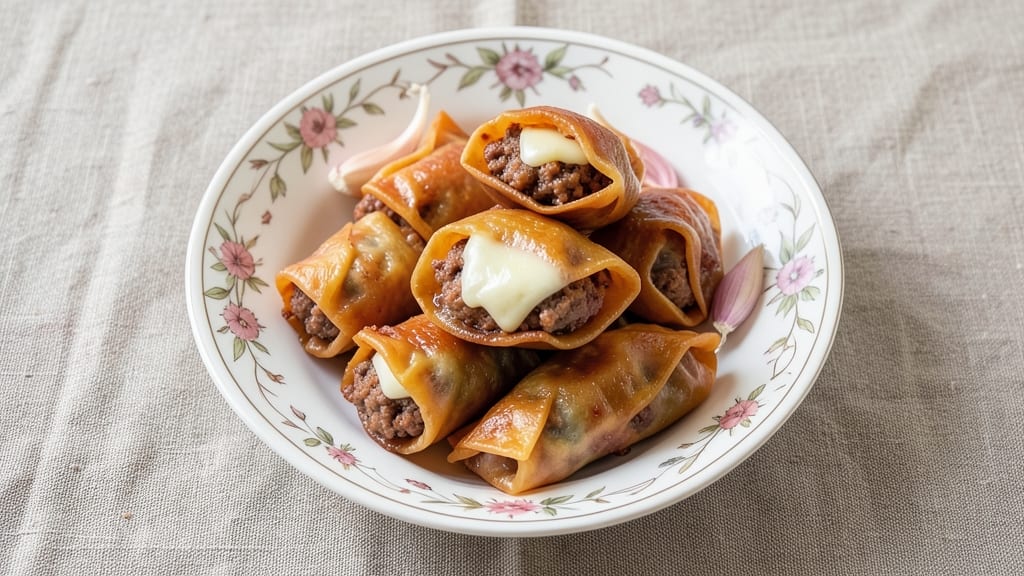
This sausage and cheese wontons recipe delivers crispy-fried gold with a secret silky dough that transforms ordinary appetizers into showstopping bites. The magic lies in balancing tender sausage, sharp cheddar, and just the right amount of seasoning—all wrapped in delicate, airy dough that crisps to perfection when fried.
I perfected this method after years of trial and error, ensuring every wonton achieves that coveted golden-brown exterior while staying pillowy inside.
The filling is where flavor comes alive: finely chopped sausage browned with garlic and ginger, mixed with melted cheese and a pinch of black pepper for depth.
The dough, made with simple ingredients like flour, water, and a touch of oil, requires precise folding and rolling to create those signature translucent wrappers. When fried in hot oil, they puff slightly before turning into crispy, golden pockets of savory goodness.
What makes these wontons exceptional is the contrast—crispy outside, silky inside—paired with the rich, herby filling that melts just enough to coat every bite. Serve them hot with a side of sweet chili sauce or soy-vinegar dip for dipping, and watch them disappear from the table.
The technique is straightforward, but the results are restaurant-quality, making this the perfect appetizer for gatherings or a satisfying snack on its own.
Whether you're hosting a dinner party or craving a quick, satisfying bite, these wontons deliver. The key is patience during assembly and maintaining consistent oil temperature for frying—just a few degrees too cool, and they won’t crisp properly.
Trust the process, and you’ll have a batch of golden, crispy wontons that taste like they came from a dim sum cart. Let’s get cooking!
Ingredients for sausage and cheese wontons
Twelve simple ingredients transform into golden, crispy wontons with a secret silky dough.
| Ingredient | Amount | Notes |
|---|---|---|
| Ground Pork Sausage 🥓 | 12 oz | Sweet or mild Italian preferred |
| Sharp Cheddar Cheese 🧀 | 8 oz | Block cheese, freshly grated |
| All-Purpose Flour 🌾 | 2 cups | Sifted for silky dough texture |
| Cold Water 💧 | 1 ½ cups | Room temperature preferred |
| Vegetable Oil 🫒 | ½ cup | For dough elasticity |
| Garlic Cloves 🧄 | 2 cloves | Minced for aromatic depth |
| Fresh Ginger 🌿 | 1 tbsp | Finely grated, aromatic |
| Ground Black Pepper 🌶️ | ½ tsp | Freshly ground for flavor |
| Salt 🧂 | ½ tsp | Kosher or sea salt |
| Vegetable Oil 🫒 | 4 cups | For deep frying |
| Sweet Chili Sauce 🍶 | ½ cup | For serving, optional |
| Soy-Vinegar Dip 🍶 | ½ cup | For serving, optional |
The ground pork sausage is non-negotiable for authentic flavor—Johnsonville mild Italian or Bob Evans are reliable brands that stay consistent. If you can't find sweet sausage, substitute Italian sausage and reduce the filling by 1 tbsp to account for excess moisture. The sharp chedddar should be block cheese (not pre-shredded)—it melts more smoothly. For the dough, King Arthur all-purpose flour is ideal, but any high-quality flour works. Cold water is critical; room temperature water can make the dough sticky. Vegetable oil for the dough adds elasticity, but avocado oil works too if you prefer a neutral flavor.
No sweet sausage? Substitute Italian sausage and add 1 tsp honey to the filling. Pre-shredded cheese won’t melt well—grate your own from a block. For the filling, fresh ginger is best, but 1 tsp ground ginger in a pinch works. The soy-vinegar dip can be made with 3 tbsp soy sauce, 2 tbsp rice vinegar, 1 tsp sugar, and 1 tsp sesame oil. If you’re short on time, store-bought sweet chili sauce (like Duke’s) is a great shortcut. The frying oil should be 350°F—use a deep-fry thermometer for consistency. Peanut oil has a high smoke point and works well, but vegetable oil is more budget-friendly.
Store the dough wrapped in plastic in the fridge for up to 2 days—it relaxes and becomes easier to work with. The filling can be prepped a day ahead and kept in the fridge. For frying, maintain oil temperature at 350°F—too cool, and they’ll absorb oil; too hot, and they’ll burn before crisping. Portion the oil into a deep skillet or Dutch oven for easier cleanup. Leftover wontons reheat beautifully in a 350°F oven for 5-7 minutes. Freeze uncooked wontons on a tray, then transfer to a bag for up to 1 month—fry straight from frozen, adding 1-2 minutes to cooking time.
Why You'll Love This Recipe
- No Fuss, No Mess: I swear by this recipe when I’m too tired to measure anything. Just mix flour and water with my fingers until it holds—no food processor, no stress. The dough comes together faster than I can say "takeout."
- Cheesy Crispy Magic: That sharp cheddar melts into gooey perfection while the edges stay golden and crisp. Honestly, the contrast of the warm, stretchy cheese and the crispy wonton wrapper? It’s the kind of bite that makes you pause mid-chew.
- Game for Any Night: I make these for lazy Mondays, game day snacks, or even a quick lunch when I’m running late. Freeze half the batch—no one will know they’re not fresh out of the pan.
- Budget-Friendly Feast: A pound of sausage and a block of cheddar stretch across multiple meals. Between us, these wontons cost less than half what takeout does, and they taste like you actually cooked them. (Spoiler: You did.)
Step-by-step instructions for sausage and cheese wontons
Here's your method for golden, crispy wontons with a tender interior—every detail matters.
Prepare the Dough for Silky Texture
In a large mixing bowl, combine the 2 cups all-purpose flour, 0.5 tsp salt, and 0.5 tsp ground black pepper. Whisk to remove any lumps. Create a well in the center and add the 0.5 cup vegetable oil and 1.5 cups cold water. Mix with a fork until a shaggy dough forms.
Transfer the dough to a clean surface and knead for 5-7 minutes until smooth and elastic. The dough should feel slightly tacky but not sticky. Here's the thing—don't overwork it. You're looking for a dough that springs back when pressed, not one that becomes tough. Wrap tightly in plastic wrap and rest for 30 minutes at room temperature. This resting period relaxes the gluten, ensuring tender wontons.
Create the Filling with Aromatic Depth
While the dough rests, prepare the filling. In a small bowl, combine the 12 oz ground pork sausage, 8 oz freshly grated sharp cheddar cheese, 2 minced garlic cloves, and 1 tbsp finely grated fresh ginger. Mix gently with your fingers until just combined—don't overwork or the filling will become dense. Season with an additional pinch of salt if needed.
This filling should be cohesive but not wet. If it feels too dry, add 1 teaspoon cold water at a time until it holds together when pressed. The cheese will melt slightly during frying, creating that signature gooey center. Keep the filling chilled until ready to use—cold ingredients prevent the dough from becoming too soft.
Assemble Wontons with Precision
Divide the rested dough into 4 equal pieces (about 4 oz each). Roll each piece into a 6-inch circle on a lightly floured surface, keeping the edges slightly thicker than the center. Use a rolling pin to achieve even thickness—about ⅛-inch thick. If the dough resists, let it rest for another 5 minutes before rolling.
Place 1 tablespoon of filling near the edge of each dough circle. Fold the dough over the filling and press the edges firmly to seal, creating a half-moon shape. Pinch the edges with your fingers to create a tight seal—this prevents filling leaks during frying. Arrange the assembled wontons on a floured tray, cover with a damp towel, and refrigerate for 15 minutes before frying. This chilling step ensures clean folds and prevents the dough from sticking.
Fry to Crispy Perfection
Heat 4 cups vegetable oil in a deep skillet or Dutch oven to 350°F. Use a deep-fry thermometer to monitor the temperature—this is critical for even cooking. Fry 4-5 wontons at a time, turning gently with tongs, until golden brown on all sides, about 3-4 minutes total. The wontons should float when ready—this is your visual cue that the dough is fully cooked.
Transfer fried wontons to a paper towel-lined plate to drain excess oil. Work quickly to maintain crispiness. The key here is temperature control—if the oil gets too hot, the wontons will brown too quickly outside while remaining raw inside. If they brown too fast, reduce heat to 325°F and fry for slightly longer. Serve immediately with 0.5 cup sweet chili sauce and 0.5 cup soy-vinegar dip for dipping.
Pro Tips For Making Sausage And Cheese Wontons
- Chill the Dough: Roll out your wonton wrappers and let them sit on a plate in the fridge for 10 minutes before filling. I used to rush this step—wrinkly, uneven edges and a chewy bite were my punishment. Cold dough handles filling better and seals cleaner when folded.
- Grate That Cheese: Skip pre-shredded cheddar—it’s coated with anti-caking agents that make it clump and weep moisture. Freshly grate sharp cheddar and pat it dry with a paper towel before mixing. Your filling will stay cohesive and crisp, not soggy.
- Test the Oil: Use a thermometer to bring your oil to 375°F (190°C) before frying. Too low, and your wontons absorb oil like a sponge; too high, and they burn before the cheese melts. A steady sizzle is your cue—adjust heat as needed.
- Fold Tight, Seal Fast: Pinch the edges of your wontons hard with your thumb and forefinger, then twist them slightly before sealing. This creates a tighter fold that won’t leak filling when frying. (Yes, it looks like you’re overcompensating—do it anyway.)
Storing and reheating this recipe
Refrigerator Storage
Uncooked wontons can be stored in the refrigerator for up to 2 days when wrapped tightly in plastic wrap or placed in an airtight container. Keep them on a tray lined with parchment paper to prevent sticking.
I like to arrange them in a single layer, separated by wax paper—this makes them easier to grab without breaking. For best results, refrigerate the assembled wontons (not the dough or filling separately) to maintain their shape and prevent the filling from oozing. 💡
Freezer Prep
For long-term storage, freeze uncooked wontons on a parchment-lined tray for 1 hour to set, then transfer to a freezer-safe bag or container. Label with the date—they’ll keep for up to 1 month.
When ready to fry, transfer frozen wontons directly to the 350°F oil and cook for 4-5 minutes, adding 1 extra minute to account for the cold start. I’ve found that freezing in a single layer prevents clumping, making them easier to handle. 🧊
Reheating Fried Wontons
Leftover fried wontons lose crispiness when reheated, but a 350°F oven works best for restoring some crunch. Place wontons on a baking sheet lined with parchment paper and bake for 5-7 minutes until warmed through. For extra crispiness, brush with a tiny bit of vegetable oil before reheating.
I avoid the microwave—it turns the dough soggy. If you’re short on time, a toaster oven at 375°F for 3-4 minutes also works well. 🔥
Reviving Dough for Later Use
The wonton dough can be refrigerated for up to 2 days in plastic wrap or a sealed container. Before using, let it sit at room temperature for 15-20 minutes to soften. If the dough feels dry, knead in 1 teaspoon cold water at a time until pliable.
I’ve even revived dough that sat overnight—just give it extra kneading time. For longer storage, wrap the dough tightly and freeze for up to 1 month. Thaw in the fridge overnight before rolling. ✨
Filling Storage Tips
The sausage and cheese filling can be prepped 1 day ahead and stored in an airtight container in the fridge. Keep it chilled until ready to assemble wontons—this prevents the cheese from softening too much and makes the dough easier to handle.
If the filling feels dry after refrigeration, add ½ teaspoon cold water to restore moisture. For freezing, portion the filling into small containers and freeze for up to 2 weeks. Thaw in the fridge before using. 🧀
Oil Management
Reuse frying oil for 2-3 batches of wontons if you strain it through a fine-mesh sieve after each use. Store leftover oil in an airtight container in the fridge for up to 1 week.
For longer storage, transfer to a freezer-safe jar and freeze for up to 3 months. When reheating oil, let it sit at room temperature for 30 minutes before using again—this prevents temperature shock.
I always keep a small amount of fresh oil on hand for the first batch to ensure the best flavor. 🫒
Nutrition facts
Frequently asked questions
Can I make these wontons without frying?
For a lighter version, pan-sear the wontons in 1 tablespoon neutral oil over medium-high heat for 2-3 minutes per side until golden. Alternatively, steam them for 8-10 minutes in a bamboo steamer until translucent. The texture will be softer but still delicious—perfect for a healthier option.
What if my wonton dough cracks when frying?
Cracking usually means the dough is too dry or the oil isn't hot enough. First, ensure your dough has rested properly (at least 30 minutes) and is rolled evenly to ⅛-inch thickness. For frying, maintain oil at 350°F—if it's too cool, the wontons will absorb oil and puff unevenly. A quick fix: brush cracked wontons with a tiny bit of egg wash before frying for extra crispiness.
Can I use store-bought wonton wrappers instead of homemade dough?
Yes! Store-bought wrappers (like those for potstickers) work perfectly—just follow the package instructions for size. For frying, use 1 tablespoon oil per wonton and reduce cooking time to 2-3 minutes (they crisp faster). The flavor won't be identical, but it's a great shortcut. Pro tip: Chill the assembled wontons for 15 minutes before frying to prevent leaks.
How do I prevent the filling from leaking during frying?
Leaks happen when the dough isn't sealed tightly or the filling is too wet. First, press the edges firmly with your fingers to create a tight seal—think "pinch and twist" like a purse string. Keep the filling chilled until assembly, and avoid overworking it (just mix until combined). If using store-bought wrappers, fold them slightly thicker at the edges. A 15-minute chill before frying also helps set the dough.
What’s the best cheese for this recipe?
Sharp cheddar is ideal—it melts smoothly and adds tangy depth. Avoid pre-shredded cheese (it contains anti-caking agents that prevent proper melting). For extra richness, mix in 2 oz cream cheese with the cheddar. Parmesan or Gouda can also work, but they’ll alter the flavor profile slightly. Always grate your own for best results.