
Desserts
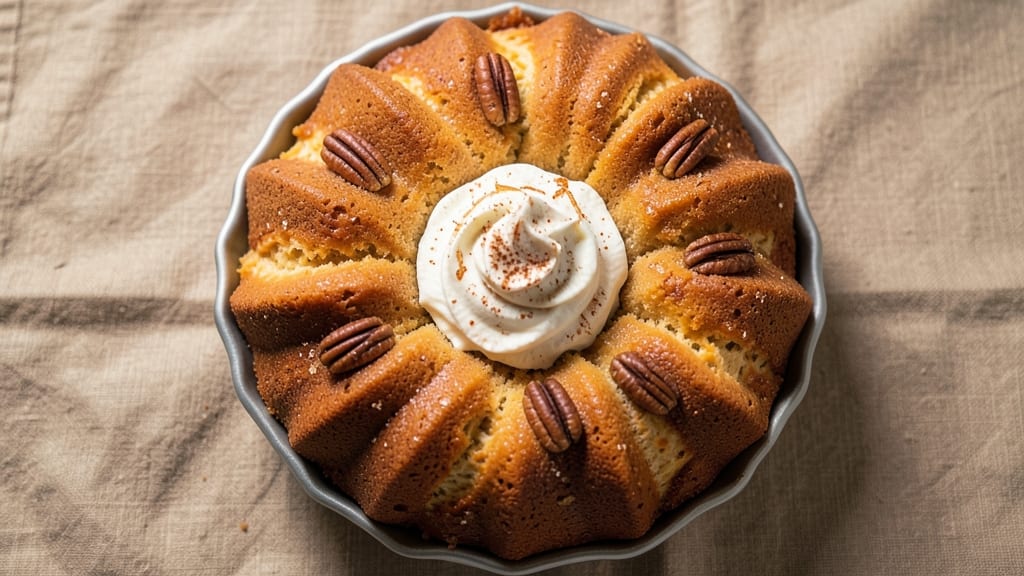
This pumpkin cream cheese bundt cake delivers the perfect autumn dessert with its signature moist layers and swirled cream cheese filling—all baked in one elegant pan. The secret lies in balancing warm spices with tangy cream cheese for a texture that's impossibly tender yet sturdy enough to hold its shape.
I developed this recipe after years of testing bundt cakes, and it never fails to impress with its rich pumpkin flavor and velvety crumb.
The recipe combines classic pumpkin cake ingredients with a foolproof cream cheese swirl technique that ensures every slice delivers that signature tangy-sweet contrast. With just one hour of active time (plus cooling), you'll have a showstopper dessert that requires no fancy equipment—just a bundt pan and precise mixing.
The cake's moistness comes from a combination of buttermilk and vegetable oil, while the cream cheese filling adds a luxurious richness.
By the time it emerges from the oven, you'll have a golden-brown bundt cake with a crackly top and tender crumb, all infused with warm cinnamon and nutmeg. The cream cheese swirls peek through the moist layers, creating visual appeal that matches the flavor.
Serve it warm with a dusting of powdered sugar or a light glaze for an extra touch of elegance.
This cake keeps beautifully for 3-4 days at room temperature or can be frozen for up to 3 months, making it perfect for holiday gatherings or last-minute dessert needs.
Whether you're baking for a special occasion or simply craving a comforting fall treat, this recipe delivers restaurant-quality results with minimal effort.
Ingredients for pumpkin cream cheese bundt cake
Twelve ingredients that transform into a showstopping bundt cake with signature swirls and velvety texture.
| Ingredient | Amount | Notes |
|---|---|---|
| Canned Pumpkin Puree 🎃 | 1 ½ cups | Unsweetened, not pie filling |
| All-Purpose Flour 🌾 | 2 ½ cups | Sifted, spooned lightly |
| Granulated Sugar 🍚 | 2 cups | White or light brown |
| Packed Brown Sugar 🍚 | 1 cup | Light or dark |
| Vegetable Oil 🫒 | 1 cup | Neutral flavor preferred |
| Large Eggs 🥚 | 4 whole | Room temperature |
| Buttermilk 🥛 | 1 cup | Fresh, not powdered |
| Cream Cheese 🧀 | 8 oz | Full-fat, room temperature |
| Powdered Sugar 🍚 | 1 ½ cups | For filling and glaze |
| Ground Cinnamon 🌿 | 2 tbsp | Freshly ground preferred |
| Ground Nutmeg 🌿 | 1 ½ tsp | Freshly grated nutmeg |
| Ground Ginger 🌿 | 1 ½ tsp | Freshly ground preferred |
| Ground Cloves 🌿 | ½ tsp | Freshly ground preferred |
| Salt 🧂 | 1 tsp | Fine sea salt |
| Baking Powder 🍞 | 2 tsp | Double-acting preferred |
| Baking Soda 🍞 | ½ tsp | Aluminum-free |
| Vanilla Extract 🍯 | 2 tsp | Pure vanilla preferred |
The pumpkin puree is non-negotiable—Libby's or Storebrand are reliable choices, but avoid anything labeled 'pie filling' (too sweet). For the spices, Penzeys or bulk bins at specialty stores yield the freshest ground cinnamon and nutmeg—key for that authentic autumn warmth. The cream cheese should be full-fat Philadelphia brand or equivalent, never low-fat, as it ensures the filling stays rich and creamy. Room temperature ingredients mix more smoothly, so take the eggs, cream cheese, and buttermilk out of the fridge 30 minutes before starting.
No buttermilk? Mix 1 tbsp lemon juice or vinegar with 1 cup milk, let sit 5 minutes. Substituting pumpkin puree? Sweet potato puree works in a pinch, but the flavor will differ slightly. For the spices, pumpkin pie spice blends can replace individual spices (use 3 tbsp for the full measure), though freshly ground spices deliver superior flavor. The vegetable oil can be swapped for melted butter (same amount) for added richness, though it may slightly darken the cake. Always sift the dry ingredients to avoid lumps in the batter.
This cake keeps beautifully at room temperature for 3-4 days when stored in an airtight container, though it's best enjoyed fresh. For longer storage, wrap tightly in plastic and freeze for up to 3 months. Thaw overnight in the fridge before serving. The bundt pan should be well-greased with vegetable shortening or butter and dusted with flour to ensure easy release. If you prefer a glaze, mix 1 cup powdered sugar with 1-2 tbsp milk and drizzle over the cooled cake for extra elegance.
Why You'll Love This Recipe
- No Pantry Panic: Honestly, this cake uses stuff you already have—just open a can of pumpkin, grab some flour and sugar, and you’re golden. No last-minute grocery runs or weird substitutions.
- Moist Magic: That creamy pumpkin puree and brown sugar combo? It’s the secret to a cake that stays tender for days. The cream cheese frosting just takes it to another level—rich, tangy, and so worth the effort.
- Holiday Hero: Between us, this is my go-to for Thanksgiving, Christmas, or even a cozy fall brunch. The Bundt shape makes it feel fancy, but it’s still simple enough to bake when company drops by.
- Leftovers Win: I’ve had this cake last a full week in my fridge, and it’s still delicious. Slice it for breakfast toast, pack it for lunches, or just enjoy seconds—no one will judge.
Step-by-step instructions for pumpkin cream cheese bundt cake
This method delivers a perfectly moist cake with rich swirls and a tender crumb every time.
Prepare the Cake Batter
Preheat your oven to 350°F and grease a 10-cup Bundt pan thoroughly with vegetable oil, then dust with all-purpose flour, tapping out any excess. In a large mixing bowl, whisk together the 1.5 cups canned pumpkin puree, 1 cup packed brown sugar, 1 cup vegetable oil, 4 whole large eggs, and 2 teaspoons vanilla extract until smooth and fully combined. This mixture forms the moist, flavorful base of the cake.
In a separate bowl, sift together the 2.5 cups all-purpose flour, 2 cups granulated sugar, 2 tablespoons ground cinnamon, 1.5 teaspoons ground nutmeg, 1.5 teaspoons ground ginger, 0.5 teaspoon ground cloves, 1 teaspoon salt, 2 teaspoons baking powder, and 0.5 teaspoon baking soda. Gradually add the dry ingredients to the pumpkin mixture, alternating with the 1 cup buttermilk, beginning and ending with the dry ingredients. Mix on low speed just until combined—overmixing develops gluten and can make the cake dense.
Here's the thing—this batter should be thick but pourable. If it looks too stiff, add 1-2 tablespoons of buttermilk to loosen it slightly. The goal is a smooth, velvety consistency that will create that signature moist crumb. Pour half of the batter into the prepared Bundt pan, spreading it evenly to coat the bottom and sides completely.
Create the Cream Cheese Filling
While the oven preheats, prepare the cream cheese filling by beating the 8 oz cream cheese with 1.5 cups powdered sugar and 1 teaspoon vanilla extract in a medium bowl until light and fluffy. This step is critical for achieving those beautiful swirls—don't skip it. The filling should be smooth and spreadable, with no lumps remaining. If the mixture feels too thick, add 1-2 teaspoons of buttermilk to achieve the right consistency.
Spread the cream cheese mixture evenly over the batter in the Bundt pan, creating a smooth layer. Then, pour the remaining cake batter over the filling, gently swirling the pan to create marbled patterns. This layering technique ensures each bite delivers both cake and filling in perfect harmony. Tap the pan lightly on the counter to release any air bubbles that may have formed during pouring.
Bake to Golden Perfection
Bake the cake for 50-55 minutes, or until a toothpick inserted into the center comes out clean with just a few moist crumbs clinging to it. The cake is done when the top springs back gently when touched and the edges pull away slightly from the pan. Your oven might run hot, so start checking at the 45-minute mark—every oven behaves differently.
During the last 10 minutes of baking, you'll notice the cake develop a beautiful golden hue. This is your visual cue that the spice flavors are caramelizing and the cake is reaching its ideal texture. If the top begins to brown too quickly, loosely tent the pan with aluminum foil to prevent over-browning while still allowing the cake to bake through.
Cool and Glaze for Finishing Touches
Remove the cake from the oven and let it cool in the pan for 15 minutes. Then, carefully invert the cake onto a wire rack and let it cool completely. This gradual cooling process prevents the cake from cracking as it sets. While the cake cools, prepare the glaze by whisking together 1 cup powdered sugar and 2-3 tablespoons of buttermilk until smooth. The glaze should be thick enough to coat the back of a spoon but still drizzle easily.
Once the cake is completely cool, drizzle the glaze evenly over the top, allowing it to drip down the sides naturally. For an extra touch, sprinkle with additional ground cinnamon or powdered sugar while the glaze is still wet. This final step not only enhances the presentation but also adds a subtle sweetness that complements the spiced cake layers. Serve slices warm or at room temperature for the best texture and flavor experience.
Pro Tips For Making Pumpkin Cream Cheese Bundt Cake
- Mix the Dry Ingredients First: I learned this the hard way—adding pumpkin puree to flour without mixing first creates lumps that turn into dense pockets in the cake. Whisk the flour, sugars, spices, and baking powder together before adding wet ingredients, or you’ll end up with a cake that tastes great but has a weird texture.
- Use Room-Temperature Cream Cheese: Cold cream cheese behaves like a brick in the batter, leading to a dense, uneven crumb. Let it sit out for 30-45 minutes (or microwave for 10 seconds) until it’s soft but not melted—this ensures it blends smoothly and keeps the cake tender.
- Don’t Overbake for Moisture: The second the edges pull away from the pan, take it out—pumpkin cake continues cooking as it cools. Overbaking turns it dry and crumbly, especially with the extra moisture from cream cheese. A toothpick with a few moist crumbs is perfect.
- Sift the Flour Twice: This isn’t the prettiest method, but it’s the tastiest. Pumpkin puree is thick, and flour clumps easily. Sift it into the dry ingredients before mixing, then sift again after adding the wet ingredients—this guarantees a light, airy texture instead of a dense one.
Pro cooking tips for this dish
Batter Consistency
The key to a perfectly moist bundt cake lies in achieving the right batter consistency—thick but pourable. I always mix my ingredients at low speed for just 30-45 seconds after combining everything to avoid overdeveloping the gluten.
If your batter looks too stiff, add 1-2 tablespoons of buttermilk gradually until it reaches a smooth, velvety texture that coats the back of a spoon. This ensures the cake will be tender yet sturdy enough to hold its shape when inverted. 🌟
Layering Technique
Pouring the batter in two distinct layers with the cream cheese filling in between creates those signature swirls. I recommend using a spatula to spread the filling evenly, then gently swirling the pan in a circular motion to create marbled patterns.
This method guarantees each slice has both cake and filling—never a dry bite. Tap the pan lightly on the counter after pouring to release any air bubbles that could disrupt the layers. Honestly, this step makes all the difference in texture and presentation.
Cream Cheese Whipping
For that light, fluffy cream cheese filling, I always beat it with a hand mixer on medium speed for about 2 minutes until completely smooth. Using room-temperature cream cheese is non-negotiable—it blends much better and creates a silky texture.
If your mixture feels too thick, add 1 teaspoon of buttermilk at a time until it reaches a spreadable consistency. The goal is a filling that's smooth enough to swirl beautifully but still holds its shape during baking. This is where the magic happens in flavor contrast.
Bundt Pan Prep
A well-prepared bundt pan prevents sticking and ensures clean release. I always use vegetable shortening (like Crisco) to grease the pan thoroughly, then dust with all-purpose flour, tapping out any excess. For extra insurance, I brush the pan with melted butter after dusting.
This triple-layer approach eliminates the need for flour residue in the cake and guarantees a perfect release every time. The pan should be completely dry before pouring the batter to prevent sogginess.
Baking Time Adjustments
Every oven behaves differently, so I recommend starting your timer at 45 minutes and checking for doneness at 50 minutes. The cake is done when a toothpick inserted in the center comes out with just a few moist crumbs.
If the top browns too quickly, loosely tent with aluminum foil during the last 10 minutes of baking. I've found that 350°F is the sweet spot for this recipe—hotter temperatures can cause the cake to dry out, while cooler temps may leave it underbaked.
Trust your oven's quirks and adjust accordingly.
Cooling Strategy
Letting the cake cool in the pan for 15 minutes before inverting is crucial for structural integrity. I always place a wire rack over a baking sheet to catch any potential drips during this process.
Once inverted, I let the cake cool completely on the rack—this gradual cooling prevents cracking and ensures the glaze sets properly. Patience here pays off with a perfectly domed cake that holds its shape beautifully.
The cooling process also allows flavors to meld together for that ultimate autumnal taste experience. ⚡
Nutrition facts
Frequently asked questions
Why does this bundt cake have a cream cheese filling instead of frosting?
The cream cheese filling creates a rich, tangy contrast to the spiced pumpkin layers that frosting can't match. When baked, it melts slightly into the cake while maintaining its signature swirl pattern, giving each bite both cake and filling. This technique also keeps the cake lighter than traditional frosted desserts.
Can I make this cake without a bundt pan?
Yes! Use a 9-inch round or tube pan instead. Grease it thoroughly and dust with flour just like the bundt pan. The cake will still be delicious, though the swirl effect will be less dramatic. For a different presentation, try a loaf pan for individual slices with clean layers.
How do I prevent the cake from cracking when inverting?
Let the cake cool in the pan for 15 minutes first, then run a thin knife around the edges to loosen it. Tap the pan gently on the counter to release any air pockets. When inverting, use a wire rack over a baking sheet to catch drips. Cooling gradually prevents sudden temperature shifts that cause cracks.
Can I substitute sweetened pumpkin puree?
No—sweetened puree contains added sugar and spices that will throw off the balance. Use 100% unsweetened pumpkin puree (like Libby's) for the perfect flavor. The recipe already includes all the spices you need, so extra sweetness or cinnamon would make the cake too heavy.
What's the best way to store leftovers?
Wrap slices tightly in plastic wrap or store in an airtight container at room temperature for 3-4 days. For longer storage, freeze slices for up to 3 months. Thaw overnight in the fridge—microwaving can make the cake gummy. The glaze will soften slightly when reheated, so add it fresh before serving.