
Desserts
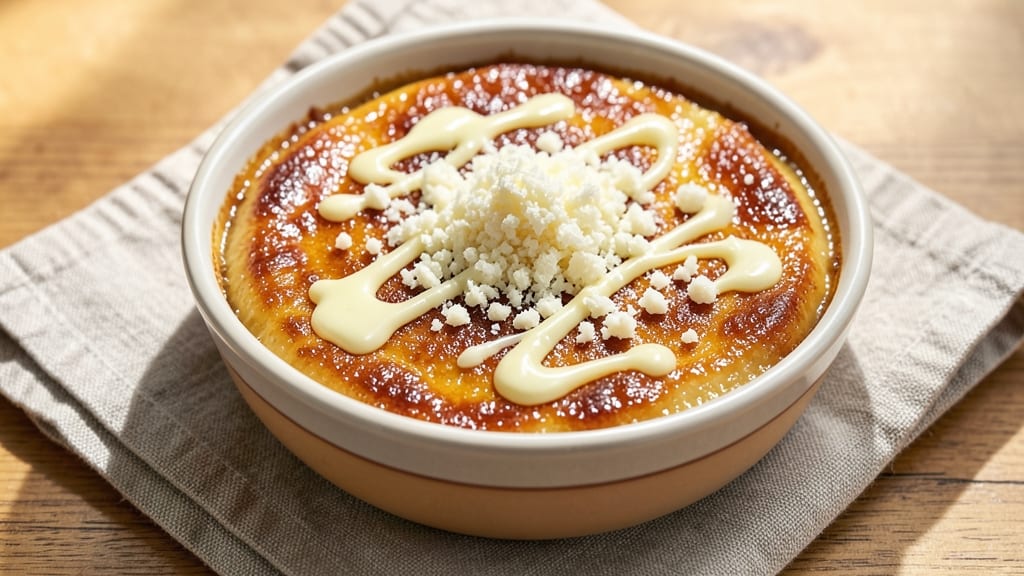
This Puerto Rican cheese flan recipe delivers the creamy, caramel-kissed perfection that makes it a beloved dessert across the island. The secret lies in blending condensed milk with fresh cheese for a richer texture, topped with coconut cream that adds a tropical twist while keeping the traditional essence intact.
I’ve perfected this version after years of baking, ensuring the custard sets just right—a silky, golden center that wobbles like liquid sunshine.
The recipe stays true to Puerto Rican traditions while incorporating a modern touch: coconut cream instead of whipped cream, which complements the flan’s sweetness without overpowering it. With just five simple ingredients and one water bath, you’ll achieve restaurant-quality results at home.
The caramel layer at the bottom isn’t just for show—it’s the foundation that ties everything together, creating that signature balance of sweet and salty.
What sets this flan apart is the coconut cream topping, which adds a velvety contrast to the smooth custard. The custard itself is lighter than traditional versions but still rich, thanks to the cheese’s tang cutting through the sweetness.
Baked to perfection, it emerges from the oven with a golden crust and a center that’s still gently set—just like your favorite pastelería back home.
Serve it warm or chilled, but always with a sprinkle of cinnamon or a drizzle of extra caramel. This recipe is foolproof, so whether you’re hosting a gathering or treating yourself, you’ll have a dessert that tastes like a taste of Puerto Rico. Let’s get baking!
Ingredients for puerto rican cheese flan
Five simple ingredients transform into a restaurant-worthy Puerto Rican cheese flan.
| Ingredient | Amount | Notes |
|---|---|---|
| Sweetened Condensed Milk 🥛 | 1 can | 14 oz can, full-fat preferred |
| Fresh Queso Fresco 🧀 | 8 oz | Crumbled, not shredded |
| Large Eggs 🥚 | 4 whole | Room temperature, separated |
| Granulated Sugar 🍚 | ½ cup | For caramel layer |
| Unsalted Butter 🧈 | 2 tbsp | For caramel layer |
| Coconut Cream 🥥 | 1 can | 13.5 oz can, chilled overnight |
| Vanilla Extract 🌿 | 1 tsp | Pure vanilla preferred |
| Ground Cinnamon 🌶️ | ½ tsp | For garnish |
| Light Corn Syrup 🍯 | 2 tbsp | For caramel stability |
| Salt 🧂 | ¼ tsp | Fine sea salt |
| Water 💧 | 1 cup | For water bath |
The condensed milk is non-negotiable—Dulce de Leche brand if you can find it, but any full-fat can works. Queso fresco is key for that authentic tang—look for crumbly, not shredded, at Latin markets or the international aisle. The eggs need to be room temp to blend smoothly, so take them out 30 minutes before mixing. For the caramel, light corn syrup prevents crystallization, and the butter adds richness. I always double-check the coconut cream is chilled overnight—it thickens beautifully that way.
No queso fresco? Cotija cheese works in a pinch, but it’s saltier so reduce to 6 oz. Short on coconut cream? Whipped cream or evaporated milk keeps the flan traditional, though it loses that tropical twist. Swap vanilla extract for vanilla bean paste if you're feeling fancy. The caramel layer can be made ahead—store it in the fridge for up to 2 weeks. For a deeper flavor, toast the cinnamon lightly before grinding it for garnish. The flan itself keeps well in the fridge for 4-5 days, though it’s best within 3.
This flan is all about the caramel foundation—spread it evenly in your baking dish before pouring the custard. The water bath is crucial: fill a deep pan halfway with water, then place your flan dish inside so it sits in about 1 inch of water. Bake until the edges are set but the center still jiggles slightly—about 45-55 minutes at 350°F. Let it cool completely before chilling in the fridge. Serve warm or chilled, but always with that cinnamon sprinkle. Leftovers? Reheat gently in the microwave with a splash of water to restore creaminess.
Why You'll Love This Recipe
- No Egg Separation Hassle: I’ll be real—this flan skips the tedious egg-white separation. Just whisk whole eggs, condensed milk, and sugar until smooth. The queso fresco adds that signature tang without extra work.
- Creamy-Tangy Magic: That first bite? Chef’s kiss. The sweet condensed milk and caramelized sugar play off the bright, crumbly queso fresco like a flavor symphony. The butter on top? Pure golden perfection.
- Party or Pantry: Bring it to gatherings or stash it for lazy mornings—it reheats beautifully. My kids grab it straight from the fridge for school lunches (yes, even on a Tuesday).
- Budget-Friendly Luxury: Condensed milk and eggs stretch your dollar, but the result feels fancy. I’ve made this for 10 people for under $15—no one ever guesses it’s this affordable.
Step-by-step instructions for Puerto Rican cheese flan
Here's how to create this rich, creamy dessert with layers of caramel and coconut cream.
Prepare the Caramel Layer
In a heavy-bottomed saucepan, combine the 0.5 cup granulated sugar, 2 tablespoons unsalted butter, and 2 tablespoons light corn syrup. Heat over medium-low heat without stirring until it melts completely and turns into a golden amber color. This should take about 8-10 minutes.
Here's the thing—don't walk away. The sugar needs constant attention. Once it reaches that deep amber stage (it will smell like butterscotch), immediately pour it into a 6-inch round baking dish or flan mold. Quickly tilt and rotate the dish to coat the bottom evenly. The caramel will harden as it cools, creating that signature glossy layer.
Make the Custard Mixture
In a large mixing bowl, whisk together the 1 can sweetened condensed milk, 4 whole large eggs, 1 teaspoon vanilla extract, and 0.25 teaspoon salt until fully combined. The mixture should be smooth with no visible streaks of egg white. This is your base custard.
Gently fold in the 8 ounces crumbled fresh queso fresco, making sure it's evenly distributed. The queso fresco will add that signature Puerto Rican tang and texture. I like to use a rubber spatula for this step to avoid overmixing. Once incorporated, pour the custard mixture over the hardened caramel layer in your prepared baking dish.
Prepare the Water Bath
Bring 1 cup water to a gentle simmer in a large pot. Place your baking dish inside a larger heatproof dish or baking pan to create a stable base. Carefully lower the baking dish with the custard into the simmering water bath, making sure the water level reaches about halfway up the sides of the baking dish.
This water bath method ensures even heat distribution and prevents cracking. Cover the entire setup loosely with aluminum foil to prevent condensation from dripping onto the custard. Bake in a preheated 350°F oven for 50-60 minutes until the custard is set but still slightly jiggly in the center. A toothpick inserted should come out clean or with just a few moist crumbs.
Chill and Add the Coconut Cream Topping
Remove the baking dish from the water bath and let it cool to room temperature. Then, refrigerate for at least 4 hours or overnight. This chilling step is crucial—it allows the flan to firm up properly and develop its signature creamy texture.
Before serving, open the 1 can chilled coconut cream and scoop out the thick cream portion (discard the watery part). Spread this coconut cream evenly over the set flan. Sprinkle with 0.5 teaspoon ground cinnamon for that authentic Puerto Rican touch. Serve chilled with a dollop of extra coconut cream on top.
Serve and Enjoy
To serve, run a thin knife around the edges of the flan to loosen it from the dish. Place a large plate over the baking dish and carefully invert. The caramel should flow beautifully over the top as you lift the dish away.
Slice into wedges and serve immediately. The contrast of the warm caramel with the cool, creamy flan and coconut cream topping is what makes this dessert truly special. Each bite should deliver that perfect balance of sweet, salty, and rich coconut flavors.
Pro Tips For Making Puerto Rican Cheese Flan
- Whisk Eggs Like You Mean It: I learned this the hard way—blending the eggs, condensed milk, and sugar until the mixture is actually pale and thick (about 3-4 minutes with a hand mixer) makes a world of difference. That extra effort keeps the flan silky instead of grainy, especially when you add queso fresco later.
- Melt Butter Slowly: Skip the high heat—melt the butter in the flan dish over medium-low until it’s just liquid and barely starting to brown (about 2 minutes). Too much heat burns it fast, and that bitter taste sneaks into your flan. A light golden color is all you need.
- Strain That Queso Fresco: Grate the queso fresco, then press it through a fine-mesh sieve to remove any large chunks or moisture. I know it’s extra work, but those bits turn to gummy spots in the finished flan. (Yes, even if you’re impatient like me.)
- Water Bath, No Foil: Use a deep roasting pan for the water bath, but skip the foil over the flan. The steam needs room to circulate—covering it traps moisture and turns your flan into a sad, waterlogged mess. Just let the top dry out naturally in the oven.
Storing and reheating this dish
Fridge Storage Tips
Store your Puerto Rican cheese flan in an airtight container or its original baking dish, covered tightly with plastic wrap or aluminum foil. The flan keeps well in the fridge for 4-5 days, though I recommend serving it within 3 days for the best texture.
The coconut cream topping may separate slightly after refrigeration, but simply whisk it lightly before serving to restore its velvety consistency. 🥛
For maximum freshness, place the flan on the middle shelf of your fridge where the temperature is most stable. Avoid storing it near strong-smelling foods like onions or garlic, as flan absorbs odors easily.
If you notice the caramel layer becoming cloudy, it’s a sign the flan has been stored too long—replace it with fresh caramel before serving.
Freezer Preservation
While flan isn’t ideal for long-term freezer storage, you can freeze it for up to 1 month if needed. Wrap the baking dish tightly with plastic wrap, then place it in a freezer-safe bag with all the air squeezed out.
Thaw in the fridge overnight before reheating gently in the microwave with a splash of water to restore creaminess. The texture will be slightly denser after freezing, but it’s still delicious. ❄️
For the coconut cream topping, freeze it separately in a small container. When ready to serve, simply thaw it in the fridge and spread it over the flan after reheating. This prevents the topping from becoming watery or grainy during the freezing process.
Reheating Methods
If you’ve stored your flan overnight and want to serve it warm, reheat it gently in the oven. Place the baking dish in a 325°F oven for 15-20 minutes, covered loosely with aluminum foil.
This method keeps the custard creamy and prevents the caramel from burning. For a quicker option, use the microwave on low power (30% setting) for 30-45 seconds at a time, stirring between each interval. 🔥
Avoid reheating the flan directly in the microwave at full power, as this can cause the custard to curdle or the caramel to become sticky. If the flan seems too firm after refrigeration, let it sit at room temperature for 10-15 minutes before reheating to help it soften naturally.
Reviving Leftovers
If your flan has lost some of its creaminess after storage, don’t toss it! Mix 1 tablespoon heavy cream or coconut cream into the custard and reheat gently.
This restores moisture and smoothness without altering the flavor. For extra richness, drizzle a little extra caramel over the top before serving. 💫
Another trick I use is to sprinkle a pinch of ground cinnamon over the flan before reheating. The warmth of the cinnamon enhances the flavors and makes the dessert feel freshly made.
If the coconut cream topping has separated, simply scoop out the thick cream and discard the watery part—this keeps the texture light and luxurious.
Nutrition facts
Frequently asked questions
Can I make this flan without coconut cream?
Traditional Puerto Rican flan often uses whipped cream or evaporated milk instead. For a similar texture, mix ½ cup heavy cream with 1 teaspoon vanilla extract and spread it over the flan before serving. The flavor will be more classic but slightly lighter.
Why did my flan crack on top?
Cracking usually happens when the flan cools too quickly or the oven temperature fluctuates. To prevent this, ensure your oven is fully preheated to 350°F and avoid opening the oven door during baking. Let the flan cool gradually at room temperature before refrigerating.
How do I know when the flan is fully set?
The flan is done when the edges are firm but the center still has a slight wobble—like Jell-O. Insert a toothpick: it should come out clean or with just a few moist crumbs. Overbaking makes it rubbery, so err on the side of underbaking by 2-3 minutes if needed.
Can I substitute queso fresco with another cheese?
Yes! If you can’t find queso fresco, use cotija cheese (6 oz) or even ricotta cheese (7 oz), but reduce the salt slightly. Avoid pre-shredded cheese—it contains anti-caking agents that make the flan grainy. Crumble the cheese finely for the best texture.
What’s the best way to serve this flan?
Serve it chilled for the creamiest texture, but warm flan is also delicious—especially when the caramel softens. Garnish with extra cinnamon or a drizzle of caramel for a restaurant-style touch. For a tropical twist, add toasted coconut flakes on top.