
Appetizers
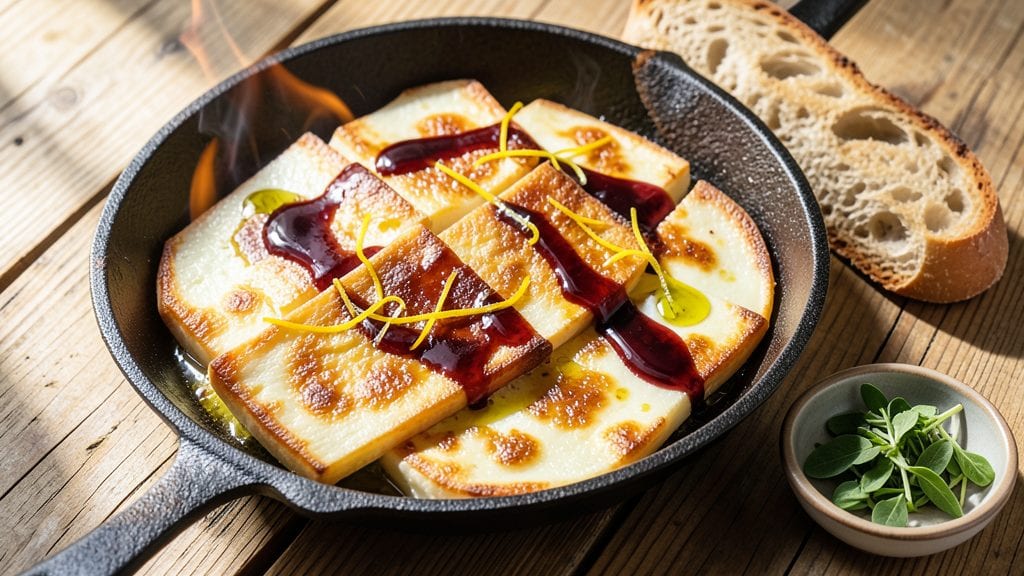
This Greek saganaki cheese recipe transforms simple ingredients into a dramatic, flaming centerpiece that will impress any dinner guest. The secret lies in using authentic Greek graviera cheese, melted slowly in olive oil until golden and bubbling—then, if you're feeling bold, flambéed with brandy for that signature spectacle.
I've perfected this technique over years of hosting, and it never fails to elevate an appetizer into an unforgettable experience.
The beauty of saganaki is its simplicity: just cheese, olive oil, and a few traditional accompaniments like lemon and oregano. While many recipes call for kefalograviera, I prefer graviera for its slightly milder flavor and perfect melting properties.
The key is patience—melting the cheese too quickly ruins the texture, but when done right, you get a rich, creamy dish with a crispy golden crust that's impossible to resist.
What makes this dish truly special is the dramatic flambé, where brandy ignites briefly before being absorbed by the cheese. The result is a dish that's as visually stunning as it is delicious—creamy, tangy, and slightly smoky from the brandy.
Serve it warm with crusty bread to soak up every last drop of that golden, savory goodness.
Perfect for dinner parties or family gatherings, this recipe brings the flavors of Greece to your table with minimal effort. Whether you choose to flambé or keep it simple, the rich, melty cheese will be the star of your appetizer spread. Let's get started on creating this timeless classic.
Ingredients for greek saganaki cheese
Authentic Greek flavors meet dramatic flambé in this crowd-pleasing appetizer.
| Ingredient | Amount | Notes |
|---|---|---|
| Graviera Cheese 🧀 | 1 ½ lb | Authentic Greek, block preferred |
| Extra-Virgin Olive Oil 🫒 | ½ cup | Light or medium for best flavor |
| Brandy 🍷 | ¼ cup | For flambé (optional but traditional) |
| Fresh Oregano Leaves 🌿 | ¼ cup | Chopped, not dried |
| Lemon Zest 🍋 | 1 tbsp | From 1 medium lemon |
| Crusty Bread 🍞 | 1 loaf | For serving (sliced into pieces) |
| Garlic Cloves 🧄 | 2 cloves | Minced, optional for extra flavor |
| Salt 🧂 | ½ tsp | Kosher or sea salt |
| Black Pepper 🌶️ | ¼ tsp | Freshly ground preferred |
| Red Pepper Flakes 🌶️ | ½ tsp | Optional for heat |
| Lemon Juice 🍋 | 1 tbsp | Freshly squeezed |
| Fresh Dill 🌿 | 2 tbsp | Chopped, for garnish |
The graviera is non-negotiable—look for authentic Greek graviera at specialty stores or well-stocked markets like Whole Foods or Mediterranean grocers. Pre-shredded cheese won't work here; you need a solid block to grate yourself for that perfect texture. For the olive oil, Kalamata or Greek varieties add subtle fruity notes that pair beautifully with the cheese. I always grab a small bottle of brandy from the liquor store—any 80-proof works, but a Greek brand like Metaxa adds authenticity. Fresh oregano is ideal, but if you only have dried, use one-third the amount.
No brandy? Skip the flambé and add extra olive oil—the dish still shines. Short on fresh oregano? Dried oregano or even thyme works in a pinch. For the bread, any crusty loaf will do—sourdough, ciabatta, or even baguette slices. The garlic is optional but adds depth—roast it first for a sweeter flavor. Want more tang? Add a splash of lemon juice to the melted cheese before serving. The red pepper flakes can be omitted if you're avoiding heat entirely, but they're worth it for a little kick.
This dish reheats beautifully—just warm in a skillet with a splash of water. Keeps for 3-4 days in the fridge, though it's best fresh. For the flambé, have everything ready—the brandy ignites fast. Serve immediately after flambéing, as the cheese continues to melt. Leftovers? Freeze in portions for up to 1 month—perfect for quick appetizers later. The bread should be served warm, so toast slices just before plating.
Why You'll Love This Recipe
- Five-Ingredient Magic: I swear, this is one of those recipes where you almost feel guilty for how little effort it takes. Just slice the graviera, drizzle olive oil, and let the brandy do its thing—no chopping, no stress, just pure satisfaction.
- Brandy Kisses: That first sip of brandy igniting over the cheese? It’s like a tiny, boozy hug. The lemon zest cuts through the richness, and the oregano adds this bright, herby punch—so simple, but ridiculously good.
- Weeknight Hero: Need something fast for dinner guests? Saganaki is my go-to—serve it warm with crusty bread and a Greek salad, or let it cool slightly for a no-fuss appetizer. Honestly, it works at every meal.
- Leftovers? Laughable: This cheese melts down to almost nothing, but what’s left? Even better—crispy edges, gooey center, and that brandy aroma clinging to every bite. I’ve reheated slices the next day, and they’re still the star of the show.
Step-by-step instructions for Greek saganaki cheese
Here's how to transform simple ingredients into a dramatic, flaming centerpiece that steals the show.
Prepare the Graviera Cheese
Start by cutting the 1.5 lb Graviera Cheese into 1-inch thick slices, working with a sharp knife for clean cuts. I like to use a block of Graviera for this recipe—it holds its shape better than pre-sliced cheese. Arrange the slices in a single layer on a baking sheet, leaving about ½ inch between each piece. This spacing ensures even cooking and prevents the slices from sticking together.
Place the baking sheet in the refrigerator while you prepare the remaining ingredients. Chilling the cheese for 20-30 minutes before cooking creates a smoother melt and prevents it from becoming too greasy during the flambé. The cheese should be cold but not frozen when you're ready to cook—just firm enough to hold its shape.
Create the Flavor Base
In a small bowl, combine the 0.5 cup extra-virgin olive oil, 1 tbsp lemon zest, 1 tbsp lemon juice, 0.25 cup chopped fresh oregano leaves, 2 cloves minced garlic cloves, 0.5 tsp salt, 0.25 tsp black pepper, and 0.5 tsp red pepper flakes. Mix well until the zest and herbs are evenly distributed throughout the oil. This infusion creates the vibrant, tangy foundation that makes Saganaki so special.
Taste the mixture and adjust the seasoning if needed—you want a balance of bright citrus, herbal notes, and just a hint of heat from the red pepper flakes. I usually add a pinch more salt if the cheese is particularly salty, as Graviera can vary in saltiness. Set this mixture aside while you prepare the flambé component.
Assemble and Flambé the Cheese
Heat a 10-inch oven-safe skillet over medium heat until it's hot but not smoking. Add the cheese slices and cook for 2-3 minutes per side, until they begin to soften slightly and develop a golden crust. Don't rush this step—the cheese needs time to develop flavor from the pan.
Once the cheese is lightly browned, carefully pour the 0.25 cup brandy evenly over the top. Immediately light the brandy with a long match or kitchen torch, then quickly cover the skillet with a lid or heatproof plate. The flames will burn out in 10-15 seconds, leaving behind a fragrant, caramelized aroma. This dramatic flambé adds depth to the cheese and creates the signature presentation.
Finish and Serve
Remove the skillet from heat and let the cheese rest for 2 minutes to allow the flavors to meld. Then, carefully spoon the olive oil mixture over the top of each cheese slice, letting it pool slightly in the center. The heat from the cheese will make the oil sizzle gently—this is when the real magic happens.
Sprinkle the 2 tbsp chopped fresh dill evenly over the cheese and serve immediately with slices of crusty bread. The contrast between the warm, melted cheese and the cool, crisp bread creates the perfect bite. For an extra touch, you can drizzle any remaining olive oil mixture over the bread before serving.
Pro Tips For Making Greek Saganaki Cheese
- CUT CHEESE THIN: Slice graviera into ½-inch thick pieces—any thicker and it’ll turn rubbery before the edges brown. I learned this the hard way when my first batch came out like a sad cheese brick instead of golden, gooey perfection.
- LOW AND SLOW: Simmer the saganaki on low heat after adding brandy—high heat sends the alcohol burning off too fast, and you lose that signature caramelized depth. Think "gentle bubble," not "fierce boil."
- TOAST THE OREGANO: Dry-toast the fresh oregano in the olive oil for 30 seconds before adding cheese—it releases the oils and makes the flavor pop. Skip this, and you’re just sprinkling wet leaves on top.
- BRANDY LAST: Pour the brandy after the cheese has melted slightly—this way, it ignites cleanly without scorching the graviera. (Yes, it’s dramatic, but it’s also the moment the dish becomes restaurant-worthy.)
Regional styles of greek saganaki cheese
Island of Crete Style
On Crete, saganaki takes on a rustic charm with local myzithra cheese, a soft, brined cheese that melts into a velvety texture.
I've seen tavernas there serve it with a drizzle of Cretan honey instead of brandy—simply melt the cheese, spoon on the honey, and finish with a sprinkle of crushed walnuts for crunch. The honey adds a delicate sweetness that balances the saltiness perfectly. 🌿
Athens Taverna Version
Athens-style saganaki often includes a splash of red wine vinegar in the olive oil mixture, adding a sharp tang that cuts through the richness. I like to use Agiorgitiko red wine for its bold fruitiness.
The dish is typically served with grilled halloumi skewers on the side, creating a playful contrast of textures. This version is lighter but still dramatic with the flambé.
Peloponnese Tradition
The Peloponnese region favors manouri cheese for saganaki, which has a slightly tangy flavor and creamy consistency. Locals often add a pinch of ground cinnamon to the olive oil mixture—a subtle spice that pairs beautifully with the cheese.
I've found that using local olive oil from the region (like Kalamata olive oil) enhances the earthy notes. The flambé remains optional but adds that signature wow factor.
Cyclades Simplicity
On the Cycladic islands, saganaki is often made with whatever cheese is available—sometimes even feta for a brinier twist. The focus is on simplicity: melted cheese, a drizzle of olive oil, and a sprinkle of dried oregano.
I've seen it served with warm pita bread and a side of tomato-cucumber salad. The island version skips the flambé entirely, relying on the natural flavors of the cheese and herbs.
Modern Greek Adaptations
Today's Greek chefs are putting creative spins on saganaki. In Athens, I've seen versions with truffle oil instead of brandy, or even a sprinkle of za'atar for an Middle Eastern-Greek fusion. Some restaurants serve it with pickled vegetables on the side to balance the richness.
The key is keeping the cheese the star while adding complementary flavors that enhance rather than overpower it. 💡
Nutrition facts
Frequently asked questions
What's the best cheese for saganaki?
For authentic saganaki, use Greek graviera or kefalograviera—both melt beautifully with a rich, nutty flavor. Pre-shredded cheese won't work; always use a solid block you can grate yourself. If you can't find these, pecorino romano or aged halloumi are decent substitutes, though they lack the traditional taste.
Can I make saganaki without brandy?
Skip the flambé and simply melt the cheese in olive oil. For extra flavor, add a splash of white wine or lemon juice to the oil before pouring it over the cheese. The dish will still be delicious—just without the dramatic flames. Serve immediately for the best texture.
Why does my saganaki turn out greasy?
Greasy saganaki usually means the cheese melted too quickly or was too warm when cooking. Always chill the cheese for 20-30 minutes before cooking, and use medium-low heat to melt it slowly. For extra insurance, pat the cheese dry before grilling to reduce moisture.
How do I safely flambé the brandy?
Pour the brandy evenly over the cheese, then light it with a long match or kitchen torch. Immediately cover the pan with a lid or heatproof plate to smother the flames after 10-15 seconds. Never leave the pan unattended—keep a fire extinguisher nearby as a precaution. The flames will burn out quickly, leaving behind a fragrant aroma.
Can I make saganaki ahead of time?
Saganaki is best served fresh, but you can prep components ahead. Grate the cheese and mix the olive oil marinade up to 1 day in advance. Reheat gently in a skillet with a splash of water, then finish with the oil mixture. For flambé, assemble just before serving to maintain the dramatic effect.