
Side Dishes
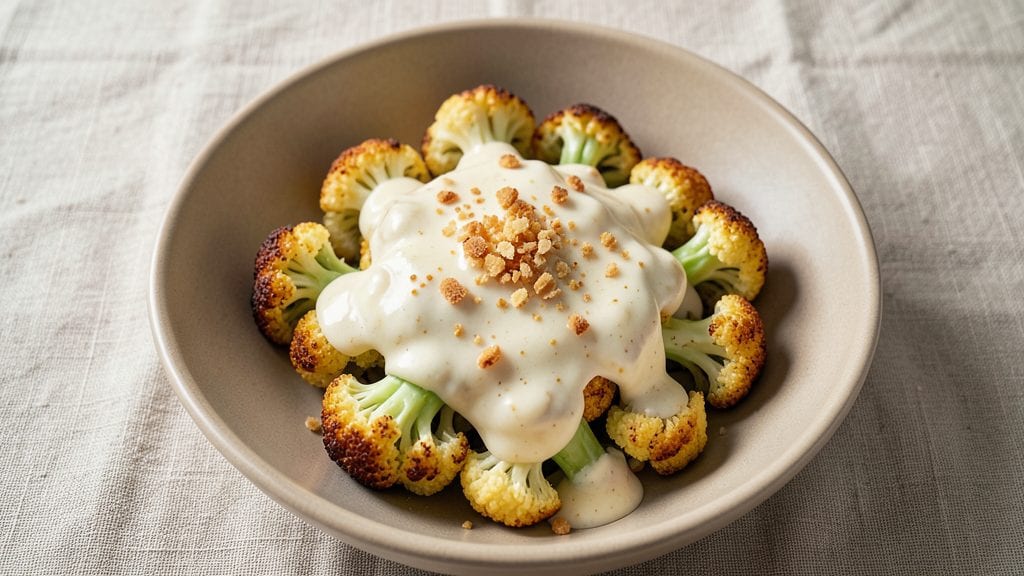
This creamy cauliflower cheese recipe delivers comfort food perfection with velvety béchamel clinging to tender roasted florets—just like your favorite British pub dish, but with a foolproof home method.
The secret lies in perfectly roasted cauliflower that absorbs the rich, cheesy sauce without turning soggy, while a crispy breadcrumb topping adds satisfying texture. I've tested countless variations to ensure this recipe delivers that signature restaurant-quality creaminess every time.
The foundation of great cauliflower cheese is a smooth, velvety béchamel sauce made with equal parts butter and flour, slowly cooked until thick and glossy. Sharp cheddar provides that classic tangy flavor, while a touch of cream adds luxurious body.
Roasting the cauliflower first concentrates its natural sweetness and creates those beautiful caramelized edges that make this dish so irresistible. This method transforms humble vegetables into a side dish that steals every meal.
By the time it emerges from the oven, you'll have golden, bubbling cauliflower topped with crispy breadcrumbs and a blanket of creamy cheese sauce that's impossible to resist.
The aroma alone will have everyone gathering around the table, while the first bite delivers that perfect balance of tender florets, rich sauce, and satisfying crunch. It's the kind of dish that feels indulgent yet remains balanced enough for weeknight dinners.
Serve this creamy cauliflower cheese alongside roasted meats, grilled fish, or even as a vegetarian main with a fresh green salad. The recipe scales beautifully for gatherings, and leftovers reheat perfectly for quick lunches.
With just a few simple ingredients and precise technique, you'll create a dish that tastes like it came from a traditional British pub kitchen—right in your own oven.
Ingredients for creamy cauliflower cheese
British pub comfort in your oven—creamy béchamel meets perfectly roasted cauliflower florets.
| Ingredient | Amount | Notes |
|---|---|---|
| Fresh Cauliflower 🥬 | 1 ½ lb | Cut into even florets |
| Extra-Virgin Olive Oil 🫒 | ¼ cup | For roasting cauliflower |
| Unsalted Butter 🧈 | ½ cup | Cold, cubed for roux |
| All-Purpose Flour 🌾 | ½ cup | For velvety béchamel |
| Sharp Cheddar Cheese 🧀 | 1 ½ cups | Freshly grated, aged |
| Heavy Cream 🥛 | ½ cup | Full-fat for richness |
| Panko Breadcrumbs 🍞 | ¼ cup | For crispy topping |
| Garlic Cloves 🧄 | 2 cloves | Minced for flavor base |
| Diamond Crystal Kosher Salt 🧂 | 1 ½ tsp | Adjust to taste |
| Freshly Ground Black Pepper 🌶️ | ½ tsp | Cracked peppercorns preferred |
| Nutritional Yeast 🍄 | 2 tbsp | For umami depth |
| Mustard Powder 🌶️ | ½ tsp | Adds subtle tang |
| Dried Thyme 🌿 | ½ tsp | Or 1 tbsp fresh |
The cauliflower's texture is everything here. Opt for a fresh head with tight florets—look for vibrant green color at Whole Foods or Trader Joe's for optimal quality. Pre-cut florets work in a pinch, but whole florets roast more evenly. The sharp cheddar should be aged at least 6 months for that signature tang; Westminster or Point Reyes deliver restaurant-quality flavor. For the breadcrumbs, panko provides superior crunch, but plain breadcrumbs work if you toast them first in a dry pan for 2 minutes—this enhances their crispiness when baked.
No sharp cheddar? Parmigiano-Reggiano adds depth, though it lacks the classic tang. Substituting heavy cream? Full-fat Greek yogurt works at half the amount, but the sauce will be slightly tangier. The nutritional yeast can be omitted if unavailable, though it adds that umami richness that elevates the dish. For the garlic, freshly minced is ideal, but powdered at half the amount suffices in a bind. The flour must be all-purpose—cake flour yields a thinner, less stable béchamel. If you're gluten-sensitive, gluten-free all-purpose flour works, though the texture may vary slightly.
Roasted cauliflower keeps 3 days in the fridge, though it's best served fresh. The béchamel sauce reheats beautifully—simply warm gently on the stove with a splash of cream to restore its silkiness. For make-ahead convenience, assemble the dish unbaked and refrigerate for up to 24 hours before baking. The breadcrumb topping should be pressed firmly onto the sauce before baking to ensure crispiness. Leftovers reheat best in a 350°F oven for 10-15 minutes to restore that golden crunch.
Why You'll Love This Recipe
- Cauliflower’s the MVP here: cheap, filling, and packed with nutrients. A single head feeds four, and that sharp cheddar stretches further than you’d think when mixed with the roux. My wallet and my family win—what’s not to love?
- One-Pan Magic: I swear by this trick—just roast the cauliflower on the same sheet you’ll bake the cheese sauce. No extra dishes, no stress. The florets caramelize right alongside that golden, bubbly sauce, and honestly? That’s the kind of lazy cooking I’ll always defend.
- Cheese Overload (In a Good Way): Sharp cheddar isn’t just in this dish—it’s the star, melted into a velvety blanket that clings to every bite. The flour-butter roux thickens it just enough to coat the cauliflower like a hug, and between us? That’s the kind of comfort food I’ll fight for at dinner parties.
- Leftover Hero: This stuff tastes better the next day, no joke. The sauce firms up slightly, the cheese gets even gooier, and I’ve reheated it straight from the fridge for lunch without a second thought. Pack it for work, freeze portions—it’s the ultimate “I didn’t even cook today” meal.
Step-by-step instructions for creamy cauliflower cheese
Master this technique and you'll achieve restaurant-quality velvety béchamel perfectly balanced with roasted cauliflower.
Roast the Cauliflower Until Caramelized
Preheat your oven to 425°F. Cut the 1.5 lb fresh cauliflower into even florets, ensuring they're similar in size for uniform cooking. In a large bowl, toss the florets with 0.25 cup extra-virgin olive oil, 1.5 tsp diamond crystal kosher salt, and 0.5 tsp freshly ground black pepper until evenly coated.
Spread the cauliflower in a single layer on a parchment-lined baking sheet, leaving space between florets. Roast for 25-30 minutes, stirring once halfway through, until the edges are deep golden brown and the florets begin to caramelize. The cauliflower should be tender when pierced with a fork but still hold its shape. This roasting step develops deep flavor and prevents a watery final dish.
Prepare the Velvety Béchamel Sauce
While the cauliflower roasts, melt the 0.5 cup unsalted butter in a large saucepan over medium heat. Add the 0.5 cup all-purpose flour all at once and whisk vigorously for 1-2 minutes until you achieve a smooth, pale roux with no floury taste. This is your sauce foundation—don't rush this step or you'll develop a raw flour flavor.
Gradually whisk in the 0.5 cup heavy cream, 0.5 tsp mustard powder, and 0.5 tsp dried thyme, ensuring no lumps form. Cook for 3-4 minutes until the mixture thickens enough to coat the back of a spoon. Remove from heat and stir in the 1.5 cups sharp cheddar cheese and 2 tbsp nutritional yeast until completely melted and smooth. The sauce should be luxuriously thick but still pourable—this is what creates that signature creamy texture.
Combine and Assemble the Dish
Transfer the roasted cauliflower to a large mixing bowl. Pour the béchamel sauce over the hot cauliflower and gently fold everything together until the florets are fully coated. The residual heat from the cauliflower will help melt any remaining cheese and create an even coating. Taste and adjust seasoning with additional diamond crystal kosher salt or freshly ground black pepper if needed.
Transfer the mixture to a greased 9x9-inch baking dish and spread it evenly. Top with the 0.25 cup panko breadcrumbs mixed with 1 minced garlic clove (from your 2 cloves garlic cloves) for added texture and flavor. The breadcrumbs will create a delightful crispy contrast to the creamy interior.
Bake to Golden Perfection
Return the baking dish to the oven and bake at 375°F for 15-20 minutes, until the top is golden brown and bubbly. The edges should be slightly crisp while maintaining a creamy center. This baking time ensures the breadcrumbs toast while the cheese remains velvety—critical for achieving that perfect textural balance.
Remove from the oven and let rest for 5 minutes before serving. The dish will be hot and bubbling—this resting period allows the sauce to set slightly, making it easier to portion. Serve immediately with a side of fresh greens or crusty bread to soak up every last bit of that creamy cauliflower cheese.
Pro Tips For Making Creamy Cauliflower Cheese
- Cut Cauliflower in Even Bites: DESCRIPTION:
- Melt Butter Slowly: DESCRIPTION:
- Whisk Cheese Like a Boss: DESCRIPTION:
- Rest Before Serving: DESCRIPTION:
Troubleshooting great creamy cauliflower cheese
Sauce Too Thin?
If your béchamel turns out too thin, it’s likely because the roux wasn’t cooked long enough or the cheese didn’t melt completely. To fix it, whisk in 1 tbsp cold butter at a time while stirring constantly—this helps thicken the sauce without breaking its emulsion.
For a more dramatic fix, simmer the sauce uncovered for 2-3 extra minutes over low heat while stirring vigorously. If it still feels too loose, mix 1 tsp cornstarch with 1 tbsp cold water, then whisk it into the sauce until it reaches the perfect velvety consistency. 🔥
Cauliflower Too Soggy
Soggy cauliflower usually means the florets were under-roasted or absorbed too much moisture from the sauce. First, ensure you roast the cauliflower until it’s deep golden brown and tender when pierced—25-30 minutes at 425°F is ideal.
If the florets still feel watery after roasting, pat them dry with a paper towel before adding the sauce. For extra insurance, spread the cauliflower on a wire rack over a baking sheet to drain excess moisture for 5 minutes before combining with the béchamel.
Breadcrumbs Not Crispy
If your breadcrumb topping comes out soft instead of crispy, it’s likely because the sauce underneath wasn’t hot enough or the breadcrumbs weren’t pressed firmly. Before baking, make sure the sauce is steaming hot—this helps the breadcrumbs toast properly.
Press the breadcrumbs down gently but firmly with the back of a spoon to create a compact layer. For even better results, broil the dish for the last 2 minutes of baking to crisp the top without overcooking the sauce below.
Cheese Clumps Forming
Cheese clumps happen when the sauce isn’t hot enough to fully melt the cheese or when it’s stirred too vigorously. To prevent this, remove the sauce from heat just before adding the cheese—the residual heat will melt it smoothly.
If clumps form, whisk in 1 tbsp cold cream or butter to help break them apart. For a smoother texture, strain the sauce through a fine-mesh sieve before pouring it over the cauliflower.
If you’re using pre-shredded cheese, swap it for freshly grated cheese—it melts more evenly and creates a silkier sauce. 🧀
Dish Too Dry After Baking
A dry final dish usually means the sauce was too thick or the baking time was too long. To fix this, reduce your baking temperature to 350°F and bake for 10-15 minutes instead of 375°F.
If the dish still feels dry, stir in 2 tbsp heavy cream or whole milk before baking to restore moisture. For extra richness, add a layer of melted butter on top of the sauce before sprinkling the breadcrumbs—this adds back the lost creaminess while keeping the topping crispy.
Uneven Cooking
Uneven cooking often happens when the cauliflower florets aren’t cut evenly or the baking dish isn’t level in the oven. To avoid this, trim the cauliflower into uniform florets—aim for 1.5 to 2 inches in size.
Before baking, place your dish on a level rack in the center of the oven to ensure even heat distribution. If the edges brown too quickly, tent the dish with aluminum foil for the last 5 minutes of baking to protect the sauce while the center finishes cooking.
Nutrition facts
Frequently asked questions
Can I make this dish ahead of time?
Assemble the dish in your baking dish up to 24 hours ahead and refrigerate uncovered. When ready to bake, add 10 extra minutes to the baking time at 375°F to account for the cold start. The breadcrumbs will still crisp beautifully, and the sauce will maintain its velvety texture.
What's the best cheese substitute if I don't have sharp cheddar?
For the classic tang, use Parmigiano-Reggiano or Gruyère—both add depth. If you need a dairy-free option, try nutritional yeast (already in the recipe) plus cashew cream (blend ½ cup soaked cashews with ½ cup water) for a rich, umami flavor. The texture will be slightly different but still delicious.
Why does my béchamel sometimes separate?
This usually happens when the sauce is stirred too vigorously after adding cheese or when it's heated too quickly. To fix it, whisk in 1 tbsp cold butter while the sauce is still warm—this helps re-emulsify it. For prevention, remove the sauce from heat just before adding cheese and let the residual heat melt it smoothly.
Can I make this dish gluten-free?
Yes! Replace the all-purpose flour with gluten-free all-purpose flour (like Bob's Red Mill 1:1) and use certified gluten-free panko for the topping. The texture will be slightly different, but the creamy flavor remains intact. For extra insurance, add 1 tbsp cornstarch to the roux to help thicken the sauce properly.
How do I reheat leftovers without drying them out?
Reheat in a 350°F oven for 10-15 minutes with a splash of heavy cream or milk stirred in to restore moisture. For the microwave, cover with a damp paper towel and heat in 30-second bursts, stirring between each. The breadcrumbs may soften slightly, but the sauce will stay creamy.