
Desserts
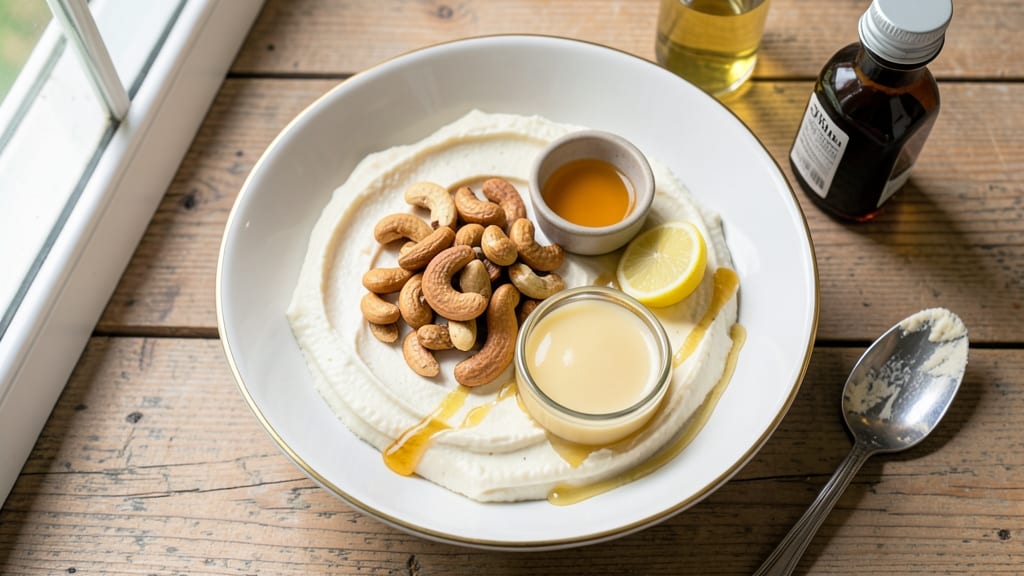
Creating cream cheese frosting without cream cheese just got easier with this plant-based version that delivers the same tangy, velvety texture in minutes. Standing on a step stool in my grandmother’s kitchen in Sicily, I learned how to transform simple ingredients into something extraordinary—this recipe does the same.
The key lies in blending cashews and coconut cream to mimic that signature creaminess, while a touch of lemon juice and vinegar delivers that unmistakable tang.
What makes this frosting special is its versatility and ease. With just five ingredients, you’ll achieve a spreadable, pipeable consistency perfect for cakes, cupcakes, or even swirled into pastries. The cashews provide a rich, creamy base, while the coconut cream adds a subtle sweetness that balances the tang.
No special equipment is needed—just a food processor and a few minutes of blending.
By the time you’re done, you’ll have a frosting that’s silky, tangy, and just as satisfying as traditional cream cheese frosting. The texture is smooth enough to pipe elegant swirls but sturdy enough to hold its shape.
This is the kind of recipe that proves plant-based baking doesn’t mean sacrificing flavor or texture—just pure, delicious results.
Ready to elevate your desserts? This frosting works beautifully with vanilla cakes, chocolate cupcakes, or even as a filling for pastries. Let’s get started—your taste buds will thank you.
Ingredients for cream cheese frosting recipe without cream cheese
Five simple ingredients transform into velvety tangy frosting—no cream cheese needed.
| Ingredient | Amount | Notes |
|---|---|---|
| Raw Cashews 🥜 | 1 cup | Unsalted, soaked in hot water for 15 minutes |
| Full-Fat Coconut Cream 🥥 | ½ cup | Chilled overnight, thick layer only |
| Lemon Juice 🍋 | 1 tbsp | Freshly squeezed, seeds removed |
| Apple Cider Vinegar 🍏 | ½ tbsp | For tangy depth |
| Pure Maple Syrup 🍯 | 2 tbsp | Grade B for richer flavor |
| Pure Vanilla Extract 🌿 | ½ tsp | High-quality, Madagascar bourbon preferred |
| Sea Salt 🧂 | ¼ tsp | Fine grain for balance |
| Powdered Sugar 🍚 | 2 cups | Sifted for smooth texture |
The cashews are the secret weapon here. Trader Joe's sells them raw and unsalted in bulk, which is perfect for this recipe. Soak them in hot water for 15 minutes before blending—they’ll turn into a creamy paste that mimics cream cheese’s texture. For the coconut cream, grab the full-fat canned version (like Thai Kitchen brand) and refrigerate it overnight. Only use the thick cream that rises to the top—skip the watery part. The maple syrup should be Grade B for that caramel depth, but Grade A works in a pinch. I always grab mine from Whole Foods or local farmers' markets where they have fresh batches.
No cashews? Almond butter or tahini works in a 1:1 swap, but the texture will be slightly thinner. Short on coconut cream? Greek yogurt (dairy-free) or extra cashew paste can stretch it, but you’ll lose that signature richness. The lemon juice and vinegar are non-negotiable for that tang—substitute with white vinegar only if you’re out of apple cider, but the flavor won’t be identical. For sweetness, agave nectar is a 1:1 swap, but maple syrup’s molasses notes add complexity. The powdered sugar is just for stability—don’t skip it if you want that pipeable consistency, but if you’re making a spreadable frosting, you can halve it.
This frosting keeps beautifully in the fridge for 5 days, sealed in an airtight container. For longer storage, freeze it in 1-tablespoon portions—thaw at room temperature before using. I like to portion it into small jars so I can grab exactly what I need for cupcakes or cakes. If it thickens in the fridge, just whisk in a splash of plant-based milk until smooth. The flavor actually improves after 24 hours as everything melds together—perfect for making ahead for parties.
Why You'll Love This Recipe
- No Blender Overload: I swear by this recipe because it’s actually simple—just soak those cashews for 10 minutes, blend, and boom. No fancy techniques, no waiting hours, and zero cleanup beyond one bowl. Honestly, my blender’s seen better days, and this still works.
- Tangy-Sweet Magic: That lemon juice and apple cider vinegar combo? It’s the secret weapon—bright, creamy, and just sweet enough to make you forget it’s dairy-free. Spread it on muffins, and you’ll get that classic tang you crave, but with a silky texture that’s ridiculously smooth.
- Crowd-Pleaser Frosting: Between us, this is the frosting I bring to potlucks when I know half the group avoids dairy. Kids love the sweetness, adults adore the richness, and no one questions why it’s so good. Works on cupcakes, cookies, or even swirled into pancakes—no judgment here.
- Zero-Waste Pantry Hero: Use up those raw cashews you bought on sale, the coconut cream from your last curry, and even that half-empty maple syrup bottle. It’s budget-friendly, keeps for a week in the fridge, and turns leftovers into another batch of frosting without breaking the bank. My wallet thanks me every time.
Step-by-step instructions for cream cheese frosting without cream cheese
Here's how to create a velvety, tangy frosting that rivals traditional cream cheese versions.
Soak and Drain the Raw Cashews
Place the 1 cup raw cashews in a heatproof bowl and pour hot water over them until fully submerged. Let them soak for exactly 15 minutes—this softens them perfectly for blending without becoming mushy. After soaking, drain thoroughly using a fine-mesh strainer, giving them a gentle shake to remove excess water. The cashews should feel pliable but not wet when you press between your fingers. This step is crucial because properly soaked cashews blend into a smooth, creamy base that mimics the texture of cream cheese.
While the cashews drain, take a moment to sift the 2 cups powdered sugar through a fine-mesh sieve into a medium bowl. This removes any lumps and ensures your final frosting has a silky, lump-free consistency. Keep the sifted sugar at room temperature—cold sugar can make the frosting grainy when mixed with the other ingredients.
Blend the Creamy Base
Transfer the drained cashews to a high-speed blender or food processor. Add the 0.5 cup full-fat coconut cream (use only the thick layer that forms after chilling overnight) and the 2 tbsp pure maple syrup. Blend on high for 1-2 minutes, scraping down the sides with a rubber spatula as needed, until the mixture becomes completely smooth with no visible cashew particles. The result should resemble a thick, pale yellow paste with a velvety texture—this is your cream cheese substitute.
Here's the thing—don't rush this blending process. If you see any gritty bits remaining, pulse again for 10-15 seconds until perfectly smooth. The longer you blend, the better the texture will be. Once smooth, add the 0.5 tsp pure vanilla extract and 0.25 tsp sea salt, blending just until combined. The vanilla adds depth while the salt enhances all the sweet flavors, just like in traditional cream cheese frosting.
Incorporate Acidic Elements for Tang
With the blender running on low speed, slowly drizzle in the 1 tbsp lemon juice and 0.5 tbsp apple cider vinegar. These acidic components are what give this frosting its signature tangy kick that mimics cream cheese. The mixture will look slightly curdled as you add them, but don't worry—it will come together beautifully. Continue blending until fully combined and smooth, about 30 seconds total.
This is where the magic happens: the acidity cuts through the richness of the cashews and coconut cream, creating that perfect balance of sweet and tangy. If you skip this step, your frosting will taste too heavy and lack the bright flavor profile that makes cream cheese frosting so beloved. Taste the mixture now—it should be rich, slightly tangy, and pleasantly sweet with a smooth, almost buttery texture.
Gradually Add Powdered Sugar for Perfect Consistency
With the blender still running on low speed, begin adding the sifted powdered sugar in three increments. After each addition, blend for 10-15 seconds to ensure the sugar fully incorporates. The frosting should become progressively thicker with each addition. You're aiming for a consistency that's thick but still pipeable—it should hold its shape on a spoon but still be spreadable.
Here's a pro tip: if the frosting becomes too thick during blending, add 1-2 teaspoons of water to loosen it. If it's too thin, you can add a bit more powdered sugar, but don't overdo it—you want to maintain that perfect balance of sweetness and texture. The ideal consistency should be smooth, glossy, and hold its shape when piped from a decorating bag but still be spreadable with a knife.
Chill and Whip to Final Perfection
Transfer the frosting to a clean mixing bowl and cover it with plastic wrap, pressing the wrap directly onto the surface to prevent a skin from forming. Refrigerate for at least 30 minutes—this chilling step is essential. It allows the flavors to meld together and gives the frosting its final, professional texture. The longer you chill it (up to 2 hours), the thicker and more stable it will become, making it perfect for decorating cakes or filling cupcakes.
After chilling, give the frosting a quick whip with a hand mixer or stand mixer fitted with the paddle attachment for 1-2 minutes. This incorporates air, making the frosting light and fluffy—just like traditional cream cheese frosting. The whipped texture will hold its shape beautifully when piped onto cakes or used to fill between cake layers. If the frosting seems too stiff after whipping, soften it slightly by adding 1 teaspoon of water at a time until it reaches your desired consistency.
Pro Tips For Making Cream Cheese Frosting Recipe Without Cream Cheese
- Soak Cashews Overnight: I learned this the hard way—rushing the soak means a gritty texture that ruins the whole frosting. Toss them in warm water (not boiling) for at least 8 hours or overnight, then drain and rinse thoroughly. The extra effort guarantees that silky, spreadable consistency you’re after.
- Chill the Coconut Cream: Sounds weird, but it works: refrigerate the full-fat coconut cream can for 24 hours before opening. The thick, solidified cream at the top is your gold—skip the watery part. This makes the frosting richer and far less likely to separate when you whip it.
- Acid Balance Matters: Too much lemon juice and your frosting tastes like a science experiment. Start with 1 teaspoon of lemon juice and apple cider vinegar combined, then adjust slowly by the ¼ teaspoon. Taste as you go—you’re aiming for tangy, not puckery.
- Whip Cold, Not Warm: After blending, pop the mixture in the fridge for 10 minutes before whipping. Warm cashews release oils that make the frosting greasy if you jump straight to beating. Cold ingredients = stable, fluffy frosting that pipes like a dream.
Creative variations of this dish
Cashew-Coconut Swirl
For a richer, more decadent frosting, blend in 1 tbsp coconut oil with the cashews before adding other ingredients. This creates a frosting with a luxurious mouthfeel that’s perfect for layering between dense cakes like chocolate or carrot.
I often use Trader Joe’s virgin coconut oil for its pure flavor. 🥥
Citrus Zest Twist
Brighten up your frosting by adding 1 tsp grated lemon or orange zest along with the lemon juice. The zest adds a fragrant, floral note that pairs beautifully with vanilla cakes.
For a tropical variation, substitute orange zest and add ½ tsp ground ginger—it’s a showstopper for pineapple upside-down cakes.
Chocolate-Dipped Version
Mix ¼ cup melted dark chocolate (70% cocoa) into the frosting after blending the cashews. This creates a marbled effect when spread on cakes or swirled into cupcakes.
For extra indulgence, top with chopped toasted hazelnuts or a sprinkle of flaky sea salt. I love this version on red velvet cakes.
Spiced Chai Frosting
Infuse warmth by adding ½ tsp ground cinnamon, ¼ tsp ground cardamom, and a pinch of black pepper to the cashew base. A dash of vanilla bean paste instead of extract adds depth. This spiced version is perfect for autumn pumpkin spice cakes or gingerbread cookies. 🌶️
Berry-Infused Tang
Replace half the lemon juice with 2 tbsp raspberry or strawberry puree for a fruity twist. The berries add natural sweetness and a vibrant color that’s perfect for spring or summer desserts.
For extra texture, fold in 1 tbsp finely chopped fresh berries just before chilling. This works beautifully on lemon or berry-themed cakes.
Nut-Free Alternative
Skip the cashews and blend ½ cup silken tofu with ¼ cup coconut cream and 1 tbsp cornstarch to create a smooth, tangy base. This version is lighter but still creamy—ideal for those with nut allergies. The cornstarch helps stabilize the texture, preventing it from becoming too thin. 🥛
Nutrition facts
Frequently asked questions
Can I make this frosting without cashews?
For a nut-free version, blend ½ cup silken tofu with ¼ cup coconut cream and 1 tbsp cornstarch instead. This creates a smooth, tangy base that still holds its shape. The cornstarch helps stabilize the texture so it won't be too thin.
How do I adjust the sweetness level?
The recipe uses 2 tbsp maple syrup and 2 cups powdered sugar for a balanced sweetness. For less sweetness, reduce the powdered sugar to 1½ cups and add 1 tsp vanilla bean paste for depth. If you prefer it sweeter, increase the powdered sugar to 2½ cups and add 1 extra tbsp maple syrup. Taste as you go!
Why did my frosting turn out too thick?
Over-blending the cashews or adding too much powdered sugar can make the frosting thick. To fix it, whisk in 1-2 tsp water or plant-based milk until smooth. For prevention, blend the cashews just until smooth (about 1-2 minutes) and add powdered sugar gradually, blending well after each addition.
Can I use this frosting for cupcakes?
Yes! This frosting is perfect for cupcakes—it holds its shape when piped and tastes just as rich. For best results, chill the frosting for 30 minutes before piping onto cupcakes. If it's too soft, refrigerate for an extra 10 minutes. Pro tip: Use a Wilton 1M tip for classic swirls or a star tip for decorative patterns.
How long will this frosting keep?
Store the frosting in an airtight container in the fridge for up to 5 days. For longer storage, freeze it in 1-tablespoon portions—thaw at room temperature before using. The flavor actually improves after 24 hours as the ingredients meld together, making it perfect for making ahead.