
Appetizers
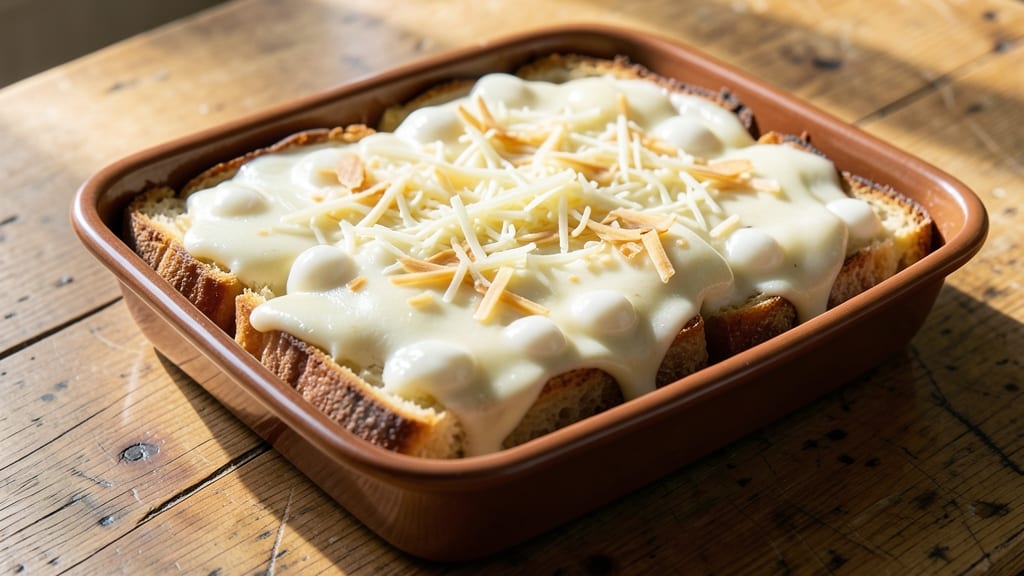
This basic cheese strata recipe delivers restaurant-quality comfort in a single baking dish—creamy egg custard layered with melty cheese that bakes into golden perfection. 💛 The secret lies in the custard mixture: whisked eggs, milk, and a touch of cream create that signature fluffy texture, while sharp cheddar and mozzarella melt into gooey, stretchy strands between tender layers.
What makes this recipe foolproof is the simple layering technique—alternating bread cubes and custard mixture creates that signature strata texture without requiring advanced skills.
The dish bakes at 350°F for about 45 minutes, transforming humble ingredients into a showstopping brunch centerpiece that's perfect for feeding a crowd or meal prepping ahead.
By the time it emerges from the oven, you'll have a dish with crispy golden edges, creamy custard centers, and pockets of melted cheese in every bite.
The aroma alone transforms any kitchen into a comforting haven, and the presentation—elegant yet rustic—makes it suitable for everything from casual weekend brunches to holiday gatherings.
For extra depth, consider adding sautéed mushrooms, caramelized onions, or fresh herbs to the custard mixture. The possibilities are endless while maintaining the dish's beginner-friendly nature. Let's create this comforting classic that's sure to become a regular on your menu.
Ingredients for basic cheese strata
Twelve essential ingredients transform simple bread into restaurant-quality strata perfection.
| Ingredient | Amount | Notes |
|---|---|---|
| Large Eggs 🥚 | 8 whole | Room temperature for even cooking |
| Whole Milk 🥛 | 2 cups | Full-fat for creamiest texture |
| Heavy Cream 🥛 | ½ cup | Adds luxurious richness |
| Sharp White Cheddar Cheese 🧀 | 2 cups | Shredded, not pre-shredded |
| Mozzarella Cheese 🧀 | 1 ½ cups | Fresh mozzarella, sliced thin |
| French Bread Loaf 🍞 | 1 whole | Stale or lightly toasted |
| Unsalted Butter 🧈 | ½ cup | Melted for bread coating |
| Diamond Crystal Kosher Salt 🧂 | 1 ½ tsp | Adjust to taste |
| Ground Black Pepper 🌶️ | ½ tsp | Freshly cracked |
| Fresh Parsley 🌿 | ¼ cup | Chopped, for garnish |
| Granulated Sugar 🍚 | 1 tbsp | Balances flavors |
| Ground Nutmeg 🌿 | ¼ tsp | Freshly grated preferred |
The cheeses are non-negotiable here. Sharp white cheddar provides the signature tang, while fresh mozzarella delivers that signature melt. Trader Joe's and Whole Foods carry excellent pre-shredded options, but block cheese shreds fresher. For the bread, French loaves work best—their crust holds up better than soft breads. If you can't find fresh, stale bread from the day before is ideal. The eggs should be large, fresh eggs—room temperature makes all the difference in achieving that signature fluffy texture.
No fresh mozzarella? Low-moisture mozzarella from a block works in a pinch, but shred it yourself for best results. Short on sharp cheddar? Pepper jack adds a nice kick. The custard mixture relies on precise measurements—don't eyeball the milk or cream. For extra depth, consider adding 1 tbsp Dijon mustard to the custard for subtle complexity. The nutmeg is optional but recommended—it elevates the dish to restaurant-quality levels. If you're missing it, a pinch of cinnamon provides a similar warmth.
Prep ahead for maximum convenience. The bread cubes can be made 2 days in advance and stored in an airtight container. The custard mixture keeps 1 day in the fridge. Assemble the strata up to 4 hours ahead and refrigerate until ready to bake. Once baked, it reheats beautifully—cover with foil and warm at 325°F for 15-20 minutes. For serving, sprinkle with extra parsley and a touch of black pepper to highlight the flavors. Leftovers keep 3 days refrigerated or 3 months frozen.
Why You'll Love This Recipe
- One-Pan Miracle: I swear by this recipe—just mix, layer, bake. No chopping, no fuss, no extra dishes. The eggs and cream do all the work while you sip coffee and pretend you’re not making breakfast for a crowd.
- Melty Magic Combo: Sharp cheddar and mozzarella play so well together—crispy edges on the outside, gooey pockets inside. Honestly, the first time I tasted it, I nearly burned my tongue waiting for the cheese to soften just right.
- Brunch or Dinner: Serve it warm for a lazy Sunday with toast, or let it cool and pack it for lunch. My college-aged kids grab it straight from the fridge for late-night snacks—no judgment here, just good cheese.
- Budget Breakfast Hack: Eggs, milk, and cheese? That’s it. I stretch this recipe to feed six for under $10, and it reheats like a dream. Leftovers taste just as good the third day—proof that simple ingredients win every time.
Step-by-step instructions for cheese strata
Here's how to create a perfectly layered strata with custard so light it melts in your mouth.
👨🍳 Step 1: Prepare the Bread and Custard Base
Preheat your oven to 350°F and grease a 9x13-inch baking dish generously with 2 tablespoons of the melted unsalted butter, reserving the rest for later. Cut the whole French bread loaf into ½-inch thick slices—about 16 slices total—and arrange them in the dish in a single layer, slightly overlapping if needed. Brush each slice lightly with the remaining melted butter.
In a large bowl, whisk together the 8 whole Large Eggs, 2 cups Whole Milk, 0.5 cup Heavy Cream, 1 tbsp Granulated Sugar, 1.5 tsp Diamond Crystal Kosher Salt, and 0.5 tsp Ground Black Pepper until fully combined. The mixture should be smooth with no streaks of egg whites. This base creates the signature custard texture that makes strata so satisfying.
🥘 Step 2: Layer Cheese and Bread
Sprinkle half of the 2 cups Sharp White Cheddar Cheese and half of the 1.5 cups Mozzarella Cheese evenly over the buttered bread slices. Then, pour half of the egg mixture over the cheese layer, tilting the dish to ensure even distribution. Repeat with another layer of bread, remaining cheese, and the rest of the egg mixture.
Here's the thing—don't overmix the layers. The bread should be mostly submerged in the custard, but you want visible slices peeking through. This creates those beautiful golden-brown pockets when baked. Tap the dish gently on the counter to help the bread absorb the custard evenly before moving to the next step.
🔥 Step 3: Bake Until Golden and Set
Transfer the baking dish to the preheated oven and bake for 45-50 minutes until the top is golden brown and the custard has set completely. You'll know it's ready when the center no longer jiggles slightly and the edges pull away from the pan. If the top browns too quickly, tent loosely with aluminum foil to prevent over-browning while the center finishes cooking.
I press down gently on the strata with a spatula during the last 10 minutes of baking—this prevents any potential sinking in the middle and ensures even cooking. The reason we wait until the last part is that the custard needs to set around the bread before we disturb it.
⏰ Step 4: Rest and Garnish
Remove the strata from the oven and let it rest for 10 minutes before serving. This resting period allows the custard to fully set and redistribute its moisture, preventing a gummy texture. While it rests, sprinkle the 0.25 cup Fresh Parsley and the remaining 0.25 tsp Ground Nutmeg over the top for a pop of color and aromatic depth.
Slice into 6 equal portions and serve warm. Each bite should deliver a perfect balance of creamy custard, crispy bread edges, and melty cheese. The strata will continue to set slightly as it cools, so serving it warm ensures that signature custard texture you crave.
Pro Tips For Making Basic Cheese Strata
- Prep Cheese Right: Grate that sharp white cheddar and mozzarella yourself—no pre-shredded stuff. The pre-shredded kind has anti-caking agents that turn your strata into a gluey mess. A 4-6 cup mix of 70% cheddar to 30% mozzarella gives the best texture and melt.
- Whisk Eggs Cold: Crack those eggs into a cold bowl first, then slowly mix in the milk and cream. Warm liquids make eggs scramble instead of bind properly. I learned this the hard way when my first batch turned into a sad, curdled puddle.
- Bake Low and Slow: Skip the high-heat rush—325°F (165°C) for 45-55 minutes is where the magic happens. Too hot and the top burns before the center sets. Tent with foil after 30 minutes if the edges brown too fast.
- Soak Bread Properly: Pour the egg-milk mixture over the bread in the dish, then let it sit 10 minutes before folding in cheese. This guarantees even saturation—no dry pockets. (Yes, even if you’re impatient like me.)
Common mistakes when making this dish
Overmixing the Custard
Whisking the egg mixture too vigorously creates air bubbles that collapse during baking, resulting in a dense, rubbery texture instead of that signature fluffy strata custard. I aim for just until combined—no streaks of egg whites, but no frothy peaks either.
If you're worried about lumps, strain the mixture through a fine-mesh sieve for ultra-smooth results. 🥚
Skipping the Butter Brush
Forgetting to brush the bread slices with melted butter leads to dry, crumbly layers that don't absorb the custard properly. I always melt ½ cup unsalted butter and use 2 tablespoons for greasing the pan—reserve the rest for brushing.
This step is non-negotiable for achieving that perfect balance of crispy edges and tender bread.
Uneven Layering
Piling all the cheese in one spot creates pockets of overly melty cheese while leaving other areas bland. Distribute the sharp cheddar and mozzarella evenly across each bread layer.
I like to sprinkle them in a crosshatch pattern to ensure every bite has that melty goodness. Tilt the dish occasionally to help the custard spread evenly.
Underbaking the Strata
Removing the strata too soon results in a jiggly, undercooked center that's more like pudding than custard. Bake until the edges pull away from the pan and the center holds its shape when gently shaken.
A toothpick inserted should come out clean or with just a few moist crumbs—never runny egg. Patience here is key for that perfect set.
Not Resting Before Serving
Skipping the 10-minute rest after baking causes the custard to continue cooking as it cools, leading to a gummy texture. The rest period lets the moisture redistribute evenly.
I also find that pressing down gently on the strata during the last 10 minutes of baking prevents any potential sinking in the middle.
Using Fresh Bread
Fresh bread absorbs too much custard and becomes soggy, while stale bread creates a dry, crumbly texture. Use bread that's at least 1-2 days old or lightly toast it first.
I often cut my French bread into slices the day before and let it sit out overnight to dry slightly. This ensures perfect absorption without sacrificing texture.
Nutrition facts
Frequently asked questions
Can I make cheese strata with any type of bread?
Stick with sturdy breads like French loaves, sourdough, or Italian bread—they hold up best during baking. Soft breads like brioche or challah absorb too much custard and can become soggy. For best results, use bread that's at least 1-2 days old or lightly toast stale bread before layering.
How do I prevent a watery or runny strata?
Overmixing the egg mixture creates air bubbles that collapse during baking, leading to a runny texture. Whisk just until combined—no frothy peaks. Also, ensure your bread cubes are evenly coated with custard but not swimming in liquid. For extra insurance, bake 5 minutes longer if the center seems underdone.
Can I add vegetables to my cheese strata? Sautéed mushrooms, spinach, or caramelized onions work beautifully. Just
Why did my strata sink in the middle?
This usually happens if the center wasn't fully set before serving. Press down gently on the strata with a spatula during the last 10 minutes of baking to prevent sinking. Also, ensure your custard mixture is properly combined with no lumps—strain it through a fine-mesh sieve if needed for ultra-smooth results.
How long can I make strata ahead of time?
You can assemble the strata up to 4 hours ahead and refrigerate it before baking. For make-ahead convenience, bake it completely, then refrigerate for up to 3 days. To reheat, cover with foil and warm at 325°F for 15-20 minutes until heated through. The texture holds up beautifully when reheated properly!