
Salads
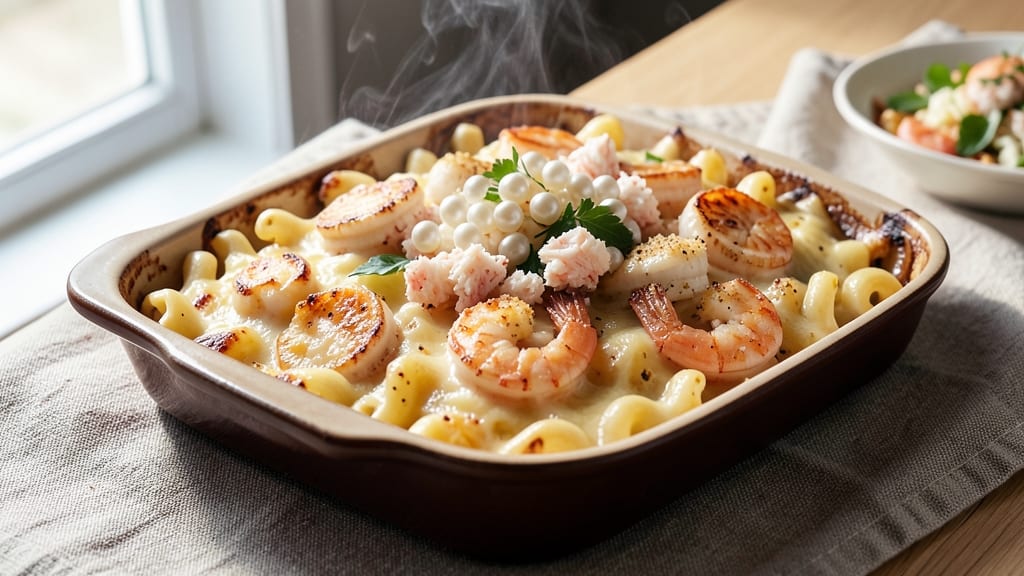
This baked seafood macaroni cheese recipe transforms classic comfort food into a luxurious seafood feast—where tender pasta meets flaky fish in a velvety cheese sauce. The secret lies in perfectly cooked seafood (shrimp, crab, or fish) folded into a rich, bubbling cheese mixture that bakes to golden perfection.
I developed this dish after craving a seafood version that kept all the creamy indulgence while adding ocean-fresh flavor.
The recipe starts with al dente macaroni tossed in a creamy cheese sauce made with sharp cheddar and Gruyère, then layered with your choice of seafood. Shrimp adds delicate sweetness, crab brings briny depth, or flaky white fish creates melt-in-your-mouth bites.
Baking at 375°F for 25 minutes creates that signature crispy top while keeping the center creamy and gooey.
What makes this dish truly special is how the seafood transforms the familiar mac and cheese—each bite delivers that satisfying pull-apart texture with bursts of flaky fish or succulent shrimp.
The aroma alone will have everyone gathering at the table, and the presentation is elegant enough for dinner parties but simple enough for weeknight dinners.
Serve with a side of garlic bread to soak up every last bit of that creamy sauce or pair with a fresh green salad for balance.
The recipe scales perfectly for crowds, and leftovers reheat beautifully. Let's create this restaurant-worthy seafood mac and cheese that feels like a celebration in every bite.
Ingredients for baked seafood macaroni cheese
Sixteen ingredients for a restaurant-worthy seafood mac and cheese that balances creamy indulgence with ocean-fresh flakiness.
| Ingredient | Amount | Notes |
|---|---|---|
| Elbow Macaroni 🍝 | 12 oz | Uncooked, medium or small shape |
| Sharp White Cheddar Cheese 🧀 | 2 cups | Shredded, block preferred |
| Gruyère Cheese 🧀 | 1 cup | Shredded, aged for nutty flavor |
| Heavy Whipping Cream 🥛 | 1 cup | Full-fat for creaminess |
| Whole Milk 🥛 | ½ cup | Warmed for smooth sauce |
| Unsalted Butter 🧈 | 4 tbsp | Cold, cubed for sauce |
| Large Eggs 🥚 | 2 whole | Room temperature, beaten |
| Yellow Onion 🧅 | 1 whole | Medium size, diced fine |
| Garlic Cloves 🧄 | 4 cloves | Peeled, minced for depth |
| Fresh Lemon Juice 🍋 | 1 tbsp | Brightens seafood flavor |
| Salt 🧂 | 1 ½ tsp | Kosher or sea salt |
| Ground Black Pepper 🌶️ | ½ tsp | Freshly cracked |
| Dried Mustard 🌶️ | 1 tsp | Adds subtle tang |
| Bay Leaves 🌿 | 2 whole | Removed after baking |
| Large Shrimp 🦐 | 1 ½ lb | Peeled, deveined, tails on |
| White Fish Fillets 🐟 | 1 ½ lb | Cod or halibut, cut bite-size |
| Lemon Zest 🍋 | 1 tsp | Bright finishing touch |
| Fresh Parsley 🌿 | ¼ cup | Chopped, for garnish |
The cheeses are non-negotiable here. Gruyère brings that signature nutty depth while the sharp white cheddar delivers the classic tang—don't substitute pre-shredded, it gets clumpy. For the seafood, freshness is everything. I always shop at Whole Foods or my local fish market for the shrimp and fish, looking for vibrant color and no fishy odor. The fish fillets should be firm to the touch, and shrimp should have that translucent sheen. If you can't find cod or halibut, tilapia works in a pinch—just be prepared for less flakiness. The butter matters too—Plugrá or Land O'Lakes are reliable brands for that rich, creamy sauce base.
No Gruyère? Parmesan at half the amount gets you close, though the flavor won't be identical. Short on shrimp? Add extra fish or a handful of crab meat if you're feeling fancy. The lemon juice can be bottled, but freshly squeezed is worth it—it brightens up the whole dish. For the pasta, elbow macaroni is classic, but cavatappi or shells would work beautifully too. The bay leaves add subtle earthiness—don't skip them, but remove them before serving. And if you're worried about the seafood cooking perfectly, undercook it slightly—it'll finish in the oven.
This dish reheats beautifully—even better the next day when all the flavors meld. Store leftovers covered in the fridge for up to 4 days, or freeze portions for 3 months. I always make a double batch because it disappears so fast. For serving, keep the fish and shrimp separate until the very end—fold them in just before baking so they stay tender. Garnish with lemon zest and parsley right before serving, as these lose their vibrancy when prepped ahead.
Why You'll Love This Recipe
- One-Pot Magic: I swear by this trick—just toss everything into one baking dish, no extra pans. The cream and cheeses melt into that golden, bubbly blanket while the seafood stays tender. Honestly, I’ve never cleaned up faster.
- Cheese Lovers’ Dream: Sharp white cheddar and Gruyère? That’s the dynamic duo you didn’t know you needed. The cheddar brings sharp bite, while Gruyère adds that nutty, caramelized depth—like a hug for your taste buds. (Yes, even on a Tuesday night.)
- Leftovers That Win: This dish actually tastes better the next day. The cheeses firm up just enough for crispy edges, and the seafood holds its texture. I’ve packed it for lunches—my coworkers think I’m a genius.
- Budget-Friendly Luxe: Elbow macaroni and a block of cheddar make this feel fancy without breaking the bank. The heavy cream and milk stretch the flavor, so you’re getting restaurant-quality richness for half the price. My wallet thanks me every time.
Step-by-step instructions for baked seafood macaroni cheese
This method delivers creamy, flaky seafood bites with a perfectly rich cheese sauce every time.
🍳 Step 1: Cook the Pasta Al Dente
Bring a large pot of water to a rolling boil and salt it generously (it should taste like seawater). Add the 12 oz elbow macaroni and cook for 1 minute less than the package instructions specify for al dente. This ensures the pasta finishes cooking in the oven while absorbing the flavorful sauce.
Reserve 1 cup of the starchy pasta water before draining. This liquid is essential for creating a silky sauce. Drain the pasta and set it aside in a large bowl. The heat from the pasta will help melt the cheese more quickly later in the process.
👨🍳 Step 2: Prepare the Seafood and Aromatics
While the pasta cooks, pat the 1.5 lb large shrimp and 1.5 lb white fish fillets dry with paper towels. Season them generously with 1 tsp salt and 0.5 tsp ground black pepper. In a separate bowl, finely dice the 1 whole yellow onion and mince the 4 cloves garlic. Sauté these aromatics in 2 tbsp unsalted butter over medium heat for 3-4 minutes until soft and fragrant.
Add the 1 tsp dried mustard and 2 whole bay leaves to the aromatics. Remove from heat and set aside. The mustard adds subtle depth while the bay leaves infuse the sauce with aromatic complexity. Don't skip this step—it elevates the dish from ordinary to exceptional.
🥘 Step 3: Build the Cheese Sauce
In a large mixing bowl, combine the drained pasta with the sautéed aromatics. In a separate saucepan over medium-low heat, melt the remaining 2 tbsp unsalted butter. Add the 2 cups sharp white cheddar cheese and 1 cup gruyère cheese, stirring constantly until completely melted and smooth.
Remove the pan from heat and whisk in the 1 cup heavy whipping cream, 0.5 cup warm whole milk, 2 whole large eggs, 1 tbsp fresh lemon juice, and 1 tsp lemon zest. The lemon brightens the rich cheese flavors and balances the seafood. Pour this mixture over the pasta and stir until fully combined.
🔥 Step 4: Assemble and Bake
Preheat your oven to 375°F. Transfer the pasta mixture to a 9x13-inch baking dish, spreading it evenly. Arrange the seasoned shrimp and fish fillets in a single layer on top, pressing them gently into the pasta. This ensures they cook through while absorbing the cheese sauce.
Bake uncovered for 20-25 minutes until the top is golden brown and bubbly, and the seafood is just opaque (it will continue cooking slightly). If the top browns too quickly, tent loosely with foil. The internal temperature of the fish should reach 145°F when done.
🍽️ Step 5: Rest and Serve
Remove from the oven and let the macaroni cheese rest for 5 minutes before serving. This allows the sauce to thicken slightly and the seafood to absorb all those delicious flavors. Garnish with the 0.25 cup chopped fresh parsley just before serving for a pop of color and freshness.
Each bite should deliver perfectly cooked, flaky seafood nestled in a velvety cheese sauce with subtle lemon brightness. Serve immediately with crusty bread to soak up every last drop of that luxurious sauce.
Pro Tips For Making Baked Seafood Macaroni Cheese
- Cook Pasta Al Dente: Seafood mac and cheese needs pasta that’s just shy of perfect—pull elbows when they’re firm (like a slight bite) and drain immediately. Overcooking turns them mushy, and you’ll end up with a gluey mess instead of a creamy, bite-sized texture. Trust the timer, not the recipe’s "perfect" claim.
- Shred Cheese Like a Pro: Skip the food processor for Gruyère—it turns to paste. Use a box grater and pulse sharp white cheddar in short bursts to avoid clumping. Wet your fingers slightly before mixing; it helps distribute the cheese evenly without clogs. (Yes, even if you’re impatient like me.)
- Bake Slow, Then Broil: Start at 350°F (175°C) for 20 minutes to let the sauce meld, then crank to 425°F (220°C) for 5–7 minutes under the broiler. This avoids a sad, watery top while keeping the seafood tender. Watch it like a hawk—it burns faster than you think.
- Prep Seafood Last: Cook the seafood after baking the mac and cheese, then fold it in gently. The residual heat finishes it perfectly without overcooking. If using shrimp, toss them in the oven for 3–4 minutes at the end—no need to boil them first. (Your future self will thank you.)
Essential equipment for this recipe
Baking Dish Essentials
You'll need a 9x13-inch baking dish—I recommend Ceramic CorningWare or USA Pan for even heat distribution and easy release. These materials handle the 375°F oven temperature beautifully and prevent sticking. Avoid dark-colored dishes as they can cause uneven browning. 🔥
Cheese Melting Tools
A double boiler or heatproof mixing bowl is essential for melting the 2 cups sharp cheddar and 1 cup Gruyère smoothly. I use a stainless steel mixing bowl placed over a saucepan of simmering water.
This gentle heat prevents scorching while creating a silky sauce. For extra insurance, whisk constantly with a silicone spatula—it won't scratch your bowl.
Precision Thermometer
Invest in a digital instant-read thermometer like the Thermoworks ThermoPop to monitor seafood doneness. The fish should reach 145°F while the shrimp should hit 145°F at its thickest part.
This prevents overcooking, which turns flaky fish into rubbery disappointment. I keep one on my countertop for quick checks during baking. ⏰
Pasta Water Reserve
Save 1 cup of starchy pasta water in a small measuring cup—this golden liquid is the secret to a velvety sauce. The starch acts as a natural thickener and emulsifier.
I use a glass liquid measuring cup with markings for easy pouring. Never skip this step; it's what transforms clumpy cheese into luxurious silkiness. 💫
Seafood Prep Station
Set up a prep station with paper towels, a sharp chef's knife, and a cutting board. Pat the 1.5 lb shrimp and 1.5 lb fish completely dry before seasoning—the moisture creates steam that can make your seafood rubbery.
I keep my prep area organized with a small bowl for seasoning mix (salt, pepper, lemon juice) right next to the cutting board. 🦐
Garnish Essentials
Fresh lemon zest and parsley need to be prepped right before serving. Use a microplane for the zest to get fine, bright strips. For parsley, a sharp pair of kitchen shears makes quick work of chopping the 0.25 cup needed.
I keep these tools handy on my countertop for the final flourish that makes the dish look restaurant-worthy. ✨
Nutrition facts
Frequently asked questions
Can I substitute other seafood besides shrimp and fish?
This recipe works beautifully with crab meat, lobster chunks, or even scallops. For shellfish, add them during the last 10 minutes of baking to prevent overcooking. If using frozen seafood, thaw it completely first and pat it very dry to avoid excess moisture in the dish.
Why does my cheese sauce get grainy?
Grainy sauce usually means the cheese melted unevenly or you didn't use enough liquid. Always melt cheeses low and slow over a double boiler, and whisk constantly. If it thickens too much, stir in 1-2 tablespoons of warm pasta water to restore silkiness. Pre-shredded cheese contains anti-caking agents that cause clumping—use block cheese and shred it yourself.
How do I keep the seafood from getting rubbery?
Seafood turns rubbery when overcooked or exposed to moisture. Pat it completely dry before seasoning, and add it to the baking dish just before the final 20 minutes of baking. For extra tenderness, brush the seafood with a little lemon juice before baking. The internal temperature should reach 145°F—never let it exceed that.
Can I make this dish ahead of time?
Yes! Assemble the dish (without baking) up to 24 hours ahead and refrigerate. When ready to bake, cover with foil and bake at 375°F for 30-35 minutes (5-10 minutes longer than fresh). For freezer prep, assemble and bake, then cool completely, wrap tightly, and freeze for up to 3 months. Reheat covered at 350°F until warmed through.
What's the best way to reheat leftovers?
Reheat in the oven at 350°F for 15-20 minutes covered with foil to prevent drying. For microwave reheating, cover with a damp paper towel and heat in 30-second intervals on medium power, stirring between each interval. The sauce may thicken slightly—add a splash of milk or water to restore creaminess. Leftovers taste even better the next day!