
Appetizers
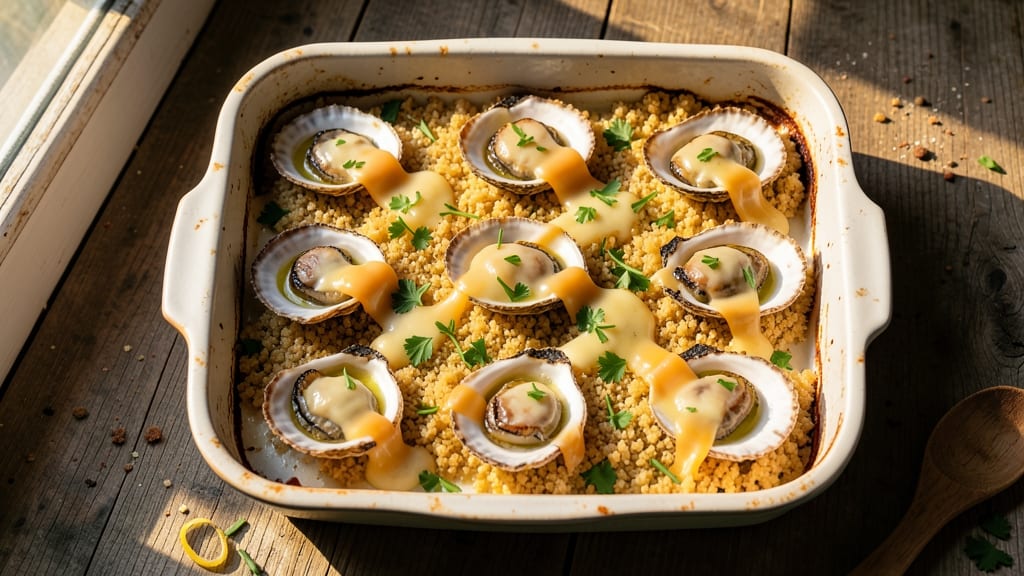
This baked oyster with cheese recipe transforms simple seafood into a luxurious appetizer that’s impossible to resist. The secret lies in balancing melty, golden cheese with tender oysters, creating a dish that’s both elegant and effortless.
Whether you’re hosting a dinner party or craving a sophisticated snack, this method delivers restaurant-quality results without the fuss.
The key to success is precisely timed baking—just enough heat to melt the cheese into bubbly perfection while keeping the oysters tender. A modern twist on classic breadcrumb toppings, this recipe uses a herb-infused cheese blend that adds depth and prevents sogginess.
No special equipment is needed, just a baking sheet and a little patience for that irresistible texture.
What you’ll end up with is a platter of glossy, golden oysters topped with gooey, caramelized cheese and a crispy, flavorful crust. The contrast of creamy oysters and rich cheese creates a bite that’s both indulgent and satisfying.
Serve with a squeeze of lemon or a drizzle of cocktail sauce to cut through the richness.
Perfect for sharing or enjoying solo, this recipe is a game-changer for any seafood lover. The technique is simple, but the results feel gourmet—ideal for impressing guests or treating yourself. Let’s get baking!
Ingredients for baked oyster with cheese
Sixteen tender oysters, bold cheeses, and crispy herb topping transform into a showstopping appetizer.
| Ingredient | Amount | Notes |
|---|---|---|
| Fresh Oysters on the Half Shell 🦪 | 16 whole | Shucked with liquor intact |
| Shredded Sharp Cheddar Cheese 🧀 | 1 ½ cups | Aged 2+ years preferred |
| Panko Breadcrumbs 🍞 | ¾ cup | Japanese-style for extra crunch |
| Fresh Chives 🌿 | ¼ cup | Finely chopped, for garnish |
| Fresh Parsley 🌿 | ¼ cup | Finely chopped, for garnish |
| Extra-Virgin Olive Oil 🫒 | 2 tbsp | For drizzling on oysters |
| Unsalted Butter 🧈 | 2 tbsp | Melted, for brushing |
| Garlic Powder 🧄 | ½ tsp | Freshly ground preferred |
| Ground Black Pepper 🌶️ | ½ tsp | Freshly cracked |
| Lemon Wedges 🍋 | 4 whole | For serving, freshly squeezed |
| Cocktail Sauce 🍅 | ½ cup | Store-bought or homemade |
| Diamond Crystal Kosher Salt 🧂 | ½ tsp | For seasoning |
The oysters are the foundation—freshness is non-negotiable. Look for plump shells with tightly closed edges and a briny scent. Local seafood markets or trusted fishmongers are your best bet; avoid oysters that have been shucked more than 24 hours in advance. The cheese blend matters too: sharp cheddar with visible crystals melts best, while pre-shredded varieties (which contain anti-caking agents) won't brown properly. For the breadcrumbs, Japanese panko provides that signature crispiness—don't substitute regular breadcrumbs, which will turn mushy. If you can't find panko, toast regular breadcrumbs in the oven for 5 minutes first.
No sharp cheddar? Gruyère or aged Gouda work beautifully, though the flavor profile shifts slightly. Short on chives? Substitute with extra parsley or green onions, but reduce the amount by one-third since they're milder. The cocktail sauce can be homemade (ketchup, hot sauce, Worcestershire) or store-bought—Heinz or Sweet Baby Ray's are reliable choices. For a vegetarian twist (though this is pescatarian), swap oysters for mushroom caps or hearts of palm arranged on the baking sheet. The key to success is preheating your oven to 425°F—any lower and the cheese won't get that golden, bubbly finish.
Oysters should be used immediately after shucking for peak texture. Store fresh oysters in the fridge on ice until ready to use—they keep for up to 3 days if properly refrigerated. The assembled oysters can be baked up to 1 hour ahead and held at room temperature, though the crust will soften slightly. For make-ahead prep, assemble the oysters, refrigerate uncovered for 30 minutes to set the cheese, then bake as directed. Leftovers? These reheat poorly, so plan for immediate consumption. If you have extras, blend them into a bisque—the cheese adds incredible depth to the broth.
Why You'll Love This Recipe
- Five-Ingredient Magic: I swear, this recipe is one of those "how did I live without this?" moments. You’ve got oysters, cheese, breadcrumbs, and two herbs—no fancy techniques, just toss in a baking dish, sprinkle, and let the oven do the work.
- Crispy-Creamy Obsession: That first bite? Pure satisfaction. The panko gives a golden crunch while the sharp cheddar melts into gooey perfection, and the chives add a bright finish that cuts through the richness. It’s the kind of dish that makes you reach for another one before you even finish the first.
- Weeknight or Weekend Star: Between us, this is my go-to for lazy Fridays and impressing guests. Same effort either way—just scale up the oysters if you’re feeding a crowd. Honestly, it’s the kind of recipe that works when you’re in sweatpants or dressed up.
- No Leftovers? No Problem: The beauty here is that it reheats like a dream—just a quick broil to get that crispy edge back. I’ve made it for dinner, packed it for lunch, and even served it at a potluck. It’s the ultimate "make once, eat twice" dish.
Step-by-step instructions for baked oyster with cheese
Transform fresh oysters into golden, bubbly masterpieces with this foolproof baking technique.
Prepare the Oysters and Seasoning Base
Preheat your oven to 425°F and position a rack in the middle position. Arrange the 16 whole fresh oysters on the half shell on a parchment-lined baking sheet, leaving about ½ inch between each oyster. This spacing ensures even baking and prevents overcrowding.
In a small bowl, combine the 0.5 tsp diamond crystal kosher salt, 0.5 tsp garlic powder, and 0.5 tsp ground black pepper. Gently brush each oyster with the melted 2 tbsp unsalted butter using a pastry brush, then sprinkle the seasoning mixture evenly over the top of each oyster. The butter creates a flavorful base while the seasoning enhances the natural brininess of the oysters.
Create the Cheese Topping Layer
In a separate bowl, mix the 1.5 cups shredded sharp cheddar cheese with the 0.75 cup panko breadcrumbs until evenly combined. This mixture should resemble coarse, crumbly sand. I like to use my fingers for this step—it helps distribute the cheese evenly through the breadcrumbs.
Spoon the cheese and breadcrumb mixture over each oyster, creating a generous but even layer. The panko adds texture while the sharp cheddar melts into a gooey blanket. For best results, press down gently to help the mixture adhere, but don't pack it too tightly—you want room for those golden bubbles to form.
Bake Until Golden and Bubbly
Bake the oysters for 8-10 minutes until the cheese is fully melted, golden brown, and forming bubbles. You'll know they're ready when the edges are crisp and the cheese has pulled away slightly from the oyster shells. If you're unsure, check one oyster after 8 minutes—the cheese should be set but still slightly soft in the center.
Real talk: Don't walk away during this step. The cheese can go from perfect to burnt in seconds. If the tops brown too quickly, tent the baking sheet loosely with aluminum foil for the final 2 minutes of baking to prevent over-browning while still allowing the cheese to melt completely.
Finish with Fresh Herbs and Lemon
Remove the oysters from the oven and immediately sprinkle with the 0.25 cup finely chopped fresh chives and 0.25 cup finely chopped fresh parsley. The herbs add a bright contrast to the rich cheese and briny oysters. Drizzle each oyster with ½ tbsp extra-virgin olive oil—this adds a silky finish and helps distribute any remaining cheese.
Serve immediately with the 4 whole lemon wedges and 0.5 cup cocktail sauce on the side. The acidity of the lemon cuts through the richness of the cheese, while the cocktail sauce adds a tangy, spicy complement. These oysters are best enjoyed while the cheese is still bubbling hot and the oysters maintain their delicate texture.
Pro Tips For Making Baked Oyster With Cheese
- Preheat the Pan First: I learned this the hard way—cold pans make soggy bottoms. Slide your oyster shells straight into a 425°F (220°C) oven for 2-3 minutes before adding toppings. The heat jump-starts the cheese melt and toasts the shells faster, so you’re not waiting forever for everything to set.
- Pat Oysters Bone-Dry: Wet shells = steam = soggy breadcrumbs. After shucking, wipe each oyster shell with a paper towel until completely dry. This isn’t just about looks—it’s the difference between a crispy topping and a sad, gummy mess.
- Press Down the Cheese: Don’t just sprinkle—pack that shredded cheddar into the shells. Use the back of a spoon to press it into the oysters and around the edges. This keeps it from sliding off during baking and ensures every bite has that melty, gooey payoff.
- Bake Until Bubbly, Not Brown: The breadcrumbs will turn golden fast, but resist the urge to pull them out early. Wait until the cheese is bubbling and the edges are just starting to brown—usually 10-12 minutes. Overbaking turns the panko into cardboard, and underbaking leaves the cheese uncooked.
Pro cooking tips for great baked oyster with cheese
Cheese Melting Perfection
Baking oysters with cheese requires precision—too little heat and the cheese stays cold, too much and it burns. I aim for 425°F because it creates that perfect balance of golden bubbles and creamy melt.
Pre-shredded cheese won't work here; always shred your own sharp cheddar to prevent anti-caking agents from interfering with browning. For extra insurance, mix in 1 tbsp all-purpose flour with the cheese before baking—it helps thicken the melt and creates a crispier crust. 🔥
Oyster Placement Matters
Spacing is everything when baking oysters. Place them ½ inch apart on the baking sheet to ensure even heat distribution and prevent steam buildup that makes the cheese soggy. I use a parchment-lined sheet for easy transfer and cleanup.
If you're short on space, bake in batches—two batches of 8 oysters work perfectly in a standard oven. Never overcrowd, or you'll end up with unevenly cooked, watery results.
Butter Brush Technique
The butter isn't just for flavor—it acts as a moisture barrier that helps the cheese brown beautifully. Use a pastry brush to apply the melted butter in even strokes, avoiding the edges of the oyster shells. For extra richness, I sometimes add ½ tsp smoked paprika to the butter mixture.
This adds a subtle smokiness that pairs perfectly with the briny oysters and sharp cheese. Trust me, this small step makes a huge difference in the final texture. 💡
Timing is Everything
Don't walk away during the final 8-10 minutes of baking! The cheese goes from perfect to burnt in seconds. I set a timer and check every 2 minutes starting at 8 minutes.
If the cheese is browning too quickly, tent the baking sheet with foil for the last 2 minutes to slow the process. The ideal result is cheese that's fully melted with golden bubbles and slightly crisp edges. Overcooking turns the cheese rubbery, so stay vigilant. ⏰
Herb Placement Hack
Fresh herbs aren't just for garnish—they add a bright contrast that balances the richness. Sprinkle chives and parsley immediately after removing from the oven while the cheese is still bubbly. For extra flair, I sometimes add ½ tsp dried thyme to the cheese mixture before baking.
The herbs should be finely chopped to avoid overwhelming the delicate oyster flavor. A quick drizzle of extra-virgin olive oil after adding herbs helps distribute any remaining cheese for maximum gooeyness. ✨
Lemon's Secret Role
While lemon is often served on the side, I've found that a light squeeze of fresh lemon juice over the oysters right after baking enhances the briny flavor and cuts through the richness.
For presentation, serve with lemon wedges so guests can add as much or as little as they prefer. The acidity also helps reset your palate between bites, making it easier to enjoy multiple oysters. Pro tip: Use Meyer lemons for their natural sweetness and lower acidity. 🍋
Nutrition facts
Frequently asked questions
Can I use frozen oysters for this recipe?
Fresh oysters are ideal for this dish, as their delicate texture and natural brininess are essential. Frozen oysters often lose their tenderness and can become rubbery when baked. If you must use frozen, thaw them overnight in the refrigerator first, then shuck immediately before assembling. The quality difference is noticeable—fresh oysters stay juicy and plump while frozen ones may release excess water, making the cheese topping soggy.
What's the best way to store leftover baked oysters?
These oysters are best enjoyed fresh, but if you have leftovers, refrigerate them in an airtight container for up to 1 day. The cheese will firm up, so reheating isn't recommended—the texture becomes grainy. Instead, blend any extras into a creamy bisque by adding 1 cup seafood stock and simmering for 10 minutes. The cheese adds incredible richness to the broth!
Can I make this recipe ahead of time?
You can prep the oysters up to 1 hour ahead by assembling them with cheese and refrigerating uncovered. This helps the cheese set slightly, so it holds better during baking. For best results, bake as directed when ready to serve. If prepping the night before, store assembled oysters in the fridge (covered) and bring to room temperature before baking—this ensures even melting.
What if my cheese doesn't melt properly?
Pre-shredded cheese contains anti-caking agents that prevent proper browning and melting. Always shred your own sharp cheddar using a box grater for best results. If your cheese isn't melting, try mixing 1 tbsp all-purpose flour with the cheese before baking—this helps create a thicker, more cohesive melt. Also ensure your oven is fully preheated to 425°F before baking.
How do I know when the oysters are done?
The cheese should be fully melted with golden bubbles forming on top, and the edges should be crisp. Check after 8 minutes—the cheese should be set but still slightly soft in the center. If the tops brown too quickly, tent loosely with foil for the final 2 minutes to prevent burning. The oysters themselves should remain tender, not rubbery—overcooking turns them tough.