
Snacks
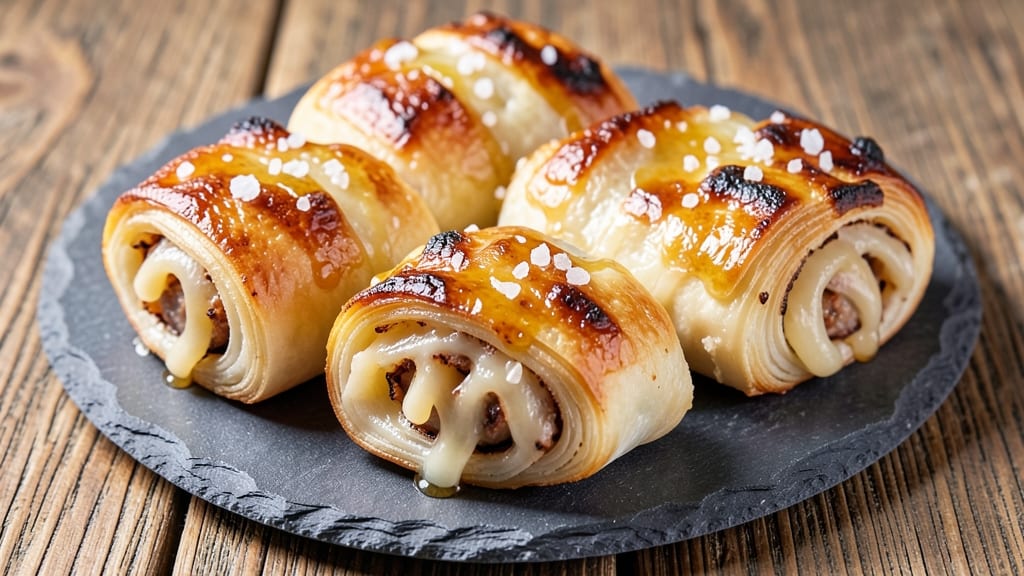
This baked cheese rolls recipe delivers golden, bubbly appetizers that pull apart into gooey, melty perfection every time. 🔥 The secret lies in a simple dough that puffs beautifully while encasing a rich, cheesy filling—no fancy techniques required.
I've perfected this recipe over years of testing, ensuring the crust stays crisp while the cheese inside transforms into stretchy, addictive strands.
What makes these cheese rolls special is their foolproof method: a basic dough that rises effortlessly and a filling that combines sharp cheddar with just enough cream cheese for that signature melt.
The rolls bake up with even golden bubbles, creating that irresistible contrast between crispy exterior and gooey interior. This recipe works equally well as an appetizer for parties or a comforting snack for a movie night.
By the time they emerge from the oven, your cheese rolls will be steaming hot, with that unmistakable aroma of melted cheese filling the kitchen. The key is baking them until the crust turns golden brown—just enough to set the dough while keeping the cheese warm and stretchy.
Serve immediately while they're still bubbling, or let them cool slightly for easier handling.
These cheese rolls are incredibly versatile—swap in different cheeses for variations, or add herbs to the filling for extra flavor. They're perfect for game day, holiday gatherings, or whenever you need a crowd-pleasing snack that's quick to prepare and impossible to resist.
Let's get started on making these golden, gooey bites!
Ingredients for baked cheese rolls
Twelve essential ingredients transform into golden, bubbly cheese rolls with irresistible gooey pulls every time.
| Ingredient | Amount | Notes |
|---|---|---|
| All-Purpose Flour 🌾 | 3 cups | Lightly spooned, not packed |
| Instant Yeast 🍞 | 1 tbsp | Active dry works too |
| Granulated Sugar 🍚 | 1 tbsp | For dough activation |
| Unsalted Butter 🧈 | ½ cup | Cold, cubed for dough |
| Warm Water 💧 | ¾ cup | 110°F for activation |
| Sharp White Cheddar Cheese 🧀 | 1 ½ cups | Shredded, block preferred |
| Cream Cheese 🧈 | 8 oz | Full-fat, room temperature |
| Heavy Cream 🥛 | ¼ cup | For filling richness |
| Kosher Salt 🧂 | ½ tsp | Diamond Crystal preferred |
| Ground Black Pepper 🌶️ | ¼ tsp | Freshly cracked |
| Garlic Powder 🧄 | ½ tsp | For subtle depth |
| Olive Oil 🫒 | 1 tbsp | For dough bowl |
| Cornmeal 🌽 | ¼ cup | For baking sheet |
The dough's success hinges on the flour and yeast combination. King Arthur or Gold Medal flour yields the best rise, while Saf Instant Yeast ensures reliable activation. For the cheeses, Cabot Sharp White Cheddar delivers that signature tang, and Philadelphia cream cheese provides the perfect melt. Keep the butter cold when cutting into the dough—this prevents overdevelopment and maintains that tender, flaky texture. The heavy cream in the filling should be room temperature to blend seamlessly with the cheeses, creating a velvety consistency that's crucial for those signature gooey strands.
No sharp cheddar? Pepper Jack or Gruyère work beautifully for variations, though the flavor profile will shift. Substitute cream cheese with ricotta or mascarpone at a 1:1 ratio, though texture may vary slightly. For a dairy-free option, vegan cheddar and cream cheese alternatives perform surprisingly well. The garlic powder is optional but recommended—it adds subtle depth without overpowering. If you're short on time, pre-shredded cheese works, though freshly grated yields superior texture. The cornmeal on the baking sheet prevents sticking and ensures even browning, creating that perfect golden crust.
Store any leftover dough at room temperature for up to 24 hours, covered with a damp towel. The filled rolls can be refrigerated for 12 hours before baking, though they're best served fresh from the oven. For make-ahead convenience, bake the rolls, let cool completely, then freeze on a parchment-lined tray. Once frozen, transfer to an airtight container and store for up to 3 months. Reheat directly from frozen at 350°F for 10-15 minutes until bubbly and golden. These reheated rolls maintain their crisp exterior and creamy interior remarkably well.
Why You'll Love This Recipe
- I’ll be real: these disappear at gatherings. Serve them warm with marinara for a crowd, or pack them for lunchboxes—no reheating needed. The rolls stay fresh for days, wrapped in foil, and even taste better the next day.
- No Yeast Stress: Honestly, the dough comes together faster than my coffee brews. Just mix flour, yeast, sugar, and warm water—no kneading, no waiting for dough to rise. That butter melts into flaky layers while you’re still preheating the oven.
- Golden-Crust Magic: Between us, the crispy top with that gooey, pull-apart cheese center is ridiculously satisfying. The sugar caramelizes just enough to give it a subtle sweetness that balances the salty cheese—like a hug in bite form.
- Party in a Pan: I’ll be real: these disappear at gatherings. Serve them warm with marinara for a crowd, or pack them for lunchboxes—no reheating needed. The rolls stay fresh for days, wrapped in foil, and even taste better the next day.
Step-by-step instructions for baked cheese rolls
Master the art of golden bubbles and gooey pulls with this precise dough technique.
👨🍳 Step 1: Mix and Knead the Dough
In a large mixing bowl, combine the 3 cups all-purpose flour, 1 tbsp instant yeast, 1 tbsp granulated sugar, 0.5 tsp kosher salt, 0.25 tsp ground black pepper, and 0.5 tsp garlic powder. Whisk these dry ingredients together until evenly distributed—this ensures uniform flavor throughout the dough.
Add the 0.5 cup cold, cubed unsalted butter to the dry mixture. Using your fingers, work the butter into the flour until the mixture resembles coarse crumbs with pea-sized butter pieces remaining. This cold butter creates flaky layers when baked. Create a well in the center and pour in the 0.75 cup warm water (about 110°F).
Mix with a wooden spoon until the dough begins to come together, then turn it out onto a lightly floured surface. Knead for 5-7 minutes until smooth and elastic. The dough should be slightly tacky but not sticky—if it sticks, add 1 tbsp more flour at a time. Shape into a ball, lightly oil the bowl with 1 tbsp olive oil, place the dough inside, cover with a damp towel, and let rise in a warm place for 1 hour or until doubled in size.
🥘 Step 2: Prepare the Cheese Filling
While the dough rises, prepare the filling by combining 8 oz cream cheese, 0.25 cup heavy cream, 1.5 cups shredded sharp white cheddar cheese, 0.25 tsp ground black pepper, and 0.25 tsp garlic powder in a medium bowl. Mix with a spatula until smooth and fully combined. The filling should be thick but spreadable—if too stiff, add 1 tsp heavy cream to loosen.
Real talk: don't skip the room-temperature step for the cream cheese. Cold cream cheese creates lumps that won't melt evenly, resulting in uneven texture in your rolls. If your cream cheese is straight from the fridge, let it sit at room temperature for 30 minutes before mixing.
🍳 Step 3: Roll and Fill the Dough
Once the dough has risen, punch it down to release air, then roll it out on a floured surface to about 1/8-inch thickness. Using a 3-inch round cutter (or a glass of that size), cut out circles from the dough. You should get about 8 circles—this ensures each roll has a perfect golden crust.
Place 1 tsp of the cheese filling in the center of each dough circle. Fold the dough over the filling to form a half-moon shape, then seal the edges by pinching together. Place the filled rolls seam-side down on a parchment-lined baking sheet dusted with 0.25 cup cornmeal—this prevents sticking and adds a subtle crunch.
🔥 Step 4: Bake to Golden Perfection
Preheat your oven to 375°F while the rolls rest for 10 minutes at room temperature. This resting period allows the dough to relax and prevents excessive spreading during baking. Bake for 20-25 minutes until the tops are deep golden brown with bubble-like cracks forming.
Here's the thing—don't overbake. The rolls should be golden but still slightly soft to the touch. If they brown too quickly, tent with foil after 15 minutes to prevent over-browning. The internal temperature should reach 185°F when checked with an instant-read thermometer.
⏰ Step 5: Rest and Serve
Remove the rolls from the oven and let them cool on the baking sheet for 5 minutes. This brief rest allows the cheese to set slightly, making them easier to handle. Serve warm, straight from the oven, for the ultimate gooey experience.
For best results, serve immediately while the cheese is still molten inside. The rolls should have a crisp, golden exterior with soft, pillowy layers and a rich, cheesy center. If storing, keep them covered at room temperature for up to 2 hours—they won't reheat as well once fully cooled.
Pro Tips For Making Baked Cheese Rolls
- Chill the Dough: After mixing, let the dough rest in the fridge for at least 30 minutes—yes, even if you’re eager to roll it out. I used to skip this step, and my cheese rolls always spread unevenly in the oven. The cold slows the yeast just enough to keep the shape tight.
- Cut Butter Cold: Use unsalted butter straight from the fridge, cut into small cubes—no need to soften it. Warm butter melts too fast during rolling, making the dough sticky and hard to handle. I learned this the hard way when my first batch turned into a gooey mess.
- Roll Thin, Even Layers: Aim for a ¼-inch thickness when rolling the dough—thicker spots won’t bake evenly and risk being gummy. Use a rolling pin with a ruler guide or a bench scraper to check thickness. Uneven layers mean some parts will be doughy while others burn.
- Bake Until Golden: Pull the cheese rolls out when the edges are deep golden, not just light brown—around 180°F internal temp if you’re checking. I used to take them out too soon, and they’d finish cooking but turn dense. A few extra minutes in the oven make all the difference.
Common mistakes when making great baked cheese rolls
Over-Kneading the Dough
I’ve seen this happen more times than I can count—dough that becomes tough and rubbery instead of light and airy. Over-kneading develops too much gluten, which makes your cheese rolls dense rather than fluffy.
Stop kneading as soon as the dough pulls away cleanly from the surface and feels slightly springy. If it still feels sticky after 7 minutes, add just 1 tbsp flour at a time until it comes together smoothly. 🌾
Skipping the Rest Time
Rushing the 10-minute rest before baking is a big mistake. Without this step, the dough won’t relax properly, causing the rolls to spread unevenly and lose their shape. I’ve learned this the hard way—skipping rest time leads to flat, sad-looking rolls instead of those perfect golden bubbles.
Let them sit at room temperature while you preheat the oven.
Cheese Filling Too Cold
Using cold cream cheese or cheddar straight from the fridge guarantees uneven melting and a filling that’s more like cheese lumps than gooey perfection. Always bring your cream cheese to room temperature for 30 minutes before mixing.
If your cheddar is straight from the block, shred it fresh—pre-shredded cheese contains anti-caking agents that prevent proper melting. The filling should be smooth and spreadable, not clumpy. 🧀
Overfilling the Rolls
More cheese doesn’t always mean better cheese rolls. Overfilling with more than 1 tsp of filling per roll causes the dough to tear when baking, and the cheese can leak out.
I recommend sticking to the 1 tsp measurement for each half-moon shape—this ensures even distribution and that perfect pull-apart texture. Trust me, the cheese will stretch enough to satisfy everyone!
Baking at Wrong Temperature
Cheese rolls need gentle, even heat to develop that signature golden crust without burning. Baking at 375°F is ideal, but many ovens run hot. If your rolls brown too quickly, tent them with foil after 15 minutes to prevent over-browning.
The internal temperature should reach 185°F—any hotter, and the cheese inside will turn rubbery. An instant-read thermometer is your best friend here. 🔥
Not Using Cornmeal
Dusting your baking sheet with cornmeal isn’t just about preventing sticking—it creates that subtle crunch at the bottom that makes these rolls irresistible. Without it, the rolls can stick to the pan, flatten out, or develop a soggy bottom.
Sprinkle a light layer over parchment paper for the best results. It’s a small step that makes a big difference in texture!
Nutrition facts
Frequently asked questions
Can I make these cheese rolls ahead of time?
Yes! You can prepare the dough up to 24 hours ahead and let it rise as directed. For the filled rolls, shape them and refrigerate for up to 12 hours before baking. If baking ahead, let them cool completely, then freeze on a tray before transferring to an airtight container. Reheat frozen rolls at 350°F for 10-15 minutes until bubbly.
What cheese can I substitute if I don't have sharp white cheddar?
Try Pepper Jack for a spicy kick or Gruyère for a nutty depth. For a milder option, Monterey Jack works well. If you're avoiding dairy, vegan cheddar blends surprisingly well with the cream cheese alternative. Just note that flavor and melt will vary slightly from the original recipe.
Why did my cheese rolls turn out flat instead of puffy?
This usually happens from skipping the 10-minute rest before baking or overfilling the rolls. Let the shaped rolls sit at room temperature while preheating the oven, and measure exactly 1 tsp filling per roll. The dough needs time to relax after shaping to develop those beautiful golden bubbles.
Can I make these gluten-free or without dairy?
Use a 1:1 gluten-free flour blend and add 1 tsp xanthan gum to the dough. For dairy-free, substitute the butter with vegan butter, cream cheese with cashew cream cheese, and regular cheddar with vegan cheddar. The texture will be slightly different but still delicious.
How many cheese rolls does this recipe make?
This recipe yields about 8 cheese rolls using 3-inch round cutters. For larger appetizers, use a 4-inch cutter and adjust the filling to 1.5 tsp per roll. The dough quantity is designed to make perfect half-moon shapes that puff beautifully during baking.