
Main Courses
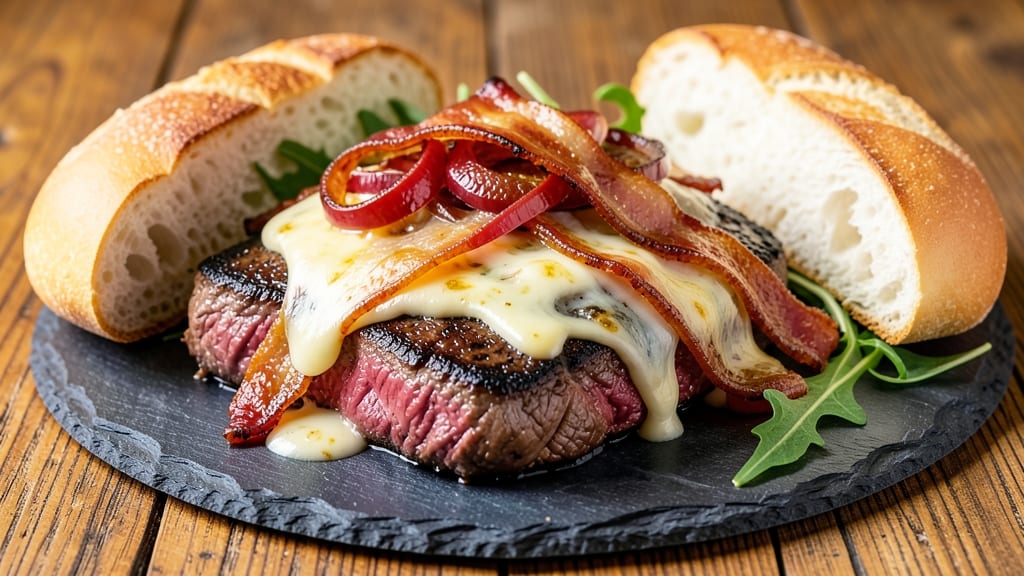
This bacon cheese steak recipe delivers all the smoky, melty goodness of a classic Philly cheesesteak—just with crispy bacon layered in for extra richness.
The secret lies in perfectly seared ribeye steak, caramelized onions, and gooey melted cheese all coming together in one pan, then piled onto toasted bread for that iconic sandwich experience.
I developed this version after craving that satisfying combination of tender beef, crispy bacon, and melted cheese without the fuss of multiple pans.
The key to success is high-heat searing for the steak—just 3-4 minutes per side—followed by thinly sliced onions that caramelize beautifully in the same pan. While the steak rests, you'll cook thick-cut bacon until crispy, then melt a blend of sharp cheddar and pepper jack right into the mix.
This method keeps everything warm and gooey while minimizing cleanup. The result is a sandwich with layers of flavor in every bite, where the bacon adds a smoky depth that complements the beef perfectly.
What makes this recipe work so well is how it balances simplicity with restaurant-quality results. You'll end up with a sandwich that's crispy on the outside, tender on the inside, and dripping with melted cheese—just like your favorite cheesesteak joint, but made in your own kitchen.
The toasted bread adds the perfect crunch, while optional toppings like sautéed mushrooms or pickles can take it to the next level. This is comfort food at its finest, ready in under 20 minutes.
Serve this with a side of crispy onion rings or a simple green salad to round out the meal. The beauty of this recipe is its versatility—it works as a hearty lunch, a satisfying dinner, or even a crowd-pleasing appetizer when cut into smaller portions.
Whether you're a Philly native or just love a great cheesesteak, this one-pan method delivers every time.
Ingredients for bacon cheese steak
Four ingredients make this cheesesteak legendary—crispy bacon, tender steak, caramelized onions, and melty cheese.
| Ingredient | Amount | Notes |
|---|---|---|
| Ribeye Steak 🥩 | 1 ½ lb | Thinly sliced against grain |
| Thick-Cut Bacon 🥓 | 6 oz | Crispy preferred |
| Yellow Onions 🧅 | 1 ½ lb | Thinly sliced for caramelizing |
| Sharp Cheddar Cheese 🧀 | 1 cup | Shredded, block preferred |
| Pepper Jack Cheese 🧀 | ½ cup | Shredded, for spicy kick |
| Hoagie Rolls 🍞 | 4 whole | Crusty, split lengthwise |
| Olive Oil 🫒 | 2 tbsp | For high-heat searing |
| Kosher Salt 🧂 | 1 ½ tsp | For seasoning |
| Ground Black Pepper 🌶️ | 1 tsp | Freshly cracked |
| Garlic Powder 🧄 | 1 tsp | Optional for extra flavor |
| Butter 🧈 | 2 tbsp | For toasting rolls |
| Optional Mushrooms 🍄 | ½ lb | Sautéed for topping |
| Optional Pickles 🥒 | ¼ cup | Sliced for tangy crunch |
The ribeye is non-negotiable here—look for well-marbled cuts at Whole Foods or your local butcher shop. Thinly slicing against the grain ensures tender bites every time. For the bacon, thick-cut from Costco gives you that perfect crispy texture without burning. Yellow onions should be sweet and firm—Vidalia if you want extra sweetness, or regular yellow for classic flavor. The cheeses? Sharp cheddar from Tillamook and pepper jack from Sargento melt beautifully together. Pro tip: slice the steak yourself if you can—pre-sliced often has uneven pieces.
No ribeye? Sirloin or flank steak works in a pinch, but ribeye's marbling is key for juiciness. Swap pepper jack for provolone or mozzarella if you prefer milder flavors. For the onions, red onions add color but yellow caramelizes better. The rolls? Italian-style hoagies from Trader Joe's toast perfectly. No hoagies? Crusty French bread or even baguettes work if you toast them well. Optional toppings like mushrooms or pickles? Sauté the mushrooms in olive oil with garlic powder for extra flavor. And if you're feeling fancy, add a sprinkle of crushed red pepper flakes on top before serving.
Store prepped ingredients smart: raw steak and bacon in the fridge for 2 days max, while shredded cheese keeps for 1 week in an airtight container. Toasted rolls stay fresh for 1 day if wrapped tightly. For leftovers, reheat in a skillet with a splash of water to keep the cheese gooey. This sandwich reheats beautifully—microwave in 30-second bursts to avoid drying out. Make ahead? Prep everything except the rolls, then assemble when ready to eat for that fresh-from-the-grill experience.
Why You'll Love This Recipe
- One-Pan Magic: I swear by this—just toss everything on a sheet pan, and you’ve got a meal that feels fancy without the fuss. The bacon renders its own fat, the onions caramelize right alongside the steak, and the cheeses melt into gooey layers with zero extra dishes.
- Crispy-Savory Cheese Bomb: That first bite? Crispy bacon edges, smoky onions, and a melty blend of sharp cheddar and pepper jack that clings to the steak like it’s never letting go. Honestly, I’ve had worse meals at restaurants—this is next-level comfort.
- Game Day or Weeknight Win: I make this for tailgates when I’m too lazy to grill, for date nights when I want to impress, and for Tuesday dinners when I’m too tired to think. It’s the kind of dish that works for a crowd or just me, with zero apology needed.
- Leftovers That Don’t Suck: Most steak leftovers are sad. Not this. The cheeses keep it rich and satisfying, and the bacon adds that salty crunch even the next day. I’ve reheated slices straight from the fridge for breakfast—yes, really—and they’re still worth it.
Step-by-step instructions for bacon cheese steak
Here's how to build layers of smoky bacon, tender steak, and melty cheese in one pan.
Sear the Bacon Until Crispy
Cut the 6 oz thick-cut bacon into ½-inch strips and lay them in a cold, heavy skillet. Turn the heat to medium-low and cook for 8-10 minutes, stirring occasionally, until the bacon renders about half its fat but remains slightly underdone. This slow start prevents burning while maximizing flavor extraction.
Once the bacon is 70% cooked with crispy edges forming, remove it from the skillet and set aside on paper towels to drain. Leave the rendered fat in the pan—this is your flavor foundation. The bacon should be golden brown with some chewiness remaining, not fully crispy yet. That comes later when we finish cooking it with the steak.
Cook the Steak and Caramelize the Onions
Pat the 1.5 lb ribeye steak dry with paper towels and season both sides generously with 1.5 tsp kosher salt and 1 tsp freshly cracked ground black pepper. Add the steak to the skillet with the bacon fat over medium-high heat. Sear for 2-3 minutes per side until deeply browned with a crust forming.
Remove the steak and set aside. Add the 1.5 lb thinly sliced yellow onions to the same skillet and cook over medium heat for 10-12 minutes, stirring occasionally, until golden brown and caramelized. You're looking for onions that smell sweet and deep, with edges that start to crisp slightly. If the pan gets too dry, add 1-2 tablespoons of water and cover briefly to steam the onions.
Combine and Finish with Cheese
Return the bacon and steak to the skillet. Add the 1 tsp garlic powder and toss everything together for 1-2 minutes to distribute the flavors. Sprinkle the 1 cup shredded sharp cheddar cheese and 0.5 cup shredded pepper jack cheese over the top. Cover the skillet for 2-3 minutes until the cheese melts completely and becomes bubbly.
Stir gently to combine, then remove from heat. If using the optional mushrooms, add the 0.5 lb sautéed mushrooms now and toss to warm through. For the optional pickles, slice the 0.25 cup pickles and add them last for that tangy crunch. The cheese should coat everything smoothly with a glossy sheen—this is your signal it's ready to assemble.
Toast Rolls and Assemble
Split the 4 whole hoagie rolls lengthwise and toast them in a dry skillet with 1 tablespoon butter over medium heat for 1-2 minutes per side until golden brown. Spread the remaining 1 tablespoon butter on the toasted rolls for extra richness.
Pile the steak, bacon, onion, and cheese mixture onto the bottom halves of the rolls. Top with the sliced optional pickles if using, then cover with the top halves of the rolls. Press gently to compress and serve immediately while everything is hot and melty. The rolls should be crispy outside with soft, buttery centers, and the filling should be so hot it's almost too hot to handle—perfection.
Pro Tips For Making Bacon Cheese Steak
- SEAR THE STEAK FIRST: Take the ribeye out of the fridge 30 minutes before cooking, then hit it with a screaming-hot cast-iron for 2-3 minutes per side—no rushing. I used to toss it back in the pan with the bacon too early, and the steak turned out greasy instead of caramelized. Let that crust form first, then add the bacon and onions.
- CUT BACON IN HALF: Thick-cut bacon takes forever. Grab kitchen shears and slice each strip crosswise into 2-inch chunks before cooking—this cuts rendering time by half. (Yes, it looks weird, but your cheese sauce won’t turn into bacon grease soup.) Cook them low and slow until crispy, then remove all but 2 tablespoons of fat.
- ONIONS NEED TIME: Don’t rush the onions—they’re the flavor base. Slice them into even ¼-inch pieces, then cook them in the bacon fat on medium-low for 8-10 minutes until deep golden. I learned this the hard way: skipping this step means your steak will taste like it’s missing something. (Pro move: Add a pinch of salt halfway through.)
- MELT CHEESE OFF-HEAT: Once your steak is done, turn off the burner and immediately add the shredded cheddar and pepper jack. The residual heat will melt it perfectly without burning. I used to keep the pan on low, and half the cheese ended up rubbery. Let the cheese do the work—just stir until smooth, then plate fast before it sets.
Common mistakes when making perfect results
Overcooking the Steak
One of the biggest mistakes is letting the steak cook past medium-rare. Ribeye should hit 130-135°F internal temperature—any hotter and it becomes tough. I've ruined many a cheesesteak by walking away while the onions caramelize.
Use a meat thermometer to monitor temp. If you don't have one, cut into the thickest piece—it should be bright red in the center with a pink edge. 🌡️
Skipping the Rest
Never skip resting the steak after searing! Let it rest for 5-10 minutes before slicing—this keeps juices inside where they belong. I used to cut into it immediately and end up with dry, flavorless bites.
The rest also lets the steak reabsorb those delicious juices that pool during cooking. Trust me, 10 minutes of patience makes all the difference.
Burning the Bacon
Starting bacon on high heat is a fast track to bitter, burnt edges. Cook it slowly at medium-low heat for the first 8-10 minutes to render fat gently. I learned this the hard way when my first attempt turned into crispy carbonized sticks.
The goal is crispy bacon with smoky flavor, not burnt charcoal. Remove it when it's 70% done—you'll finish cooking it with the steak later.
Underseasoning
Don't be shy with the salt! The steak needs 1.5 tsp kosher salt on both sides for proper seasoning. I've made this mistake by using too little, resulting in bland beef. The salt enhances the natural beefy flavor while helping create that perfect crust during searing.
For extra flavor, add 1 tsp garlic powder after the steak comes out of the pan—it mingle beautifully with the bacon fat.
Cheese Overload
Too much cheese can make your sandwich soggy and overwhelming. Stick to 1 cup sharp cheddar and 0.5 cup pepper jack—this gives you that perfect melty blanket without drowning the other flavors.
I've seen recipes call for 2 cups of cheese, and while it sounds good, it turns the sandwich into a cheese log. Balance is key here—let the steak and bacon shine.
Skipping the Onion Caramelization
The onions aren't just a filler—they're the sweet, caramelized glue that binds everything together. Don't rush this step! Cook them for 10-12 minutes until deep golden brown. If you rush, you'll miss out on that incredible sweetness that makes this sandwich legendary.
I've used quick-cooking methods that left the onions pale and bland, and it ruined the whole dish. Patience pays off here. 🍯
Nutrition facts
Frequently asked questions
Can I use pre-cooked bacon for this recipe?
Pre-cooked bacon won't give you that perfect crispy texture and smoky flavor that makes this sandwich special. The recipe relies on fresh, crispy bacon cooked in the same pan as the steak to create layers of flavor. If you're short on time, try baking thick-cut bacon at 400°F for 12-15 minutes until crispy before adding it to the skillet with the steak.
What's the best way to slice the steak for even cooking?
Slice the ribeye against the grain into ¼-inch thick strips for maximum tenderness. Use a sharp knife and work quickly to prevent the meat from drying out. If you're not comfortable slicing yourself, ask your butcher to do it—many will slice it right at the counter for you. The goal is even pieces that cook uniformly in just 2-3 minutes per side.
Can I make this recipe ahead of time?
but with a few key adjustments! Cook all components (steak, bacon, onions, cheese) and store them separately in the fridge for up to 2 days. When ready to serve, reheat in a skillet over medium heat for 3-4 minutes, then assemble with freshly toasted rolls. The cheese will melt beautifully when reheated this way. For best results, add pickles fresh when assembling to keep them crisp.
What's the difference between Philly and New York-style bacon cheese steaks?
Philly-style uses thinly sliced ribeye steak and is typically served on a long roll with provolone cheese, while this recipe blends the best of both worlds with crispy bacon and a mix of cheddar/pepper jack. New York-style often includes mushrooms and sometimes giardiniera, while Philly-style keeps it simpler with just steak, cheese, and onions. This version gives you that smoky bacon depth that elevates both regional styles.
How do I keep the bread from getting soggy?
Toast your rolls thoroughly in butter until golden brown before assembling, and use the cheese sparingly (1 cup total). The key is to assemble the sandwich right before serving—don't let the filling sit on the bread for more than 2-3 minutes. For extra insurance, lightly toast the rolls again in the oven at 350°F for 1-2 minutes right before serving to restore crispiness.