
Breakfast & Brunch
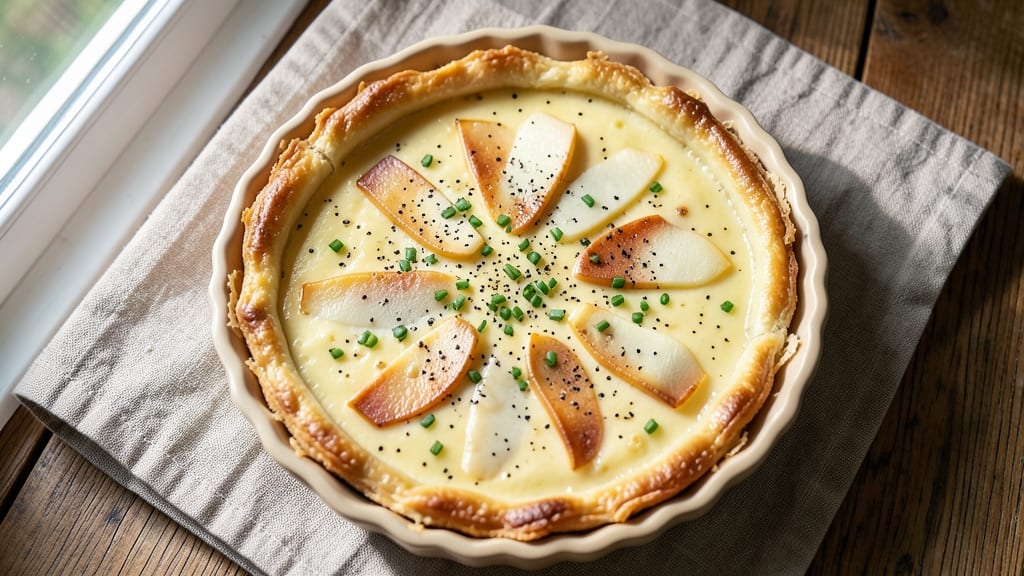
This Asiago cheese quiche recipe delivers the perfect balance of flaky crust and rich, melty cheese filling that transforms breakfast into a brunch-worthy centerpiece. The secret lies in using sharp, aged asiago—its nutty flavor and luxurious melt create rivers of golden cheese that make every bite irresistible. I've perfected this recipe over years of testing, ensuring the crust stays crisp while the filling remains tender and deeply savory.
The foundation begins with a buttery, flaky crust—whether store-bought or homemade—that forms a sturdy base for the egg mixture. The filling combines creamy eggs, heavy cream, and asiago cheese, creating a custard that's rich yet light.
Adding a touch of Dijon mustard and fresh herbs elevates the flavor profile, while optional vegetables like spinach or mushrooms add texture and color without overpowering the cheese's star quality.
Baked at 375°F for 35–40 minutes, this quiche emerges with a golden crust and a filling that's just set—creamy in the center, with pockets of melted asiago that pull into silky strands.
The aroma alone will have your kitchen smelling like a Parisian café, and the first bite delivers that perfect harmony of crisp, cheesy, and eggy goodness. It's the kind of dish that makes brunch feel special without requiring hours in the kitchen.
Serve warm with a side salad or crusty bread to soak up every last drop of that creamy cheese sauce. This recipe scales beautifully for gatherings, and leftovers reheat perfectly for quick breakfasts all week. Let's get started on creating your next brunch showstopper.
Ingredients for asiago cheese quiche
Sharp asiago cheese and flaky crust make this quiche a brunch standout—rich yet light.
| Ingredient | Amount | Notes |
|---|---|---|
| Asiago Cheese 🧀 | 2 cups | Sharp, aged variety preferred |
| Large Eggs 🥚 | 4 whole | Room temperature for even cooking |
| Heavy Cream 🥛 | 1 cup | Full-fat for richness |
| Unsalted Butter 🧈 | 1 cup | Cold, cubed for crust |
| All-Purpose Flour 🌾 | 1 ½ cups | Plus 1 tbsp for dusting |
| Ice Water 💧 | ½ cup | For pie crust |
| Salt 🧂 | 1 tsp | Kosher or sea salt |
| Black Pepper 🌶️ | ½ tsp | Freshly ground preferred |
| Dijon Mustard 🍯 | 1 tbsp | For depth of flavor |
| Fresh Spinach 🌿 | 2 cups | Chopped, optional |
| Fresh Chives 🌱 | ¼ cup | Chopped, for garnish |
| Garlic Cloves 🧄 | 2 cloves | Minced for filling |
The asiago is non-negotiable here. Look for sharp, aged asiago from specialty cheese shops or the deli section—it should have that nutty, caramelized flavor. Whole Foods or local cheese mongers often carry the best varieties, but the pre-shredded stuff at Kroger works in a pinch. For the crust, store-bought pie crust (like Pepperidge Farm) saves time, but homemade is worth the effort if you've got 20 minutes. The key is keeping everything cold until the last minute—cold butter equals flakier layers. If you're using fresh spinach, wilt it first to avoid a watery filling.
No asiago? Parmigiano-Reggiano or Gruyère work in a pinch, though the flavor won't be identical. Short on heavy cream? Half-and-half or whole milk stretches it, but the texture will be lighter. The crust can be made ahead and frozen—just thaw before using. For extra richness, add a splash of crème fraîche to the filling. The garlic and Dijon mustard are optional but elevate the dish significantly. If you're adding mushrooms, sauté them first to remove moisture. And if you're feeling fancy, a sprinkle of nutritional yeast on top adds a cheesy umami kick without extra dairy.
This quiche bakes best when made fresh, but the crust can be prepped a day ahead. Store leftovers covered in the fridge for up to 4 days, though it's best enjoyed within 2 days for peak texture. Reheat slices in a 350°F oven for 10-12 minutes—microwaving makes the crust soggy. The filling reheats beautifully, but the crust loses its crispness after the first day. For make-ahead convenience, assemble the quiche the night before, cover tightly, and bake straight from the fridge—just add 5-10 minutes to the baking time.
Why You'll Love This Recipe
- No-Fuss Crust: I swear, this crust comes together faster than I can say "preheat oven." Just mix flour, butter, and ice water—no rolling required. My kids help crack the eggs, and somehow we never end up with a mess.
- Nutty, Rich Bite: That Asiago? Oh, it’s the star. Sharp, creamy, and just salty enough to make every bite feel like a little reward. The heavy cream turns the filling into a velvety cloud—no one will guess it’s basically just eggs and cheese.
- Weeknight to Brunch: Breakfast for dinner? Brunch for a lazy Sunday? This quiche does it all. I’ve served it at 7 a.m. and 7 p.m., and it’s always a hit. Even my picky husband doesn’t complain—(he’s a hard sell).
- Leftovers That Shine: Honestly, I almost always make two. The flavor gets better as it sits, and it reheats like a dream. Pack it for lunch or freeze slices for those days when takeout feels like too much effort. Zero waste, all win.
Step-by-step instructions for asiago cheese quiche
Master the art of a golden, flaky crust with rivers of melted Asiago cheese using these precise techniques.
Prepare the Classic Pie Crust
In a large mixing bowl, combine the 1 cup unsalted butter (cold and cubed) with the 1.5 cups all-purpose flour and 1 tsp salt. Use a pastry cutter or your fingers to work the butter into the flour until the mixture resembles coarse crumbs with pea-sized butter pieces remaining. This texture is crucial for achieving that signature flaky layer.
Gradually add the 0.5 cup ice water, 1 tablespoon at a time, mixing gently with a fork until the dough just comes together. Avoid overmixing—just until the dough holds when pressed. Divide the dough into two equal parts, flatten into discs, wrap in plastic, and chill for at least 30 minutes (or up to 24 hours). Chilling prevents shrinking during baking and ensures maximum flakiness.
Roll and Blind-Bake the Crust
Preheat your oven to 375°F. On a lightly floured surface, roll out one dough disc into a 12-inch circle (about 1/8-inch thick). Transfer carefully to a 9-inch pie dish, pressing gently to fit the bottom and sides. Trim any excess dough hanging over the edge. Prick the bottom all over with a fork to prevent puffing.
Line the crust with parchment paper, fill with pie weights or dried beans, and bake for 15 minutes. Remove the weights and bake for an additional 5 minutes until the edges are just beginning to golden. The crust should be set but not browned—this prevents a soggy bottom when adding the filling. Let cool slightly before filling.
Prepare the Asiago Filling
In a medium bowl, whisk together the 4 whole large eggs, 1 cup heavy cream, 1 tbsp Dijon mustard, 0.5 tsp black pepper, and 2 cups grated Asiago cheese until completely smooth. The mixture should be thick but pourable. In a separate small bowl, combine the 2 cups chopped fresh spinach and 2 minced garlic cloves, tossing lightly to wilt the spinach slightly.
Spread the spinach mixture evenly over the pre-baked crust. Pour the egg mixture over the spinach, using a spatula to gently spread it into an even layer. The filling should reach just below the top edge of the crust—this prevents overflow during baking. Sprinkle the 0.25 cup chopped fresh chives evenly over the top for color and freshness.
Bake to Golden Perfection
Return the quiche to the 375°F oven and bake for 30-35 minutes until the filling is set and the top is golden brown. The center should still be slightly jiggly—this indicates the cheese is properly melted but not overcooked. If the edges brown too quickly, cover them loosely with aluminum foil.
For the ultimate test, insert a knife near the center: it should come out clean with just a few moist crumbs clinging. Let the quiche rest for 10 minutes before slicing—this allows the filling to set completely and prevents a runny center. The result should be a flaky, buttery crust with rivers of melted Asiago cheese and a creamy, slightly custardy filling.
Pro Tips For Making Asiago Cheese Quiche
- Preheat That Pan: Blind-bake your crust for 10-12 minutes at 375°F (190°C) with pie weights or dried beans—no parchment needed. I learned this the hard way when my crust turned soggy from the egg wash; a pre-baked shell keeps it crisp while the filling cooks.
- Shred Asiago Like a Pro: Use a box grater with medium holes, then pulse the cheese in a food processor for 10 seconds—this creates even distribution without clumping. Freshly grated Asiago melts smoother and doesn’t leave grainy bits in your custard.
- Whisk the Cream Cold: Chill your heavy cream and eggs separately before mixing, then combine over ice water in a bowl to prevent curdling. I was skeptical until I tried it—my quiche filling now sets perfectly instead of turning rubbery.
- Bake Low and Slow: After 25 minutes at 375°F (190°C), drop the heat to 325°F (165°C) and bake another 20-25 minutes. This prevents the top from browning too fast while letting the center set gently—no more undercooked custard or over-browned edges.
Troubleshooting great asiago cheese quiche
Soggy Crust Fix
If your crust turns soggy instead of crisp, it’s usually from steam buildup during baking. Always pre-bake the crust for 15-20 minutes with pie weights before adding filling. I’ve also found that venting the top edge with a few small slits helps steam escape without losing structure.
For extra insurance, brush the pre-baked crust with a thin layer of egg wash before adding the filling—it creates a moisture barrier. 🌡️
Runny Filling Solutions
A runny center happens when the quiche isn’t baked long enough or the oven isn’t hot enough. Bake until the center is just set (a slight jiggle is normal) and the internal temperature reaches 160°F.
If your oven runs hot, reduce the temp to 350°F and add 5-10 extra minutes. For a foolproof test, use an instant-read thermometer—it’s more accurate than the knife trick. Also, chill the filling for 10 minutes before baking to thicken it slightly.
Cheese Not Melting Properly
If your asiago stays in chunks instead of melting into rivers, it’s likely not aged enough or was pre-shredded (which contains anti-caking agents). Use freshly grated sharp asiago—the kind sold in blocks at specialty stores.
For extra melt, add 1 tablespoon of heavy cream to the cheese before mixing it into the filling. Preheating the cheese mixture in the microwave for 10 seconds also helps it blend smoothly and melt evenly. 🧀
Overbrowned Edges
When the crust edges brown too quickly while the center stays undercooked, it’s a classic oven hotspot issue. Cover the edges loosely with aluminum foil after 20 minutes of baking, then uncover for the final 5-10 minutes to let the top brown.
Another trick: bake on the middle rack instead of the bottom—it distributes heat more evenly. If your oven has hot spots, rotate the quiche halfway through baking for uniform results.
Filling Separating
If the filling looks curdled or separated, it’s often from overwhisking the eggs or adding too much liquid. Whisk the eggs and cream just until combined—no need to make them frothy. For extra stability, add 1 tablespoon of cornstarch to the filling mixture.
Also, don’t overfill the crust—leave at least ½ inch of space at the top to prevent spillage. If it still separates, try baking at a slightly lower temp (350°F) for a longer time to set the custard gently.
Nutrition facts
Frequently asked questions
Can I make this quiche without a pie crust?
For a crustless version, simply pour the filling into a greased 9-inch pie dish or oven-safe skillet. Bake at 375°F for 25-30 minutes until set. The texture will be more custard-like, but the asiago cheese will still create those delicious melted rivers.
How long can I keep this quiche in the fridge?
This quiche stays fresh for up to 4 days when stored properly in an airtight container. For best texture, enjoy within 2 days—the crust remains crispest when served fresh. Reheat slices in a 350°F oven for 10-12 minutes to restore warmth without making the crust soggy.
What's the best way to reheat leftover quiche?
Always reheat in the oven to maintain crispness. Cut slices and place on a baking sheet, then warm at 350°F for 10-12 minutes until heated through. Microwaving creates a rubbery crust—never use it for leftovers! For extra crispiness, broil for 1-2 minutes at the end.
Can I substitute asiago cheese with something else?
While asiago is ideal, you can use Parmigiano-Reggiano or Gruyère for similar nutty flavor. For a milder taste, Swiss or Emmental work well. Avoid pre-shredded cheese—the anti-caking agents prevent proper melting. Always use freshly grated cheese for the best texture and flavor.
How do I make this quiche ahead for a brunch party?
Assemble the quiche completely (including filling) the night before, cover tightly, and refrigerate. Bake straight from the fridge at 375°F for 40-45 minutes—the cold start prevents overbrowning. Add 5-10 extra minutes to account for the chilled state. This method ensures perfect texture even when serving a crowd!