
Side Dishes
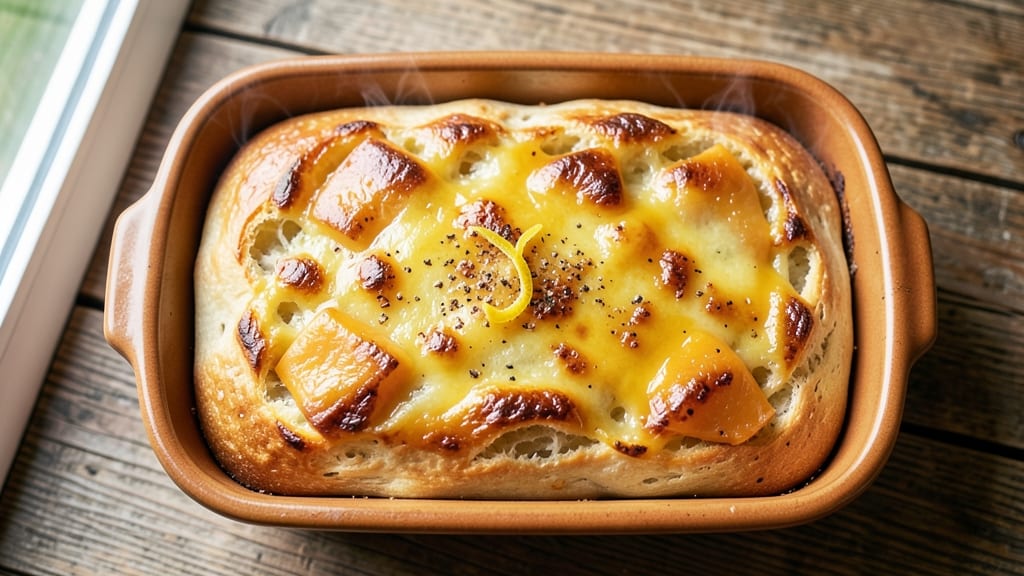
This artisan cheddar cheese bread recipe delivers a golden crust and melty pull-apart magic that transforms ordinary dinner into something extraordinary. The secret lies in aged cheddar's sharp, tangy depth—it's not your basic cheddar, but the good stuff that develops rich, complex flavors as it melts into the dough.
I've perfected this recipe over years of trial and error, ensuring every bite offers that perfect balance of crispy exterior and tender, cheesy interior.
The process begins with a foolproof dough that requires minimal kneading but maximum flavor development. We'll incorporate sharp cheddar in two stages—first mixed into the dough for even distribution, then layered on top for that signature melty pull-apart effect.
The high-heat baking technique creates a crispy crust while keeping the interior soft, while a simple garlic butter glaze adds the finishing touch that makes this bread irresistible.
What you'll end up with is a restaurant-quality loaf that's perfect for soaking up soups, pairing with charcuterie boards, or serving alongside your favorite main dishes.
The aroma alone will have everyone gathering around the table, and the first pull-apart reveals that perfect combination of golden crust and gooey, cheesy goodness. This isn't just bread—it's the star of the meal.
Whether you're hosting a dinner party or simply craving something comforting, this artisan cheddar cheese bread delivers professional results with home kitchen simplicity. The recipe scales easily for crowds, and leftovers reheat beautifully.
Let's get started on creating your new favorite bread—one that will become a staple in your dinner rotation.
Ingredients for artisan cheddar cheese bread
The secret to restaurant-quality cheddar bread lies in aged cheese and precise technique.
| Ingredient | Amount | Notes |
|---|---|---|
| Aged Sharp Cheddar Cheese 🧀 | 2 cups | Shredded, 2+ years aged for depth |
| All-Purpose Flour 🌾 | 4 cups | Bread flour preferred for chewiness |
| Active Dry Yeast 🍞 | ¼ oz | 1 packet, dissolved in warm milk |
| Granulated Sugar 🍚 | 2 tbsp | Enhances yeast activation |
| Unsalted Butter 🧈 | ½ cup | Cold, cubed for dough development |
| Whole Milk 🥛 | ¾ cup | Warmed to 110°F for yeast activation |
| Large Egg 🥚 | 1 whole | Room temperature for even mixing |
| Diamond Crystal Kosher Salt 🧂 | 1 ½ tsp | Adjusts final seasoning perfectly |
| Garlic Cloves 🧄 | 2 cloves | Minced for butter glaze |
| Extra-Virgin Olive Oil 🫒 | 2 tbsp | For dough and glaze finish |
| Cornmeal 🌽 | ¼ cup | Prevents sticking on baking sheet |
| Coarse Sea Salt 🧂 | ½ tsp | For final crust sprinkle |
The cheddar is non-negotiable—2+ year aged sharp cheddar from Murray's Cheese or Wisconsin specialty shops delivers that complex, tangy depth. If you can't find aged cheddar, Pepper Jack with 2 years aging works in a pinch, but expect less nuance. For the flour, King Arthur Bread Flour gives the best chew, but all-purpose works if that's what you've got. The yeast? Fresh is ideal, but instant yeast at half the amount (0.125 oz) works too—just skip the dissolving step. Store your cheddar in parchment-lined containers to prevent drying out, and bring it to room temperature before shredding for even distribution in the dough.
No aged cheddar? Extra-sharp cheddar at double the amount gets you closer, though the texture won't be identical. The butter matters here—European-style unsalted like Plugrá adds richness, but regular butter works fine. For the garlic butter glaze, roasted garlic takes it to another level (just blend 4 cloves with 2 tbsp butter), but fresh minced works perfectly too. The milk temperature is critical: 110°F activates the yeast without killing it—use a thermometer if you're unsure. Want to stretch the recipe? Double the dough and bake two loaves simultaneously in your oven—just space them 2 inches apart for even browning.
This dough is best made 8-12 hours ahead—the flavor develops dramatically during cold fermentation. Store it in the fridge, covered, until ready to bake. For the glaze, make it fresh post-bake so the butter stays soft enough to brush. Leftovers? 3 days in an airtight container at room temperature, or freeze for 3 months—wrap tightly in foil to preserve moisture. Reheat slices at 350°F for 5 minutes to restore that crispy crust. Pro tip: Toast slices before freezing for maximum crunch when reheated.
Why You'll Love This Recipe
- No-Knead Nightmare Solved: I swear by this dough—just mix, let it rise, and forget about it. That aged cheddar melts into golden pockets while you’re still deciding what to watch on TV.
- Sharp Cheese Magic: The moment it comes out of the oven, that crispy crust gives way to gooey, tangy cheddar that sticks to your fingers. Honestly, I’ve made bread that’s supposed to be fancy—this one actually delivers.
- Lunchbox Legend: Slice it warm for sandwiches or pack it cold for school lunches. My kids fight over the pieces, and I don’t even have to bribe them with juice boxes.
- Budget-Friendly Stretch: A block of sharp cheddar and a bag of flour go a long way—this recipe feeds four for dinner and leaves enough for tomorrow’s toast. (Yes, even on a Tuesday night.)
Step-by-step instructions for artisan cheddar cheese bread
Here's how to create a bread so rich and pull-apart perfect it'll disappear faster than you can say "garlic butter."
Activate the Yeast and Prepare the Dough Base
In a small bowl, combine the 0.75 cup warm whole milk (around 110°F) with the 2 tbsp granulated sugar and 0.25 oz active dry yeast. Let this sit for 5-10 minutes until it becomes frothy and bubbly—this confirms your yeast is alive and ready to work. If it doesn't bubble, start over with fresh yeast.
In a large bowl, whisk together the 4 cups all-purpose flour and 1.5 tsp diamond crystal kosher salt. Make a well in the center and add the yeast mixture, 1 whole large egg, and 0.5 cup cold unsalted butter (cubed). Mix with a wooden spoon until a shaggy dough forms. Here's the thing—don't overwork it yet. The butter needs to stay cold to develop gluten properly later.
Knead and Develop the Dough
Turn the dough onto a lightly floured surface and knead for 8-10 minutes until smooth and elastic. You'll know it's ready when it springs back slowly when poked. I like to use a dough scraper to help fold and turn the dough—it keeps things contained and makes cleanup easier.
Shape the dough into a ball, place it back in the bowl, and cover with a damp towel. Let it rise in a warm place for 1-1.5 hours or until it doubles in size. You're looking for a light, airy dough that's puffy and jiggly when gently shaken. This first rise builds structure and flavor—don't rush it.
Incorporate the Cheddar and Shape the Loaf
Once the dough has risen, punch it down to release air, then fold in the 2 cups shredded aged sharp cheddar cheese using your hands. The cheese should be evenly distributed throughout. Here's where it gets exciting—press the dough gently into a 9x5-inch loaf pan that's been lightly greased with 1 tbsp extra-virgin olive oil. The dough should come up about 1 inch above the pan's edge for that classic pull-apart effect.
Cover the pan with the damp towel again and let it rise for another 30-45 minutes until it's just above the pan's rim. The cheese should be visible through the dough, and it should feel firm but still springy to the touch. Preheat your oven to 375°F while the dough rises—this ensures it goes straight into a hot oven for maximum browning.
Bake to Golden Perfection
Before baking, brush the top of the dough with a mixture of 1 tbsp melted unsalted butter and 1 tsp minced garlic cloves for a rich, aromatic finish. Sprinkle the 0.25 cup cornmeal evenly over the top, then dust with 0.5 tsp coarse sea salt. This creates a beautiful crust while adding texture and flavor.
Bake for 30-35 minutes until the bread is deep golden brown and sounds hollow when tapped on the bottom. The internal temperature should reach 190°F at the center. If the top browns too quickly, tent loosely with foil to prevent over-browning while the center finishes cooking. The cheese should be melted and gooey, pulling apart effortlessly when you slice into it.
Rest and Serve
Remove the bread from the oven and let it cool in the pan for 10 minutes. Then transfer it to a wire rack to cool completely. This resting period allows the gluten to relax and the flavors to meld—skipping it results in a gummy texture. For the best experience, serve warm with extra garlic butter or a side of tangy mustard.
Slice into thick pieces to showcase those melted cheese pockets. Each bite should deliver a perfect balance of chewy bread, sharp cheddar, and buttery richness. Store leftovers wrapped in foil at room temperature for up to 2 days, or freeze for up to 3 months—just thaw and reheat in a 350°F oven for 5-10 minutes to restore freshness.
Pro Tips For Making Artisan Cheddar Cheese Bread
- Grate Cheese Fresh: Skip the pre-shredded cheese—it’s packed with anti-caking agents that make your bread gummy. Use a box grater right before mixing, and go for a mix of fine and medium shreds so the flavor melts evenly without clumping.
- Chill the Dough: After kneading, let the dough rise once, then refrigerate it for at least 2 hours. Cold dough handles better when shaping, and the extra rest deepens the cheddar flavor—no one notices the wait.
- Don’t Overmix the Butter: When cutting cold butter into the flour, aim for pea-sized lumps, not a sandy paste. Overworking it turns the dough greasy, and the bread ends up dense instead of flaky. Keep your hands cool and work fast.
- Bake Until Golden: The bread’s done when the crust is a deep golden brown, not pale yellow. If it’s browning too fast, tent it with foil, but push it to 375°F for the last 5 minutes—crispy crusts hold up better when sliced.
Best sauces and condiments for these flavors
Garlic Butter Glaze
This garlic butter glaze is my go-to finish—it adds richness and an aromatic punch that makes every bite irresistible. Melt 2 tbsp unsalted butter with 1 minced garlic clove and a pinch of salt, then brush it over the warm bread right after baking.
For extra depth, add ½ tsp lemon zest to brighten the flavors. This glaze works equally well as a topping or for dipping slices into soups. 🧄
Spicy Honey Drizzle
For a sweet-and-spicy contrast, combine 2 tbsp honey with ½ tsp cayenne pepper and a splash of apple cider vinegar. Warm the mixture gently until the cayenne dissolves, then drizzle over the bread while still warm.
The heat cuts through the cheddar’s richness, creating a perfect balance. I love this on pull-apart pieces for a fun, interactive serving style.
Herb-Infused Olive Oil
Fresh herbs elevate this bread to restaurant-quality status. Mix 3 tbsp extra-virgin olive oil with 1 tbsp finely chopped rosemary, 1 tbsp thyme leaves, and a pinch of black pepper. Brush this over the bread just before serving or drizzle it over slices.
The herbs complement the cheddar’s sharpness while adding a bright, earthy note. Store the mixture in the fridge for up to 1 week.
Whipped Cream Cheese Spread
For a creamy, tangy contrast, whip 4 oz cream cheese with 1 tbsp sour cream, 1 tsp lemon juice, and ½ tsp garlic powder until smooth. Spread this on warm slices for a decadent twist.
It pairs perfectly with the bread’s cheesy pull-apart texture and adds a cool, velvety element. Keep it chilled until ready to serve to maintain its consistency. 🧀
Smoky Chipotle Aioli
For a smoky kick, blend ½ cup mayonnaise with 1 tsp adobo sauce (from a can of chipotles), ½ tsp smoked paprika, and a squeeze of lime juice. This aioli adds depth and a subtle heat that contrasts beautifully with the cheddar.
Serve it as a dip or spread it on slices for a bold, flavorful bite. Store in an airtight container for up to 3 days.
Classic Beer Cheese Sauce
Simmer ½ cup beer (I recommend a light lager or pale ale) with ½ cup shredded cheddar and 1 tbsp butter until the cheese melts and the sauce thickens. Stir in 1 tsp Dijon mustard for tang.
This sauce is perfect for dipping or drizzling over slices. The beer’s maltiness enhances the cheddar’s sharpness, creating a rich, savory pairing. 🍺
Nutrition facts
Frequently asked questions
Can I substitute regular cheddar for aged sharp cheddar?
While you can use extra-sharp cheddar at double the amount (4 cups), aged sharp cheddar delivers that complex, tangy depth that transforms this bread from good to exceptional. The longer aging process develops deeper flavors that melt beautifully into the dough. For best results, stick with the aged version if possible—it's worth seeking out at specialty cheese shops or online retailers.
How do I know when the dough is properly kneaded?
The dough is ready when it's smooth, elastic, and springs back slowly when poked with your finger. For visual confirmation, it should feel firm yet slightly tacky to the touch. If it feels sticky, knead for another 2-3 minutes while adding small amounts of flour only if absolutely necessary. Overworking the dough can develop too much gluten, making the bread dense rather than chewy.
Why did my bread turn out dense instead of pull-apart?
Dense bread usually results from over-kneading, underproofing, or using too much flour. Make sure your yeast is active (it should bubble within 5-10 minutes when mixed with warm milk). Also verify your oven temperature is accurate—many home ovens run 25°F cooler than set. For perfect pull-apart texture, let the dough rise until it's just above the pan's rim before baking, and avoid packing it down too firmly when shaping.
Can I make this bread without a loaf pan?
For a free-form version, shape the dough into a round or oval on a parchment-lined baking sheet. Place it in the oven on the middle rack and bake for 25-30 minutes at 375°F until golden. Brush with garlic butter and sprinkle with cornmeal and sea salt before baking. This method creates a more rustic, artisan look while maintaining that pull-apart magic in the center.
How should I store leftover cheddar bread?
Wrap cooled slices tightly in aluminum foil or place the whole loaf in an airtight container at room temperature for up to 3 days. For longer storage, freeze individual slices wrapped in foil for up to 3 months. To reheat, place slices on a baking sheet and warm at 350°F for 5-10 minutes until crispy. For maximum freshness, store the whole loaf in the fridge for up to 5 days—just slice and reheat as needed.