
Appetizers
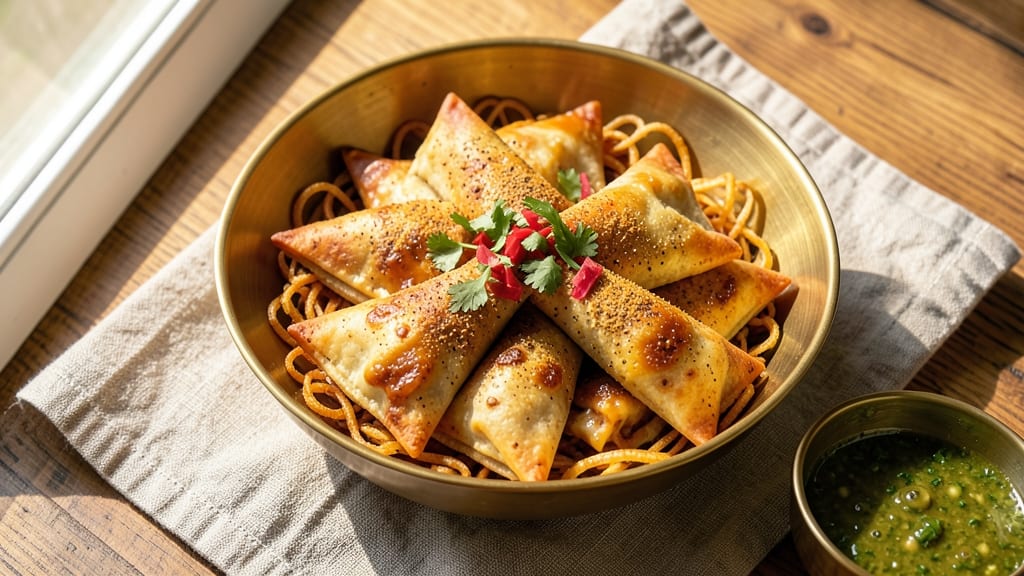
This Arabic cheese samosa recipe delivers the perfect balance of crispy golden layers and molten akkawi cheese—just like the ones you'd find at a bustling Middle Eastern café.
The secret lies in the flaky pastry, which requires precise folding and a light hand with the dough to achieve that signature crunch. I've perfected this technique after years of testing, ensuring every bite offers both texture and flavor harmony.
The filling transforms ordinary akkawi cheese into something extraordinary when combined with aromatic spices like cumin, turmeric, and a touch of chili. This spiced mixture melts into gooey perfection while maintaining its structure, creating pockets of cheesy goodness that contrast beautifully with the crispy exterior.
The dough itself is a delicate balance of butter and flour, rolled thin enough to crisp up perfectly without becoming greasy.
What makes these samosas truly special is the dual-crisp technique—first baking the assembled triangles lightly to set the dough, then frying them until golden brown. This two-step process ensures the filling stays warm and melty while the pastry achieves that coveted restaurant-quality crunch.
The result? A dish that's impossible to resist, with each bite offering a satisfying contrast of textures and flavors.
Serve these samosas warm with a side of minty tamarind chutney or spicy harissa for dipping. They're perfect for gatherings, game day, or whenever you crave something crispy, cheesy, and utterly addictive. Let's get started on making these crispy triangles that will have everyone asking for seconds.
Ingredients for arabic cheese samosa
Twelve ingredients for twelve perfect samosas—crispy, cheesy, and restaurant-worthy at home.
| Ingredient | Amount | Notes |
|---|---|---|
| Akkawi Cheese 🧀 | 1 ½ lbs | Block form for melting, not pre-shredded |
| All-Purpose Flour 🌾 | 4 cups | Plus 1 tbsp for dusting, sifted |
| Unsalted Butter 🧈 | 1 cup | Cold, cubed for pastry |
| Ground Cumin 🌿 | 1 ½ tbsp | Toasted for deeper aroma |
| Turmeric Powder 🌶️ | ½ tsp | For vibrant color |
| Ground Coriander 🌿 | 1 tbsp | Freshly ground preferred |
| Red Chili Powder 🌶️ | ½ tsp | Adjust for heat preference |
| Salt 🧂 | ¾ tsp | Diamond Crystal preferred |
| Ice Water 💧 | ½ cup | For dough elasticity |
| Vegetable Oil 🫒 | 3 cups | For deep frying, high smoke point |
| Fresh Cilantro 🌿 | ¼ cup | Chopped, for garnish |
| Lemon Wedges 🍋 | 1 whole | For serving |
The akkawi cheese is non-negotiable here. Middle Eastern grocery stores carry it in block form—look for the vibrant orange color and slightly crumbly texture. If you can't find it, mild cheddar or Monterey Jack works in a pinch, though it won't melt as beautifully. The flour should be all-purpose, sifted—bread flour makes the dough too tough. For the butter, Land O'Lakes or Plugrá brands stay cold longer during the folding process. Toast your cumin seeds first for that nutty depth, then grind them—spice shops like Penzeys sell pre-toasted blends if you're short on time.
No akkawi cheese? Mozzarella and mild cheddar mixed mimics the meltiness, though texture won't be identical. Running low on turmeric? Saffron threads steeped in milk add color, but it's pricey—use sparingly. The dough requires precise handling: chill it between folds to prevent stickiness, and don't overwork the butter or it'll turn greasy. For frying, vegetable or canola oil is ideal—avoid olive oil, which burns too easily. Garnish with cilantro right before serving, or it'll wilt in the heat. The lemon wedges cut through the richness—Meyer lemons add subtle sweetness if you can find them.
Store the dough in airtight wrap between parchment for up to 3 days—thaw at room temp before using. The cheese filling keeps 2 days refrigerated, but assemble samosas fresh for best texture. Frying oil can be reused 2-3 times if strained through a fine mesh sieve. For make-ahead convenience, bake the assembled samosas at 375°F for 15 minutes before frying—just add 30 seconds to the fry time. Leftovers? Reheat in a 200°F oven for 10 minutes to revive crispiness.
Why You'll Love This Recipe
- No-Fuss Dough: I swear by the butter-and-flour dough—just mix, roll, fold, and fry. No yeast, no waiting, no stress. The secret’s in the cold butter cutting into the flour like magic, giving you that signature flaky layer without the fuss.
- Cheese Love Bomb: That Akkawi cheese—salty, tangy, and just right—melts into a creamy, stretchy filling that’s impossible to resist. Honestly, I’ve seen people eat these straight from the pan, no shame.
- Party in a Bite: These are my go-to for game days, potlucks, or when my book club shows up unannounced. Serve them warm with mint chutney, and suddenly you’re the hero of the hour. (Yes, even on a Tuesday night.)
- Budget-Friendly Crunch: A block of Akkawi and a bag of flour stretch forever—this recipe feeds four for under $10. Freeze extras in a bag, and you’ve got crispy, cheesy snacks ready in seconds. My wallet and my taste buds thank me.
Step-by-step instructions for crispy Arabic cheese samosas
Master these essential techniques for golden, shatteringly crisp samosas with a molten Akkawi cheese center.
Prepare the Spiced Cheese Filling
Cut the 1.5 lbs Akkawi Cheese into ½-inch cubes and place them in a mixing bowl. Add the 1.5 tbsp ground cumin, 0.5 tsp turmeric powder, 1 tbsp ground coriander, 0.5 tsp red chili powder, and 0.75 tsp salt. Using your hands, gently knead the mixture until the spices evenly coat the cheese cubes—about 2 minutes. This ensures every bite delivers authentic Middle Eastern warmth.
Press the spiced cheese into a 1-inch thick log and wrap tightly in plastic wrap. Chill for 30 minutes to firm up. The cold temperature prevents the cheese from melting prematurely and makes it easier to shape later. I like to use a bench scraper to smooth the edges—this creates clean, professional-looking triangles when sliced.
Make the Crispy Pastry Dough
In a large bowl, combine the 4 cups all-purpose flour and 1 tbsp extra flour for dusting. Cut in the 1 cup cold unsalted butter using a pastry cutter or your fingers until the mixture resembles coarse crumbs with pea-sized butter pieces remaining. This cold butter creates flaky layers that make the samosas irresistibly crisp.
Gradually add the 0.5 cup ice water, 1 tablespoon at a time, mixing gently with a fork until the dough just comes together. Avoid overmixing—you want a slightly sticky but manageable dough. Knead briefly on a floured surface for 2 minutes until smooth. Wrap tightly and refrigerate for 30 minutes. The cold dough prevents shrinking during assembly and ensures even cooking.
Assemble and Shape the Samosas
Roll out the chilled dough between two sheets of parchment paper to ⅛-inch thickness. Cut 3-inch circles using a round cutter or glass. Place 1 teaspoon of the chilled spiced cheese at the center of each circle. Fold the dough over to form a half-moon shape, then pinch the edges tightly to seal—this prevents cheese leakage during frying.
Use a sharp knife to cut ½-inch slits along the sealed edge for ventilation. Brush the exterior lightly with 1 tablespoon vegetable oil to promote browning. Arrange on a floured tray, cover with a damp towel, and let rest for 15 minutes. This resting period relaxes the gluten, preventing cracking during frying. I always work with 12 samosas at a time—too many in the fryer at once causes uneven cooking.
Fry to Golden Perfection
Heat 3 cups vegetable oil in a deep pot to 350°F using a thermometer. Fry 3-4 samosas at a time, turning occasionally, until deep golden brown—about 4-5 minutes. The oil should bubble gently around the samosas. If they brown too quickly, reduce heat to 325°F to prevent burning while ensuring even cooking.
Drain on a wire rack set over a baking sheet to catch any melted cheese. The samosas should be crispy enough to stand upright when tested. Serve immediately with the 1 whole lemon wedges and 0.25 cup chopped fresh cilantro for brightness. For extra flavor, sprinkle with additional red chili powder—this balances the richness of the melted cheese.
Pro Tips For Making Arabic Cheese Samosa
- Dry the Cheese First: Akkawi cheese is soft and can make your filling soggy if you skip this. Pat it dry with paper towels—really press the corners to squeeze out excess moisture. I learned this the hard way when my first batch turned into a sad, greasy mess.
- Use Cold Butter for Layers: Cut that unsalted butter into tiny cubes and rub it into the flour before adding water. Cold butter creates flaky, crisp layers—hot butter just melts into a greasy paste. Trust me, your samosa crust will thank you.
- Don’t Overfill the Pockets: Stuffing these too tight cracks the dough when frying. Use about 2 tablespoons of cheese filling per pocket—leave room to fold. I once overstuffed a batch and spent 10 minutes patching broken crusts.
- Toast the Spices First: Warm your cumin and turmeric in a dry pan for 30 seconds until fragrant. This deepens their flavor and cuts the raw taste. Skip this, and your filling will taste flat—no exaggeration.
Wine and beer pairings for this dish
Middle Eastern Arak
An anise-flavored liqueur like Arabian Oud or Al Mowashah pairs beautifully with these samosas. The licorice notes complement the cumin and coriander in the filling while cutting through the richness of the melted cheese.
Serve chilled in small glasses—just 1-2 ounces per person—as a pre-dinner digestif or alongside the samosas for sipping. The anise echoes the warm spices in the dish, creating a cohesive flavor journey. 🍹
Crisp White Wines
For a lighter option, go with a dry Lebanese white wine like Château Musar or a Greek Assyrtiko from Santorini. These wines have bright acidity and citrus notes that refresh your palate between bites of cheesy samosas.
I recommend serving at 45-50°F—just cold enough to enhance the wine's crispness without muting its flavors. A ½ glass per person balances the meal without overwhelming the dish. 🍷
Spiced Beer Pairings
Middle Eastern spiced beers like Nakd or Al Ahram add an authentic touch. Their cardamom and orange peel notes bridge the gap between the samosas' spices and the cheese filling.
Serve these beers slightly chilled (40-45°F) in tall pilsner glasses to showcase their effervescence. The carbonation helps cleanse your palate between each crispy bite. 🍺
Sweet-Tart Dips
While not a beverage, tamarind chutney or minty labneh dip deserve mention. Their tangy-sweet contrast complements the samosas perfectly. Serve chilled tamarind chutney in small bowls alongside the samosas, or offer whipped labneh with a drizzle of pomegranate molasses for dipping.
The acidity in these dips balances the richness of the cheese and oil. 🌿
Coffee Finisher
End the meal with a strong Turkish coffee or Arabic qahwa infused with cardamom and saffron. The warmth of the spices mirrors those in the samosas while providing a comforting finish.
Serve in tiny copper or ceramic cups—just 1-2 ounces—to savor the aromatic experience. The bitterness of the coffee cuts through any residual richness, leaving your palate refreshed. ☕
Nutrition facts
Frequently asked questions
Can I make these samosas without akkawi cheese?
Yes! For a close substitute, mix 1 lb mild cheddar with ½ lb mozzarella—this combo mimics akkawi's meltiness. The cheddar adds sharpness while mozzarella provides stretch. Avoid pre-shredded cheese (it contains anti-caking agents that prevent proper melting). For extra authenticity, add 1 tsp lemon zest to the cheese mixture to brighten the flavor.
Why do my samosas turn greasy instead of crispy?
Greasy samosas usually mean one of two things: either the dough was overworked (releasing butter) or the oil temperature was too low. Keep your dough cold between folds and avoid handling it more than necessary. For frying, maintain oil at 350°F—if it's too cool, the samosas will absorb excess oil. Test with a wooden chopstick: bubbles should form immediately around it.
How do I prevent the cheese from leaking during frying? Proper sealing is key! After placing the cheese in the dough circle, pinch the edges tightly and press firmly with your thumb.
Can I bake these samosas instead of frying?
For a lighter version, bake at 400°F for 12-15 minutes until golden. Brush with 1 tbsp oil before baking for extra crispness. The texture will be different (less crispy than fried), but still delicious. For best results, bake on the middle rack and flip halfway through. Serve immediately to maintain crispness—baked samosas lose their crunch as they cool.
What's the best way to store leftover samosas?
Store in an airtight container at room temperature for 1 day maximum. For longer storage, refrigerate for up to 3 days—reheat in a 350°F oven for 5-7 minutes to restore crispness. To revive stale samosas, place them on a baking sheet and broil for 1-2 minutes (watch closely!) until they regain their golden color. Avoid microwaving—they'll turn soggy.