
Appetizers
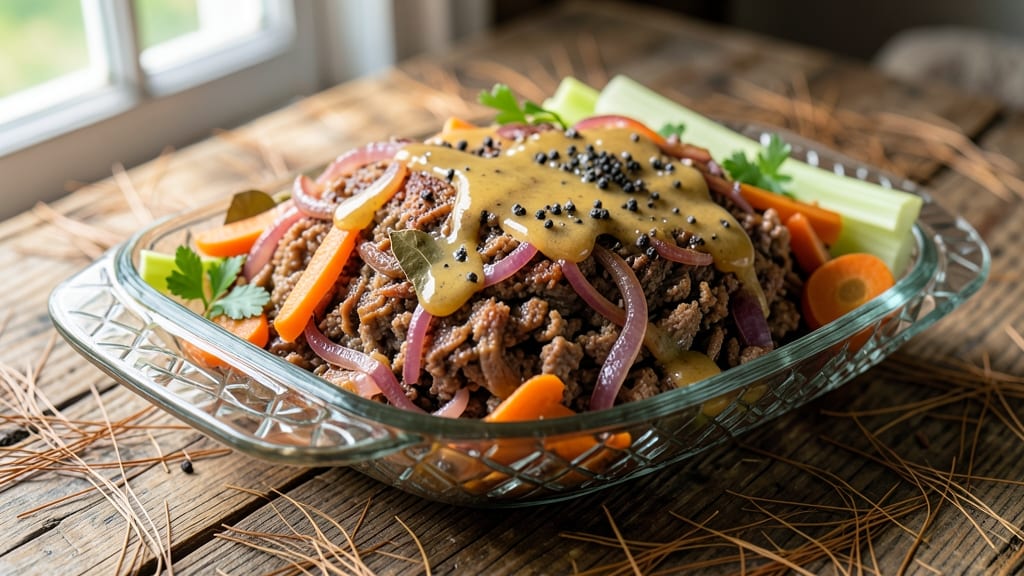
This Amish head cheese recipe brings traditional Pennsylvania Dutch flavors to your table with a savory gelatin loaf rich in herbs and spices. 🌟 The recipe pays homage to Amish culinary traditions, where pork head and aromatic seasonings create a dish that's both hearty and elegant.
Unlike modern gelatin desserts, this version delivers deep, meaty satisfaction with every slice.
The process begins with slow-cooking pork head and vegetables to extract rich, flavorful broth. After straining and seasoning with mustard, cloves, and black pepper, the mixture is carefully molded and chilled until firm. This method transforms simple ingredients into a showstopping appetizer that's perfect for holiday gatherings or special occasions.
What makes this recipe special is its balance of texture and flavor—creamy yet firm, aromatic yet savory. The gelatin sets beautifully, creating clean slices that reveal tender meat and fragrant spices throughout. It's a dish that carries generations of tradition while remaining approachable for modern cooks.
Once set, this head cheese keeps well in the refrigerator for up to two weeks, making it ideal for meal prep or gifting. Serve it chilled with mustard or horseradish for an authentic Amish experience. Let's bring this classic recipe to life in your kitchen.
Ingredients for amish head cheese
Traditional Amish ingredients transformed into a rich, aromatic gelatin loaf with deep heritage flavors.
| Ingredient | Amount | Notes |
|---|---|---|
| Pork Head (or Pork Shoulder as Substitute) 🐖 | 3 lb | Freshly sourced, skin removed |
| Yellow Onions 🧅 | 2 whole | Medium, peeled and quartered |
| Carrots 🥕 | 3 whole | Medium, peeled and halved |
| Celery Stalks 🌿 | 3 whole | Fresh, trimmed and chopped |
| Bay Leaves 🌿 | 2 whole | Dried, for aromatic depth |
| Ground Black Peppercorns 🌶️ | 2 tbsp | Freshly cracked for intensity |
| Whole Cloves 🌿 | 6 whole | For traditional Amish spicing |
| Dijon Mustard 🍯 | 2 tbsp | High-quality, for tangy balance |
| Unflavored Gelatin Powder 🧂 | ½ cup | High-grade, for firm setting |
| Fresh Thyme Sprigs 🌿 | 1 tbsp | Leaves only, finely chopped |
| Fresh Parsley 🌿 | ¼ cup | Finely chopped, for freshness |
| Salt 🧂 | 1 ½ tsp | Diamond Crystal preferred |
| Cold Water 💧 | 4 cups | For gelatin activation |
The pork head is the heart of this recipe—its slow-cooked broth carries generations of Amish tradition. Local butchers or specialty meat markets often carry whole pork heads, but a pork shoulder works beautifully as a substitute if unavailable. Look for well-marbled cuts for maximum flavor. The vegetables—onions, carrots, and celery—should be fresh and firm, not wilted. For the herbs, fresh thyme and parsley elevate the dish, but dried alternatives can be used at half the quantity. The gelatin powder must be high-grade to achieve that signature firm yet creamy texture—Great Lakes or Knox brands are trusted choices in traditional recipes.
No pork head available? A pork shoulder or even smoked ham hock can substitute effectively, though the flavor profile will shift slightly. For the mustard, Dijon provides the ideal tang—substitute with whole-grain mustard if needed. The cloves and black peppercorns are non-negotiable for authenticity, but if you’re avoiding whole spices, ground cloves at one-third the amount will work. The gelatin can be swapped for agar-agar for a vegetarian adaptation, though the texture will differ. For the vegetables, frozen is acceptable in a pinch, but fresh yields superior flavor. Always trim and peel uniformly—this ensures even cooking and a polished final presentation.
This head cheese develops its signature texture over time, so patience is key. After setting, it keeps beautifully in the refrigerator for up to two weeks, making it ideal for holiday prep. For gift-giving, wrap individual slices in parchment paper and secure with twine. The dish also freezes well for up to three months—portion into airtight containers before freezing. To serve, slice thinly with a sharp knife for clean, elegant portions. Pair with whole-grain mustard or horseradish for an authentic Amish touch.
Why You'll Love This Recipe
- One-Pot Magic: I swear by this recipe because it’s literally one pot—chop onions, carrots, celery, toss in the pork head (or shoulder), add bay leaves, and let it simmer. No chopping boards to clean, no extra pans, just pure, satisfying simplicity.
- Deep, Savory Soul: That slow-cooked pork head (or shoulder) melts into rich, gelatinous perfection, while the onions and carrots caramelize into sweet, earthy bites. Honestly, the aroma alone makes my kitchen feel like a cozy Amish kitchen—warm, homey, and impossible to resist.
- Weeknight Workhorse: Between us, this is my go-to for potlucks, church dinners, or just feeding the family after a long day. It’s hearty enough for a crowd but simple enough to make when I’m too tired to fuss. (Yes, even on a Tuesday night.)
- Budget-Friendly Feast: Pork head or shoulder is cheap compared to cuts like brisket, and the veggies stretch it into a full meal. I’ll be real: it’s not the prettiest, but the taste makes up for it—and leftovers? Even better reheated the next day.
Step-by-step instructions for Amish head cheese
Transform humble ingredients into a rich, gelatinous masterpiece with this time-honored technique.
🔥 Step 1: Prepare and Simmer the Pork Base
In a large stockpot, combine the 3 lb pork head (or pork shoulder), 2 whole yellow onions, 3 whole carrots, 3 whole celery stalks, 2 whole bay leaves, 6 whole cloves, and 1.5 tsp salt. Add 4 cups cold water and bring to a boil over medium-high heat. Once boiling, reduce heat to low and simmer uncovered for 4-5 hours until the meat is fork-tender and the broth has reduced by half.
I skim the foam that rises during the first hour—this ensures a clear, flavorful broth. The pork should pull away from the bone easily, and the vegetables should be completely tender. If using pork shoulder, cut it into 2-inch chunks before adding to the pot for even cooking.
👨🍳 Step 2: Strain and Season the Broth
Remove the pot from heat and carefully strain the broth through a fine-mesh sieve, pressing on the solids to extract all flavor. Discard the vegetables and bones, but reserve the meat. Return the strained broth to the pot and stir in the 2 tbsp Dijon mustard and 2 tbsp ground black peppercorns. Bring to a gentle simmer for 10 minutes to infuse the flavors.
Here's the thing—this step builds the foundation. The mustard adds tangy depth, while the peppercorns provide a subtle, aromatic warmth. Taste the broth now and adjust seasoning if needed, though the gelatin will mellow the flavors slightly later.
🥘 Step 3: Shred the Meat and Prepare the Gelatin
Working carefully, shred the cooked pork meat using two forks or your hands, removing any remaining fat or connective tissue. In a separate bowl, whisk together the 0.5 cup unflavored gelatin powder with 1 cup cold water until fully dissolved—this creates a smooth slurry. Add this mixture to the warm broth in the pot and stir constantly over low heat for 5 minutes until the gelatin is fully incorporated.
The gelatin will thicken noticeably as it heats. I use a wooden spoon to stir vigorously, ensuring no lumps form. If the mixture becomes too thick before all gelatin dissolves, add 1-2 tablespoons hot broth to thin it slightly. This step is critical for achieving that signature firm yet tender texture.
⏰ Step 4: Assemble and Chill the Loaf
Transfer the shredded pork mixture to a greased 9x5-inch loaf pan, pressing down gently to compact it. The mixture should be thick but still pourable—if it's too stiff, add 1-2 tablespoons hot broth to loosen it. Sprinkle the 1 tbsp fresh thyme sprigs and 0.25 cup fresh parsley evenly over the top, pressing lightly so they sink into the surface.
Cover the pan with plastic wrap and refrigerate for at least 6 hours, preferably overnight. This slow chilling process allows the gelatin to set firmly while keeping the texture tender. The head cheese should have a glossy surface and hold its shape when gently pressed with a finger.
🔪 Step 5: Serve and Slice for Perfect Texture
Once fully set, remove the head cheese from the refrigerator and let it sit at room temperature for 10 minutes before slicing. Using a sharp knife, cut the loaf into ½-inch thick slices. The edges should hold together cleanly, with a firm yet slightly jelly-like interior. Serve chilled or at room temperature with crusty bread or as part of a charcuterie board.
This dish keeps well in the refrigerator for up to 5 days, though the texture becomes slightly firmer after the first day. For best results, slice just before serving—each bite should deliver rich pork flavor, herbal brightness, and that signature Amish gelatin texture.
Pro Tips For Making Amish Head Cheese
- Trim the Fat First: Cut away the pork head’s thick cheek fat before simmering—it makes the broth cloudy and the final texture greasy. I used to skip this, and the head cheese always tasted heavy; now it’s clean, rich, and properly set.
- Sear the Meat Hard: Get that pork head or shoulder deep brown in a hot pot—no rushing. I learned this the hard way when mine turned out pale and bland. High heat for 10 minutes first locks in flavor and keeps the gel from breaking later.
- Don’t Overcrowd the Pot: Packing in too many veggies or meat at once steams instead of simmers, turning your broth into soup. Layer the onions, carrots, and celery in stages—let them caramelize first, then add the rest. Your future self will notice the difference.
- Strain Through a Damp Cloth: Skip the fine-mesh sieve for the final strain—it traps too much gelatin. A damp cheesecloth or towel lets the rich broth flow while holding onto the good stuff. Yes, it’s messy, but the texture is worth it. (Wear an apron.)
Creative variations of this recipe
Herb-Infused Variations
Swap the thyme and parsley for rosemary and sage—tuck 1 tbsp chopped rosemary and 1 tbsp chopped sage into the loaf before chilling. The piney notes complement the pork beautifully, especially if you add ½ tsp orange zest to the broth during simmering.
This variation feels especially festive for holiday gatherings. 🌿
Spicy Kick Options
For heat lovers, stir 1 tbsp hot sauce (like Crystal or Tabasco) or ½ tsp cayenne pepper into the warm broth before adding gelatin. The heat mellows slightly as it sets, leaving a subtle warmth behind.
Pair with pickled jalapeños on the serving platter for extra zing. I like this version for game-day appetizers!
Vegetarian Adaptation
Replace pork with mushrooms and lentils—sauté 1 lb cremini mushrooms and 1 cup cooked lentils until golden, then use them as the base. Add 1 tbsp soy sauce and 1 tsp smoked paprika to mimic pork's depth.
Use agar-agar (½ cup) instead of gelatin, blooming it in 1 cup hot water before mixing. The texture will be firmer but still satisfying. 🌱
Smoked Flavor Twist
Infuse the broth with smoked elements by adding 2 slices smoked bacon or 1 smoked paprika packet during simmering. For extra richness, stir 1 tbsp maple syrup into the broth before gelling—it balances the smokiness perfectly. This version shines when served with cornbread for a Southern-inspired twist.
Garnish Upgrades
Elevate presentation by topping the loaf with crispy fried onions or toasted breadcrumbs before chilling. For a pop of color, add red pepper flakes or finely chopped sun-dried tomatoes.
A drizzle of honey-mustard glaze (mix 1 tbsp honey with 1 tsp Dijon) after slicing adds sweet-tangy contrast. These garnishes make it look as good as it tastes!
Nutrition facts
Frequently asked questions
Can I make Amish head cheese without pork head?
While pork head is traditional, you can substitute with 3 lb pork shoulder or even smoked ham hock for similar flavor. Cut the meat into 2-inch chunks before simmering to ensure even cooking. The broth will be slightly less rich, but the gelatin texture remains the same.
Why does my head cheese turn out too soft? This usually happens when the gelatin isn't fully dissolved or the mixture wasn't chilled long enough.
How do I store and reheat leftovers?
Wrap sliced head cheese tightly in plastic wrap and store in the fridge for up to 2 weeks. For reheating, slice and warm in a skillet over low heat with a splash of broth until just heated through. Never microwave—it makes the gelatin rubbery. The texture is best when served cold or at room temperature.
What's the difference between head cheese and souse?
Both are traditional pork dishes, but head cheese is a gelatin-based loaf made with broth and pork meat, while souse is a pickled version that includes the head and is served cold in its juices. Head cheese has a firmer texture from the gelatin, whereas souse stays more liquid. Both are Amish staples but serve different purposes.
Can I make this recipe vegetarian?
Yes, but you'll need to adapt the method. Replace pork with mushrooms and lentils (sautéed until golden) and use agar-agar instead of gelatin. Add soy sauce and smoked paprika to mimic pork's depth. The texture will be firmer but still satisfying.